


Bathroom Lino Ideas
Bathroom lino (or sheet vinyl) is one of the easiest ways to freshen up a tired bathroom floor without blowing the budget. It's water resistant, feels warm underfoot, and comes in far more styles than you might expect.
This guide walks you through the options, the trends and the practical details, so you can pick a floor that 100% suits your home.
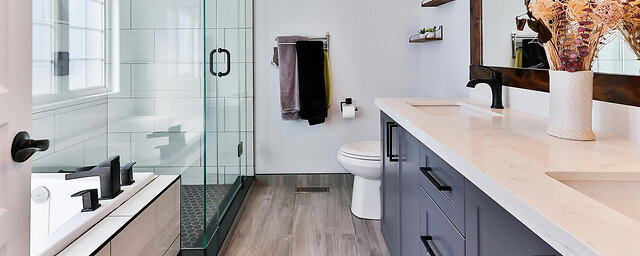
What is 'bathroom lino'?
Most people use "lino" as a catch-all term, but these days it usually means modern bathroom vinyl rather than traditional linoleum made from linseed oil. Real lino is still available, but sheet vinyl is what you will find in most bathrooms today.
Bathroom sheet vinyl is built in layers. A printed design sits beneath a clear wear layer, and that wear layer is what keeps the floor looking good through daily use, splashes and foot traffic. Traditional lino is a single material with the pattern running all the way through, which gives a different look and feel but a narrower choice of designs.
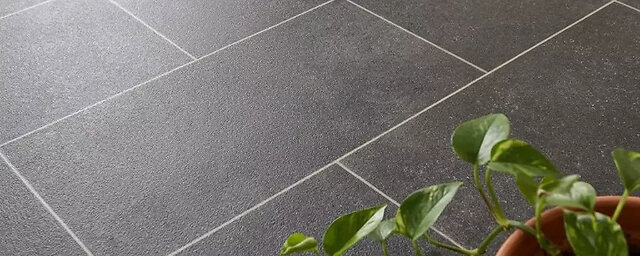
Luxury vinyl tiles, or LVT, are another separate (hugely popular) category. Unlike sheet vinyl, LVT comes in individual planks or tiles that click or glue together. It is thicker and more rigid than sheet vinyl, with more realistic designs, but at a higher price point.
Why Bathroom Vinyl Flooring Works So Well
Bathrooms are the most demanding floors in the house. Splashes land from the shower, drips puddle beside the bath, and steam settles on every surface within minutes of a hot wash.
Bathroom vinyl gives you:
Strong water resistance across the surface and at the seams
Comfort underfoot, which really matters on cold mornings
Easy cleaning with a damp mop and a mild cleaner
Soft, warm feel compared with cold ceramic tile or natural stone.
A surprisingly wide range of styles, from wood and stone effects to bold patterns
Because vinyl is softer than tiles, it also takes the edge off a room that can otherwise feel clinical. For busy households with children or older family members, that softness makes a real difference.
Bathroom Lino Ideas for Every Style
The range of colours and styles is broader than most people realise.
Wood Effect Vinyl
Wood effect vinyl is a firm favourite. It brings the warmth of real timber into a room where solid wood would not cope with moisture. Light oak and ash tones help smaller bathrooms feel more open, while walnut and dark oak create a richer, more dramatic look. Embossed in register technology gives the surface a texture that follows the printed grain, so the planks look and feel closer to real wood. Herringbone layouts are growing in popularity, adding visual depth without needing a large room to work in.
For a soft, chalky finish, the Arizona Chalk Washed Oak is a pale wide-plank print with a calm, washed palette that suits bright bathrooms and Scandi schemes.
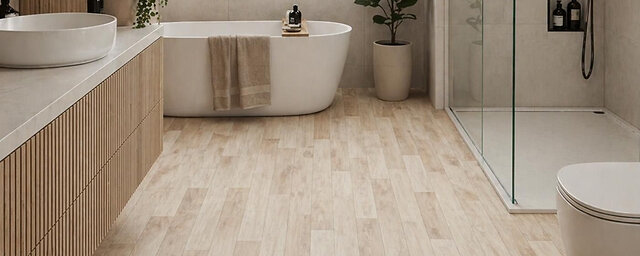
For a grey-toned finish ideal for wet rooms, the Tudor Mansions Eltham Oak is a 4mm extra-thick felt-backed sheet vinyl that is both slip and water resistant, with a 7-year residential guarantee.
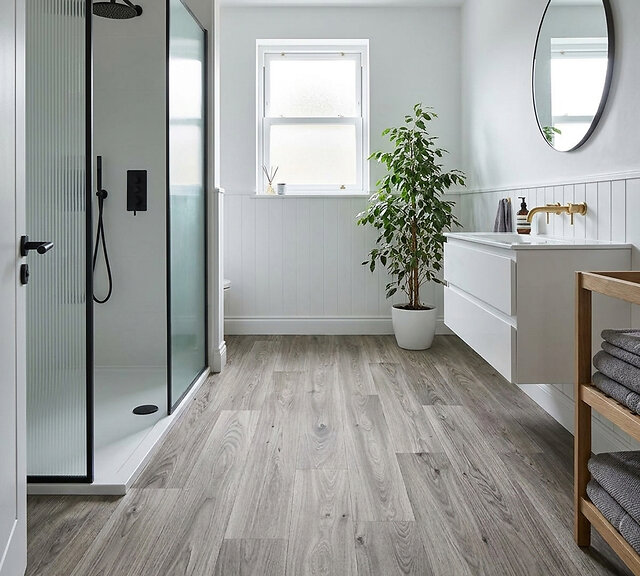
For a warmer, deeper wood tone, the Tudor Mansions Bramhall Oak brings deep brown tones in the same 4mm felt-backed format.
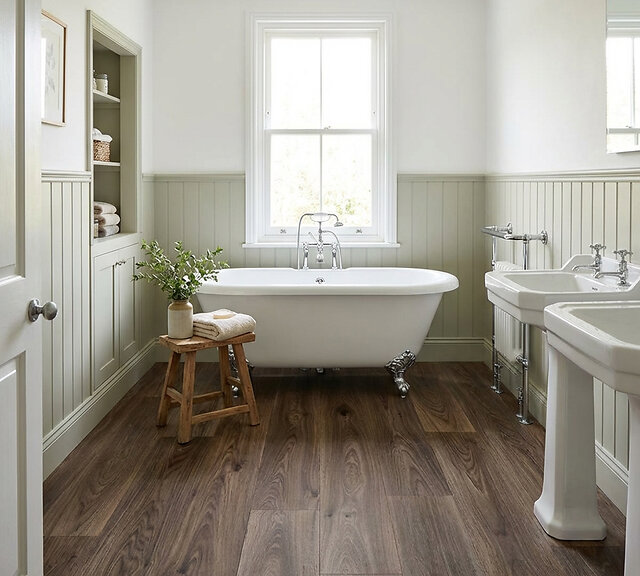
Tile Effect and Stone Effect
Tile effect vinyl gives you the look of ceramic or natural stone with the underfoot comfort of vinyl. Large-format grey concrete-effect designs reduce the number of visible grout lines and suit modern bathrooms with a minimalist feel. Monochromatic checkerboard designs remain a classic choice, particularly in traditional homes and period properties.
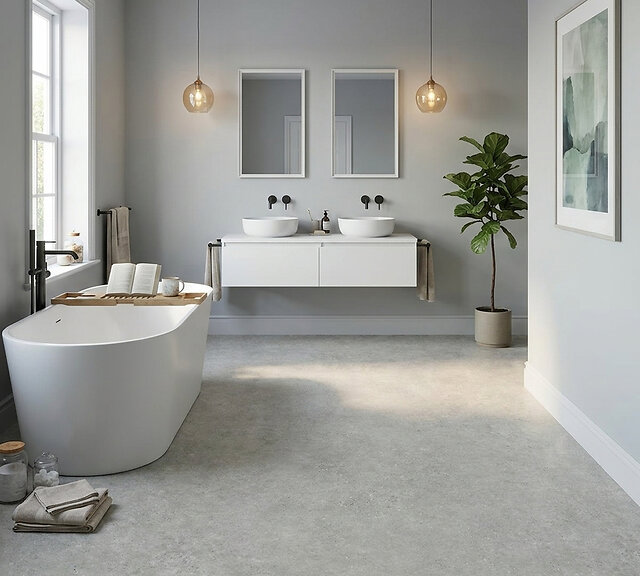
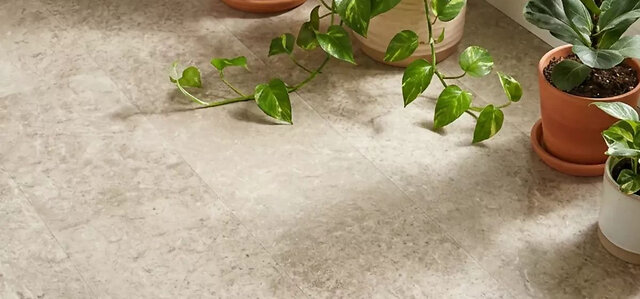
The Tudor Mansions Hardwick Stone is a pale speckled grey stone-effect vinyl roll ideal for kitchens and bathrooms, giving the calm stone aesthetic without the cold underfoot feel of real stone.
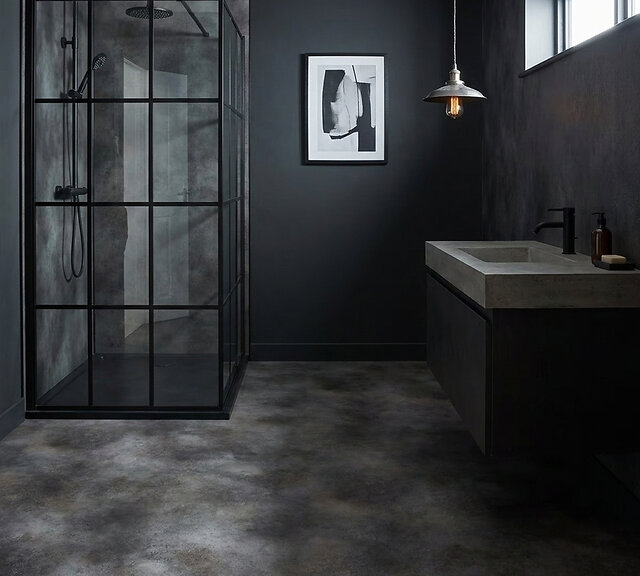
For a cooler, more industrial feel, the Metallic Stone Effect in Concrete Nickel gives a raw concrete finish with a subtle metallic sheen.
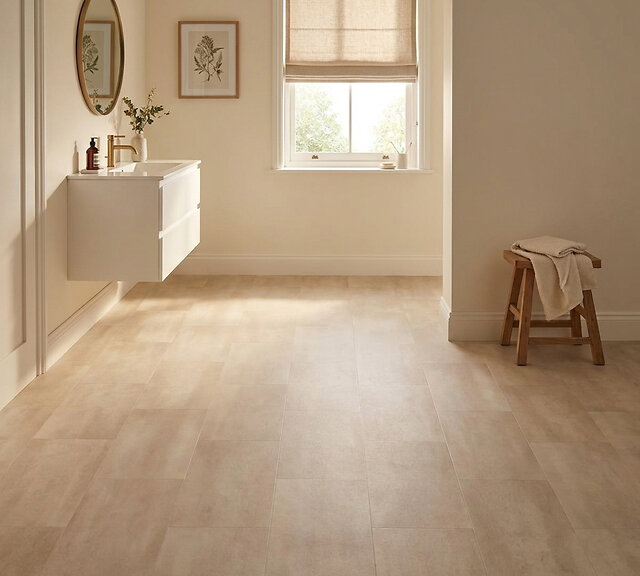
For a softer, warmer stone look with authentic grout-line detail, the Arizona Honed Limestone brings classic beige stone-tile tones, with grout lines printed into the design for depth.
See the stone-effect sheet vinyl range for the wider selection.
Victorian, Moroccan and patterned
Smaller bathrooms and cloakrooms are the ideal space for bolder flooring ideas. Floral prints, geometric patterns and intricate designs in warm muted tones can lift a small room without overwhelming it. Subtle terrazzo-style vinyl adds an artistic touch to modern bathrooms, while diagonal patterns can make a narrow room feel wider.
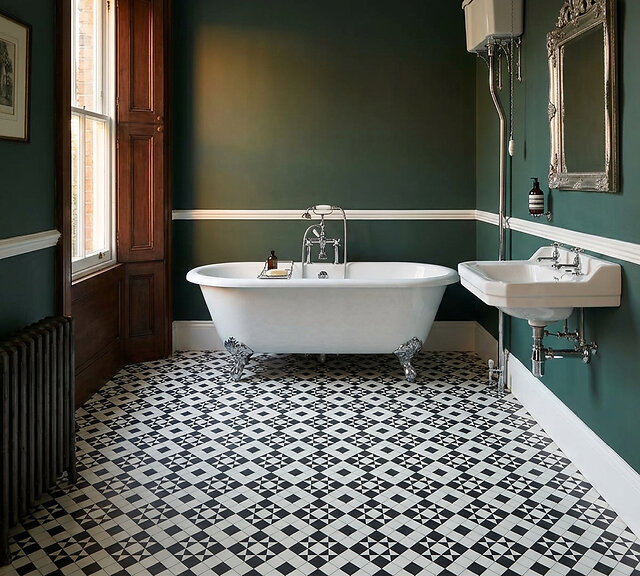
The Era Brunel Black and White Tessellated Victorian Tile Sheet Vinyl is a monochrome geometric tessellated print that suits Victorian and Edwardian properties.
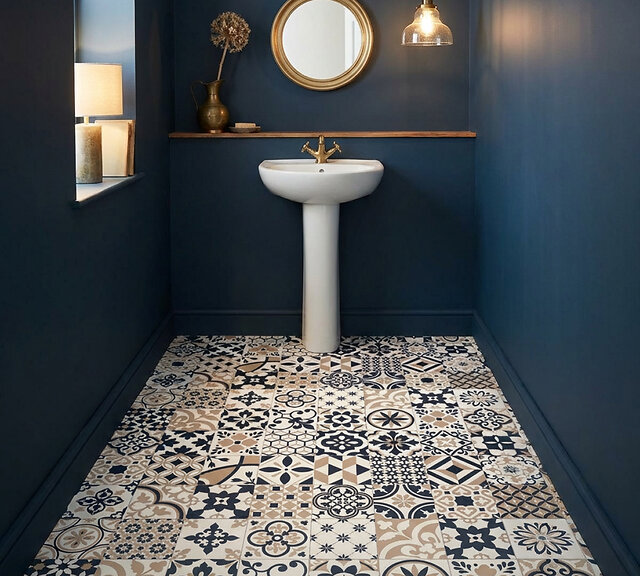
Vivre 60 Moroccan Vinyl Flooring delivers Moorish pattern in a single sheet, avoiding the cost and labour of real encaustic tiles.
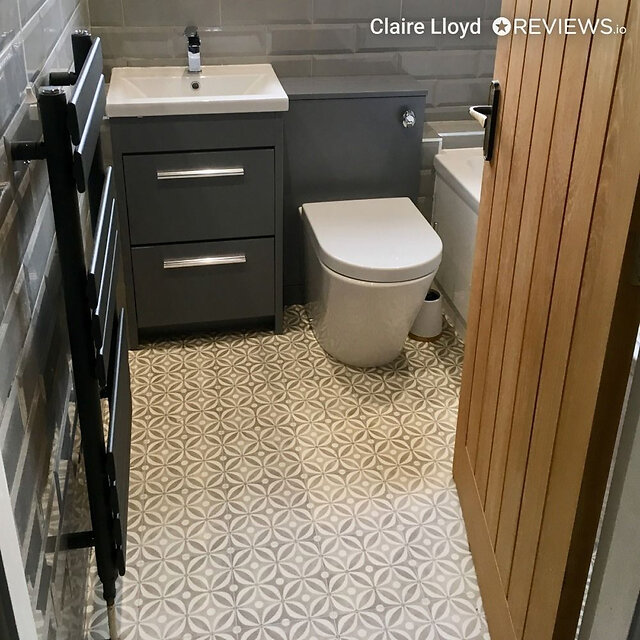
For a softer, quieter patterned option, the Cement Tile Design in Topaz Natural brings the cement-tile trend in a neutral palette.
Grey, cream and neutral tones
Grey bathroom lino still leads the category. A mid-grey stone or oak effect sits comfortably with white suites, chrome or brass fittings, and almost any paint colour on the walls.
Cream and warm beige have crept back in as greys have softened towards warmer, chalkier tones over the last two years. For a lighter bathroom that needs warmth rather than cool, warm beige and honey oak tones feel more current than the cooler greys of the mid-2020s.
Current Trends in Bathroom Flooring
Modern design is leaning towards warmer, natural materials and textures. Deeper woods, herringbone layouts and bold classic prints are all popular right now. Simple, elegant designs in neutral shades hold steady with anyone after a timeless look. A few trends worth noting:
Warmer wood tones replacing cool greys in larger bathrooms
Herringbone planks adding structure and depth
Subtle metallic accents in modern sheet vinyl
Stone and marble effects with minimal grout lines
Terrazzo designs in smaller bathrooms and en suites
See our flooring trend guide for more inspiration.
How to choose the right bathroom lino
Beyond the design, five practical points decide how well a floor wears.
Wear layer thickness
The clear top layer is what protects the print. For a standard family bathroom, 0.3mm is a reasonable minimum; 0.5mm or above is more durable and better suited to busier homes.
Slip resistance
Look for the R rating if the bathroom sees lots of wet bare feet. R10 is fine for most domestic bathrooms; R11 is worth considering if you have a walk-in shower with a drain in the floor.
Seams and edge sealing
Sheet vinyl ideally comes in a single piece wide enough to cover the bathroom with no seam. Most bathrooms sit comfortably under standard 3m or 4m-wide rolls. If a join is unavoidable, it needs to be welded or sealed by the fitter.
Subfloor condition
Any lumps, nails or dips will telegraph through sheet vinyl within weeks. A quick sand or a self-levelling compound over the subfloor is time well spent.
Installation method
Glue-down gives a strongest water seal in a bathroom and is almost always the right call, loose-lay with tape works in smaller cloakrooms.
Fitting and Subfloor Preparation
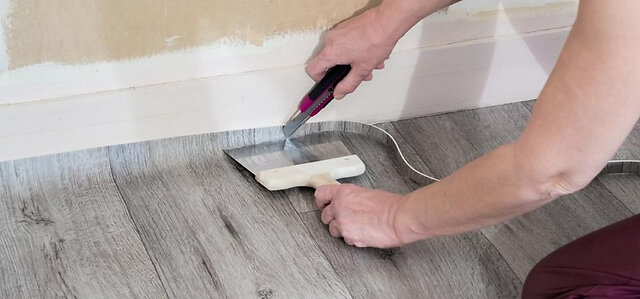
Vinyl performs best when the subfloor is smooth, dry and flat. Lumps and dips will eventually show through the surface, and a damp subfloor can cause problems further down the line.
What goes under lino in a bathroom?
Sheet vinyl is usually laid directly onto the subfloor using glue or double-sided tape around the edges. Underlay is not typically needed for sheet vinyl if the product has a built-in backing or is designed for direct installation. For most bathrooms, a plywood overlay fitted over existing floorboards gives the smoothest and most reliable base.
Can I put lino over bathroom tiles?
You can, but only if the tiles are sound, level and free from cracks. Grout lines and uneven tiles will show through thinner vinyl over time, so a thin plywood overlay is often the better route to keep the surface flat and gives the vinyl a long, trouble-free life. Read our DIY guide to sheet vinyl installation for more advice.
Cleaning and Maintenance
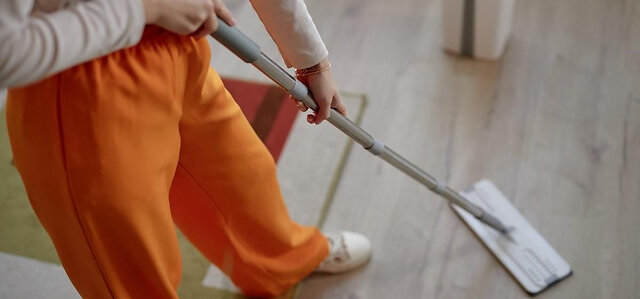
Vinyl flooring is low-maintenance and can be kept looking good with regular sweeping or vacuuming to remove dirt and grit.
Sweep or vacuum regularly to lift dirt and grit
Damp mop with a mild, pH-neutral cleaner
Wipe up spills and splashes without delay
Avoid harsh chemicals and steam mops on vinyl flooring, which can damage the protective surface
Avoid abrasive tools that can scratch the surface
Felt pads under any freestanding furniture help protect the floor from dents and drag marks. Check out our vinyl flooring cleaning guide for more tips.
Ready to refresh your bathroom floor?
The fastest way to make a confident choice is to see the pattern in your own light, next to the tiles, suite and paint colour you already have. Order free samples of any bathroom lino you are considering. If the shortlist is still long, get in touch and the team will walk you through what has worked for similar bathrooms.
FAQs
Is lino flooring good for bathrooms?
Yes, bathroom vinyl is a super practical choice. It handles moisture, feels warm underfoot, and is far kinder than stone or ceramic tiles if something breakable gets dropped.
Is there a difference between lino and vinyl?
Yes. Traditional lino is a natural product made from linseed oil, cork dust and jute, and reacts to water more than modern vinyl does. Vinyl is a synthetic, multi-layer sheet built specifically for wet rooms. Almost every modern "bathroom lino" sold today is sheet vinyl.
How long does bathroom vinyl last?
With proper care, vinyl flooring can last 10 to 20 years or more, depending on the quality of the product and the level of foot traffic. Higher-end options with thicker wear layers resist scratches and daily wear better, which is why they are often recommended for kitchens and hallways alongside bathrooms.
Which vinyl flooring is best for a bathroom?
Look for a sheet vinyl with a wear layer of at least 0.3mm for a standard bathroom, or 0.5mm and above for a family or shared one. Glue it down for the best water seal, and pick a design with an R10 or R11 slip rating if the bathroom doubles as a wet-room-style space.
Is laminate suitable for bathrooms?
Standard laminate is not a reliable bathroom choice, but water-resistant laminate designed for wet rooms is. The core is treated to resist swelling and the joints are engineered to keep water out. Even so, sheet vinyl or LVT is the safer default for a family bathroom. See our water resistant laminate range for all the options.
What is the current trend for bathroom floors?
Warmer tones and natural textures are leading the way. Deeper wood effects, herringbone plank layouts and large-format stone or marble designs all feature strongly. Terrazzo-style vinyl is growing in smaller bathrooms and en suites. Matte and satin finishes are preferred over gloss, giving a softer and more considered result. Read our trends guide for inspiration.
How can I cover my bathroom floor cheaply?
Sheet vinyl is one of the most cost-effective flooring choices for bathrooms. It needs no grout, is quick to fit, and comes in a wide range of colours and designs. Even entry-level sheet vinyl is durable enough for everyday bathroom use. Fitting it yourself brings the overall cost down further.
What is the best flooring for a bathroom?
Sheet vinyl, LVT and waterproof laminate work well in most bathrooms. For the full picture of what suits the room, our bathroom flooring hub covers all the options in one place.
What can I use on a bathroom floor instead of tiles?
Sheet vinyl, LVT and, in some cases, water-resistant laminate. Vinyl and LVT are the strongest bathroom picks; water-resistant laminate can cope with splashes in downstairs cloakrooms but is not ideal directly around a shower or bath.
Can I put lino over existing bathroom tiles?
Yes, if the tiles are sound, flat and free of cracks. Wide or uneven grout lines will eventually show through sheet vinyl, so a thin self-levelling skim over the top saves future grief. For a small cloakroom with tight, shallow grout lines, you can often lay straight over. See more installation tips in our advice centre.