


The Best Flooring for Small Spaces
How to Make Every Room Feel Bigger
There's plenty to love about a small room. They're cosy, less expensive to heat, and much quicker to decorate. The catch? Making them feel more open and airy than they really are.
Here's the good news: your flooring choice can really make a difference to how big a room feels. Pick the right one and even a tight space will feel brighter, calmer, and bigger. This guide covers the best flooring for small rooms, from colour and plank size to clever layouts and the materials that work well in everyday homes.
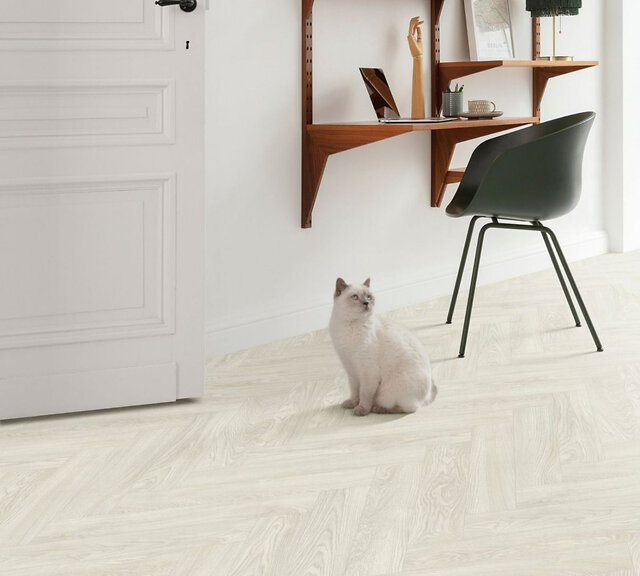
Quick answer: best flooring for small spaces
| Room | Best flooring type | Why it works |
|---|---|---|
| Living room | Light LVP or wide plank laminate in pale oak | Reflects light, reduces seams, lengthens the room |
| Bathroom | Light stone effect LVT, larger tile format | Fewer grout lines, 100% waterproof |
| Kitchen | Light sheet vinyl or LVT with subtle grain | Seamless flow into adjoining rooms |
| Bedroom | Pale neutral carpet or light wood with a rug | Soft, calm, uncluttered feel |
| Hallway | Wide plank LVT or laminate, pale tone | Carries light through to connected rooms |
Why does flooring matter so much in a small room?
Your floor is the biggest single surface in any room. It shapes how light moves, how patterns appear, and how roomy the space feels the second you step inside. Get the flooring right, and everything else falls into place, from wall colour to where you put the sofa.
Light floors bounce natural light around the room, softening shadows and lifting the whole mood. Dark floors do the opposite. They soak up light and can make a small room feel heavier than it needs to. Dark colours aren't completely off the table, but they need a bit more thought when space is tight. Light wood finishes can reflect noticeably more natural light than darker woods. This simple swap makes a meaningful difference.
What colour is best for small spaces?
Light Tones for an Open, Inviting Feel
Light coloured flooring is the safest bet for making a small room look bigger. Pale oak, soft greys, warm beiges, and light stone effects all bounce more light back instead of soaking it up. The result is a room that looks larger than it really is. Pair light flooring with light coloured walls for a soft, low-contrast look. Your eye drifts from floor to wall without hitting a hard line, and the room instantly feels wider and taller. Pale greys work beautifully here, especially with a crisp white skirting and light walls. For more on how shades shape a room, see our guide to the psychology of colour.
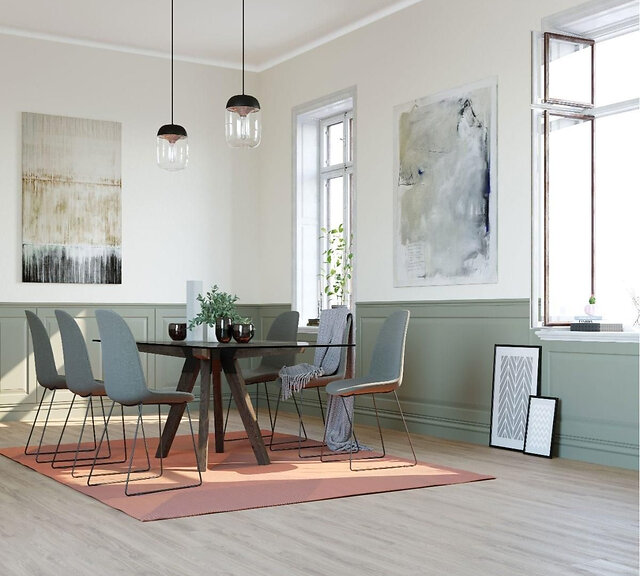
The Moduleo LayRed Blackjack Oak 22210LR is a light beige, wood effect LVT in a generous long plank format, designed to reduce seams and give the eye an uninterrupted run across the room.
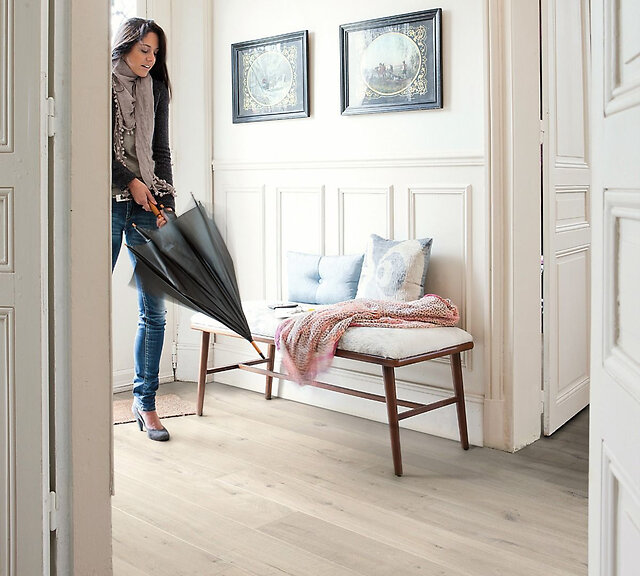
The Quick-Step Impressive Ultra Soft Oak Beige IMU1854 is a light beige laminate that captures the look of a bleached rustic oak, with natural knots and a brushed timber texture that bring real character without darkening the room.
When Dark Floors Can Still Work
Dark floors can feel grounded, cosy, and rich, especially in a living room with plenty of window light. It's all about balance. If you've got your heart set on dark wood flooring, keep the walls light, add in plenty of reflective surfaces to bounce light around and layer in soft furnishings in pale tones so the room feels open rather than boxed in.
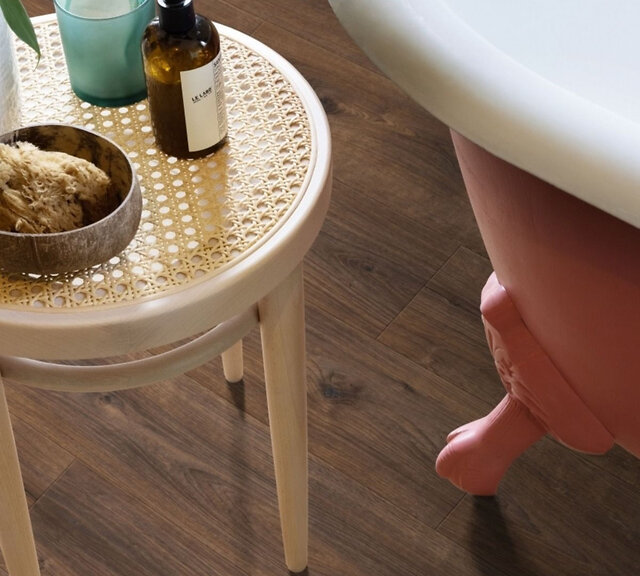
The Moduleo Roots 55 EIR Galway Oak 87863 brings rich, dark oak tones with embossed-in-register texturing that feels like solid wood.
The Rule of Three in Flooring
The rule of three keeps your room feeling calm and pulled together. Stick to three main tones across floor, walls, and furniture. Or use three coordinating shades within the flooring itself. It stops the room from visually fighting with itself, which is the last thing you want when space is tight.
Best Flooring Materials for Small Spaces
Laminate Flooring
Laminate is one of the most practical options for smaller homes. It's affordable, hardwearing, and comes in loads of light wood and stone effects. Modern laminate mimics real wood hardwood flooring beautifully, and a satin finish bounces more light around without looking glossy or clinical. Go for water-resistant laminate in kitchens and hallways, and pair it with a quality underlay to soften footsteps and improve comfort underfoot.
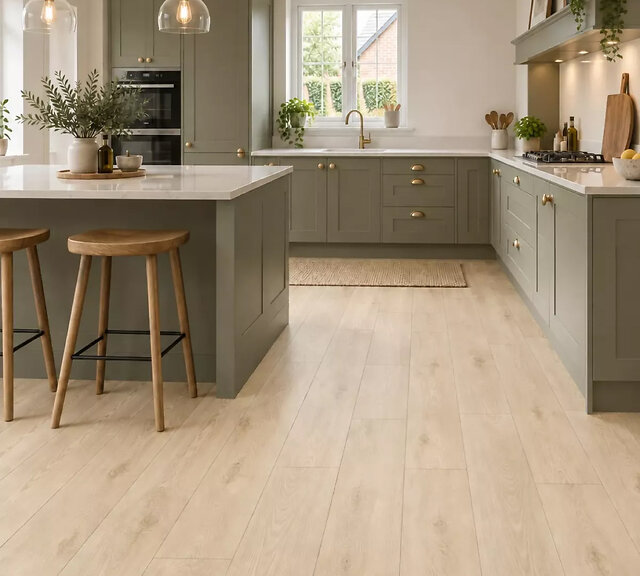
A great example is the Verdanti Splash Sunray, a light sun-bleached oak laminate that keeps small rooms feeling bright and open. The water and stain-resistant finish means it handles the daily chaos of family life at a budget-friendly price point.
Luxury Vinyl Tile (LVT)
LVT is 100% waterproof, super-durable, and warm to walk on. It's perfect for a small bathroom, kitchen, or utility room, and it takes busy family life in its stride. Wide planks in light tones work especially well for making a room feel wider, offering a hyper-realistic alternative to real wood flooring. Look for a robust wear layer and trusted brands like Karndean or Moduleo for long-term peace of mind.
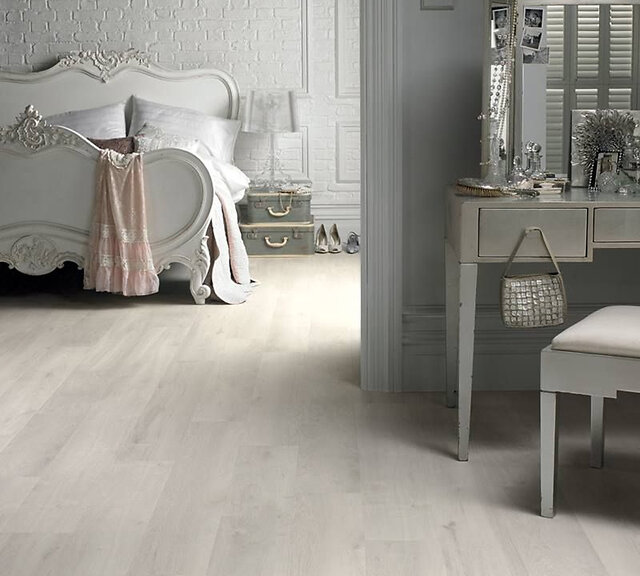
The Karndean Van Gogh White Washed Oak VGW80T is a lovely example, with pale, white-washed tones spread across wide 48" x 7" planks to give small rooms that airy, open feel.
Sheet Vinyl
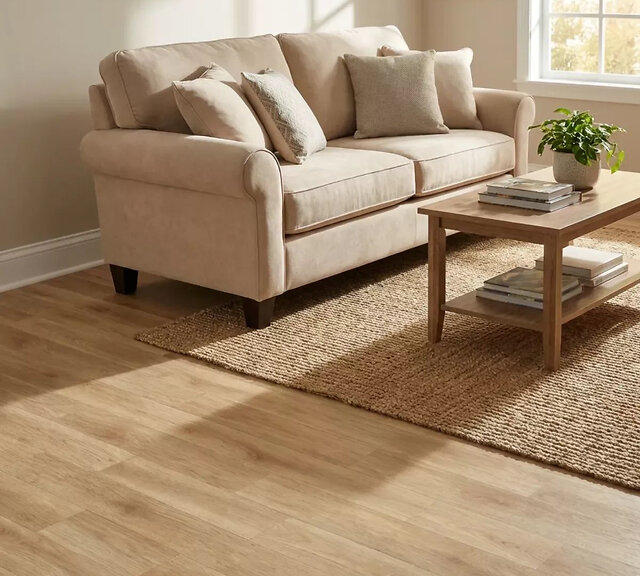
Sheet vinyl is the unsung hero of small-space flooring. It's affordable, completely water-resistant, and comes as one continuous piece, which means no seams interrupting the eye. The Spectrum Hixton Light Oak Sheet Vinyl perfectly demonstrates this with a Scandinavian-inspired, fresh light oak design.
Carpet
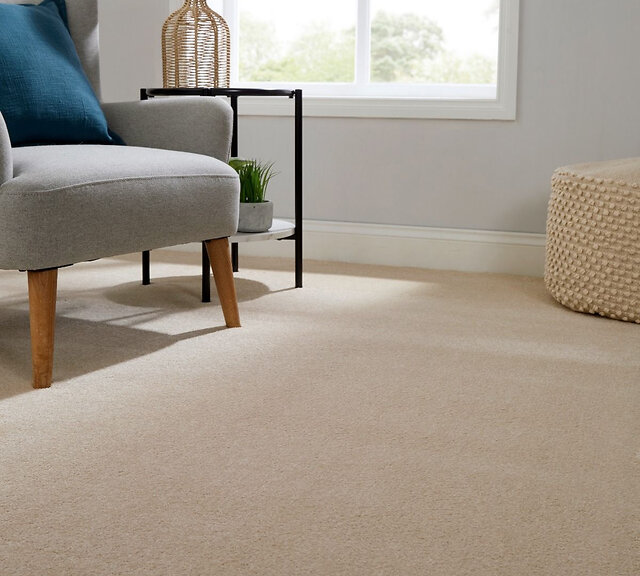
Soft, warm, and hard to beat in a cosy bedroom. For a small floor space, choose a plain or lightly textured carpet in a pale shade. Busy patterns tend to shrink a space visually, so keep things simple. The Joy Biscuit Luxury Saxony Carpet is a lovely example, with a soft, creamy oatmeal beige tone and a subtle velvet-look finish that keeps small bedrooms feeling calm and uncluttered.
Layout Hacks That Make a Small Space Look Bigger
Go for Wide Planks
Wide planks reduce the number of seams across the floor, which creates a sense of continuity and draws the eye outward. Fewer seams + fewer visual breaks = more floor space. It's a small detail that can really give the illusion of more space.
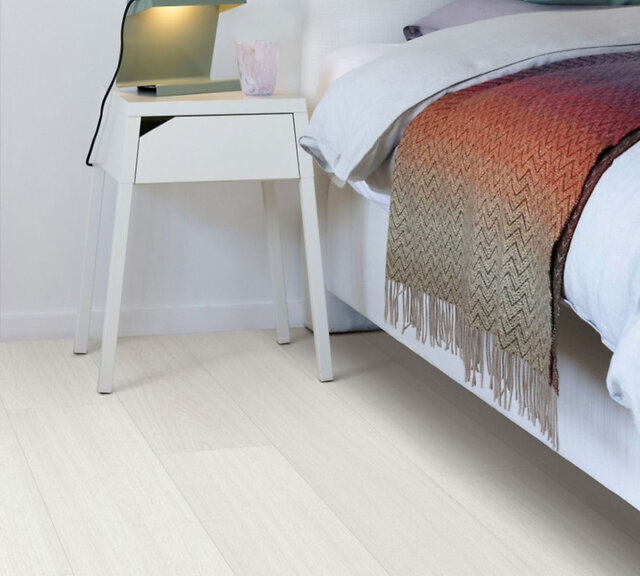
A great example is the Moduleo Roots XL Glyde Oak 22126, an extra-large plank LVT measuring a generous 149.8cm long by 21.4cm wide, with a super-light oak design that keeps things bright and uninterrupted.
Mind the Direction
Placing planks parallel to the longest wall visually elongates the room. In a narrow hallway or galley kitchen, running longer planks along the length of the space makes the room feel wider and more generous. For square rooms, a diagonal lay can add movement and interest.
Avoid Busy Patterns
Busy patterns create visual boundaries that chop a space into smaller chunks. Keep patterns subtle. If you love herringbone (and who doesn't), it can work in a small space, but stick to light tones and smaller block sizes so it doesn't overwhelm.
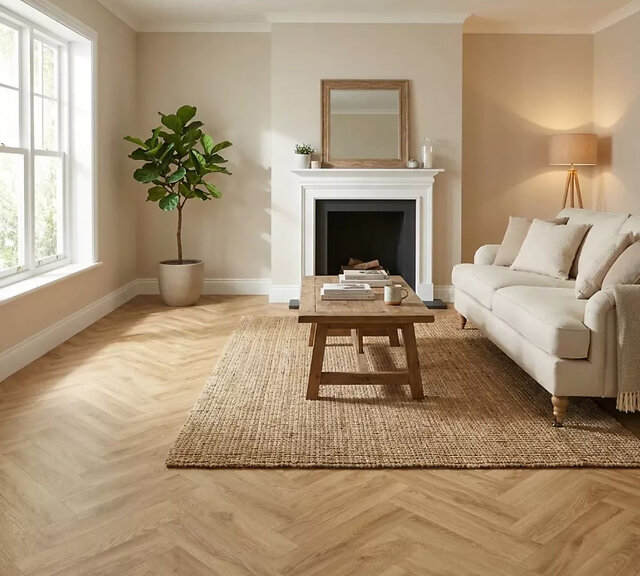
The Spectrum Buckden Light Oak Herringbone Sheet Vinyl is a perfect example of how to get the herringbone look; its small, beautifully formed light oak parquet blocks keep the pattern gentle on the eye.
Low Contrast Colour Choices
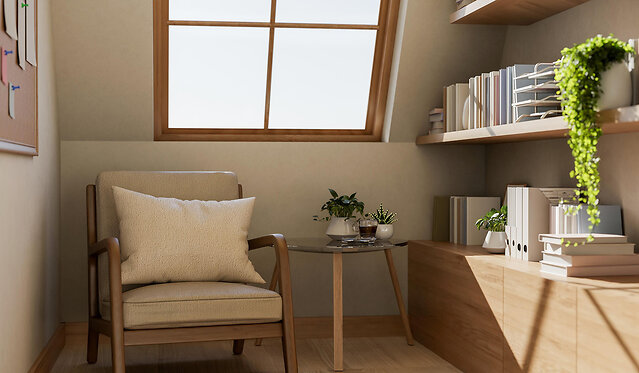
Keeping your flooring, walls and furniture in similar tones helps them seamlessly blend into one another, creating a calm, uninterrupted look. Take it a step further with colour drenching, where the same shade wraps across multiple surfaces, and the effect not only looks modern but can make a small room look bigger.
Use the Same Flooring Across Multiple Rooms
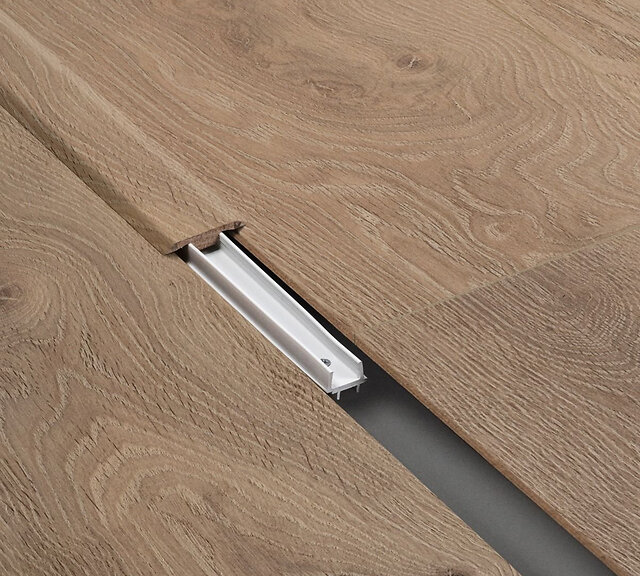
Consistent flooring through your hallway, living room, and kitchen creates a seamless flow. The eye doesn't stop at doorways, so the whole area reads as one larger space. Threshold strips and edging profiles make it easy to continue the same floor across adjoining rooms neatly.
"We always tell customers that a small space isn't necessarily a limitation. Get the flooring right, and everything else visually falls into place."

Paul Humphries
Managing Director, Best4Flooring
Room-by-Room Flooring Ideas
For broader advice on matching the floor to the room, see our guide on choosing flooring for each room in the home.
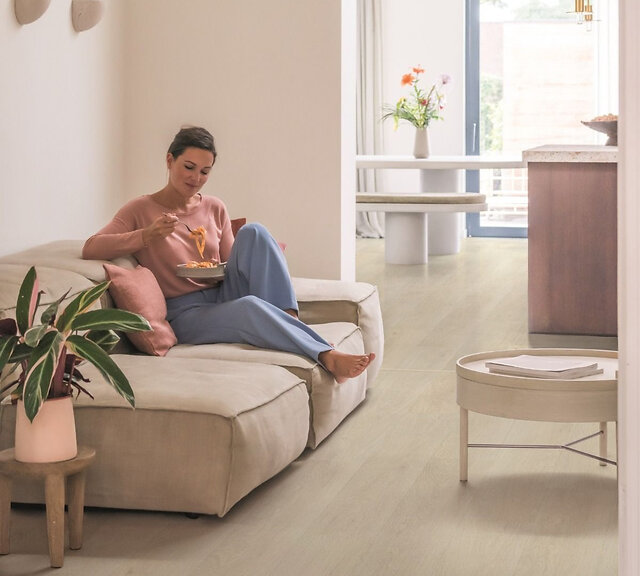
Small Living Room
Light LVP or wide plank laminate in a pale oak. Lay the planks along the longest wall, keep the wall colour soft, and let the floor breathe with minimal rugs. The Quickstep Bloom Sea Breeze Oak Light is a natural fit here: soft pale oak with a clean, understated grain.
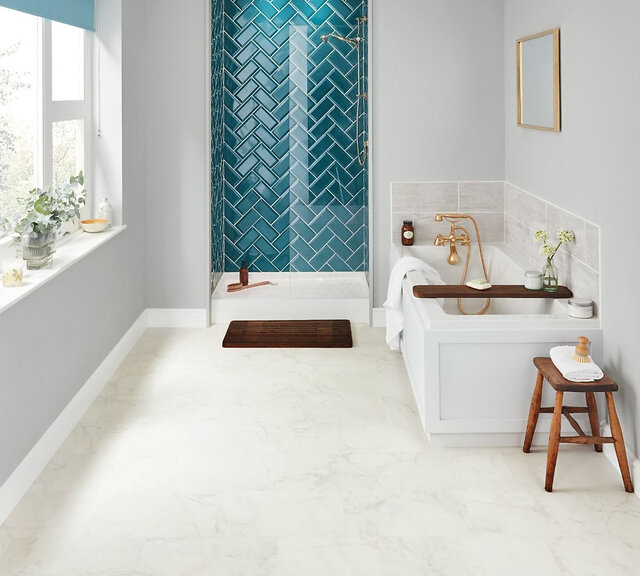
Small Bathroom
LVT in a light stone effect with larger tiles to reduce grout lines. Larger tiles help a compact space feel more open, and waterproof LVT handles moisture without drama. The Karndean Knight Tile Frosted Marble ticks every box: fresh white marble with realistic decorative veining and a subtle tile format that keeps the grout-line illusion minimal.
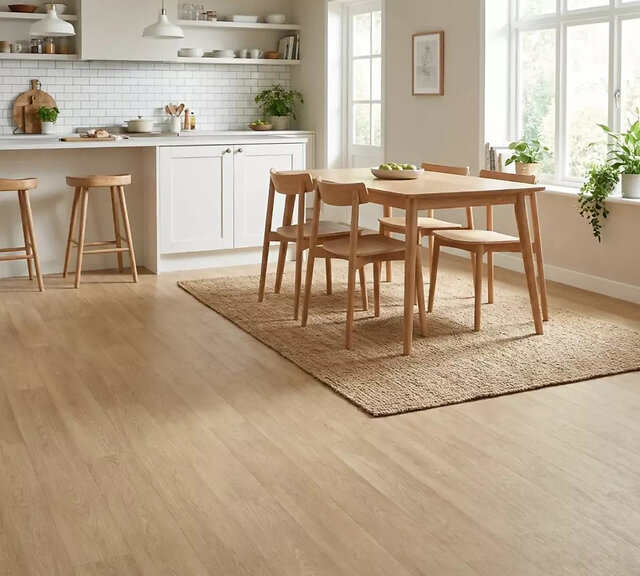
Small Kitchen
Light coloured sheet vinyl or LVT with a subtle grain. Kitchen floors should flow naturally into adjoining rooms where possible, so think about what carries through from the hallway. For a deeper look at the right material here, see our guide on what flooring is best for a kitchen. The Spectrum Lochore Oak would work well; a clean, pale oak with a soft warm tone.
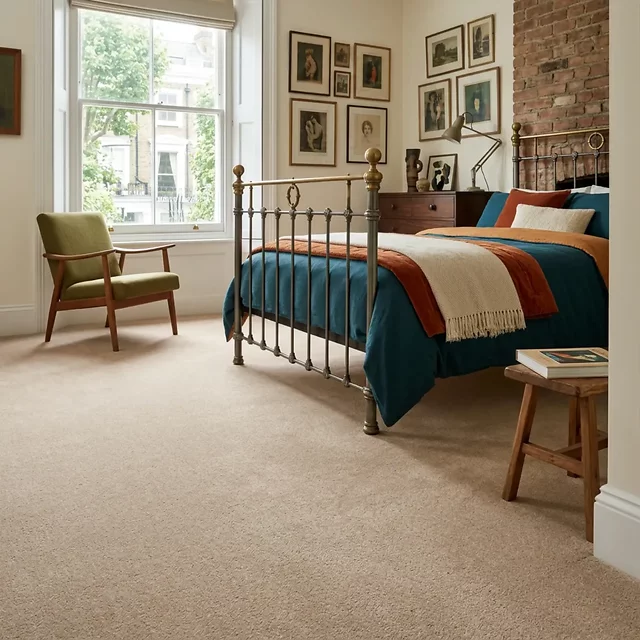
Small Bedroom
Soft carpet in a pale neutral, or light wood flooring with a warm rug. Either creates an inviting feel without crowding the space. A light greige with gentle green undertones, Saxonia Putty carpet is the perfect pale neutral for a calm, relaxing bedroom.
A Quick Word on Finish
Satin and low-sheen finishes are ideal for small spaces. They reflect light gently, hide everyday wear, and avoid the harsh glare of high-gloss surfaces. Matte finishes are fine too, but you'll lose a little of that light-bouncing benefit.
Ready to make your small space feel bigger?
The right floor can completely change how a room feels, and the easiest way to get it right is to see samples in your own light before you commit. Order free samples and compare pale tones, grain patterns, and finishes against your walls and furniture at home.
If you're not sure where to start, our team is happy to help you narrow it down: just get in touch and we'll point you to the ranges that suit your room best. Or explore the full range and shortlist your favourites.
FAQs
What flooring makes a small space look bigger?
Light coloured flooring with wide planks makes a small room look bigger. Pale oak, soft grey, and light stone effects reflect natural light back into the room, while fewer seams across the floor create a sense of openness and continuity. A satin or low-sheen finish adds to the effect without looking clinical. Browse our light wood effect laminate range for options that suit compact spaces, or get inspired with our light wood flooring ideas.
What is the rule of three in flooring?
The rule of three means sticking to three coordinating tones across your floor, walls, and main furniture pieces. It keeps a compact space calm and cohesive, rather than visually cluttered. You can also apply it within the flooring itself by choosing three shades from the same colour family. This approach works especially well in open-plan areas where different zones need to feel connected.
Which direction should I lay LVT planks in a small bathroom?
Lay LVT planks parallel to the longest wall in a small bathroom. This elongates the room visually and creates a seamless flow from the doorway inward. For very square bathrooms, a diagonal lay can add a sense of movement. Check that your chosen product carries a suitable slip rating for wet areas before fitting. Explore our LVT range designed for bathrooms.
How do I clean SPC flooring?
Sweep or vacuum regularly, then use a damp mop for marks. Avoid abrasive cleaners and harsh scourers. That very low-maintenance routine is one of the main reasons people choose SPC.
What is the best flooring for a small space?
Light coloured laminate or LVT in wide planks tend to work best. These materials reflect light, reduce visual breaks across the floor, and suit most rooms in the home. Look for an AC4 rating or above for busier areas, and choose a wear layer of at least 0.3mm for LVT. Our LVT collection has plenty of light tones to choose from.
Do lighter or darker floors make a room look bigger?
Lighter floors make a room look bigger. They reflect light around the space and create a softer, more open feel. Dark floors absorb light and can make a compact room feel heavier. If you prefer a darker tone, balance it with light walls, pale soft furnishings, and good natural light to stop the room feeling closed in. Our light oak flooring is a popular starting point.
How long does SPC flooring last?
With regular cleaning and a little care, SPC flooring can last around 20 to 30 years. Using furniture pads and avoiding abrasive cleaners will help it stay looking good.
Does herringbone wood flooring look good in a smaller space?
Herringbone can look lovely in a small room if you keep the planks light and the block size modest. Large, dark herringbone blocks can feel too busy and close a room in visually. Pale oak or soft grey tones in a smaller block pattern strike the right balance between character and calm. A diagonal herringbone can also draw the eye outward and make the room feel more generous. See our herringbone flooring styles for inspiration.
Ready to give your small room a bigger feel? Order free samples, compare light tones in your own light, and see how the right colour transforms the space before you commit.