

How to Choose the Best Carpet for a Living Room
- 20 Mar 2026
- Adrian Marsh
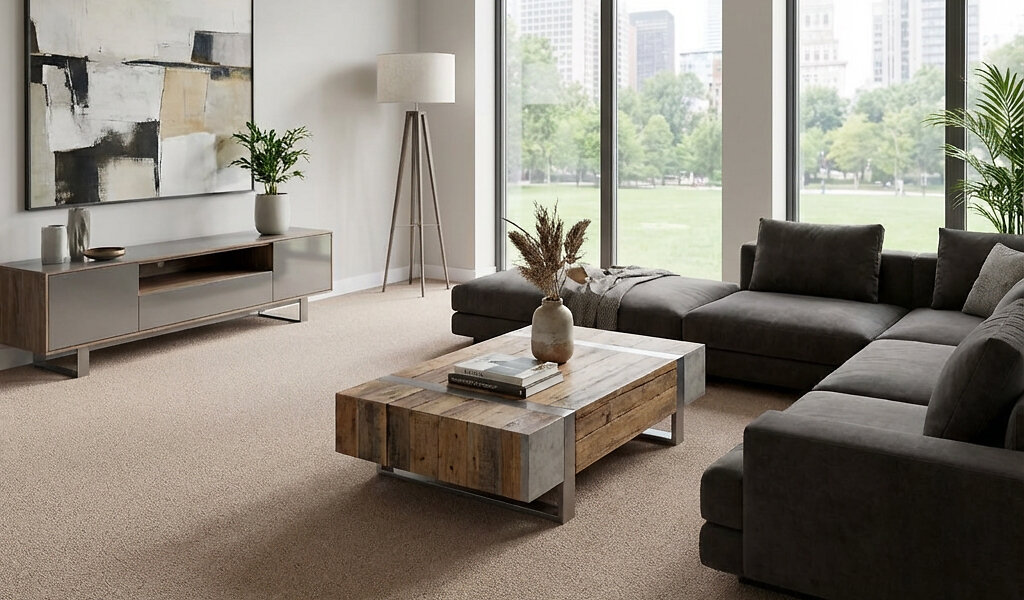
Comfort? Check. Aesthetics? Check. Easy to clean? Check. We ask a lot from our living room carpet.
The right carpet creates the atmosphere for the whole room. Whether you like sleek modern style or a cosy traditional feel, you can achieve the look you want with carpet. It softens sound and makes your space feel more inviting. The living room is the heart of the home, so it makes sense to fill it with love, warmth, and comfort.
This guide will help you choose a living room carpet that the whole family will love while lasting the test of time.
Ready for a new carpet? Shop our wide range of living room carpets with free samples and fast delivery.
What Makes a Good Living Room Carpet?
Looks alone aren't enough. A living room carpet has a lot to cope with: foot traffic, furniture, pets, the odd spill, and everyday wear all add up. Choosing the right one means thinking beyond colour and focusing on how the room works day to day.
“The right carpet transforms a room. It is not just about colour or material. It is how it feels underfoot and performs day to day.”

Paul Humphries
Managing Director, Best4Flooring
That starts with understanding the balance between softness and durability. A carpet that feels great underfoot but shows wear too quickly will only end up being replaced sooner. On the other hand, something built to last but uncomfortable to live with misses the point of the room entirely.
Pile type, fibre choice, and colour all play a part here. Some carpets bounce back better after being walked on. Others hide marks and footprints more effectively. Getting these details right makes the difference between a carpet that still looks good years down the line and one that feels tired far too soon.
A good living room carpet should fit your lifestyle as comfortably as it fits the space.
Choosing the Right Pile Type for Your Living Room
Pile type has a bigger impact on how a carpet performs than most people realise, affecting how carpet feels, wears over time, and the amount of effort needed to keep it looking good.
In living rooms we're looking for balance: you want a comfortable carpet that doesn't flatten too quickly or show every footprint.
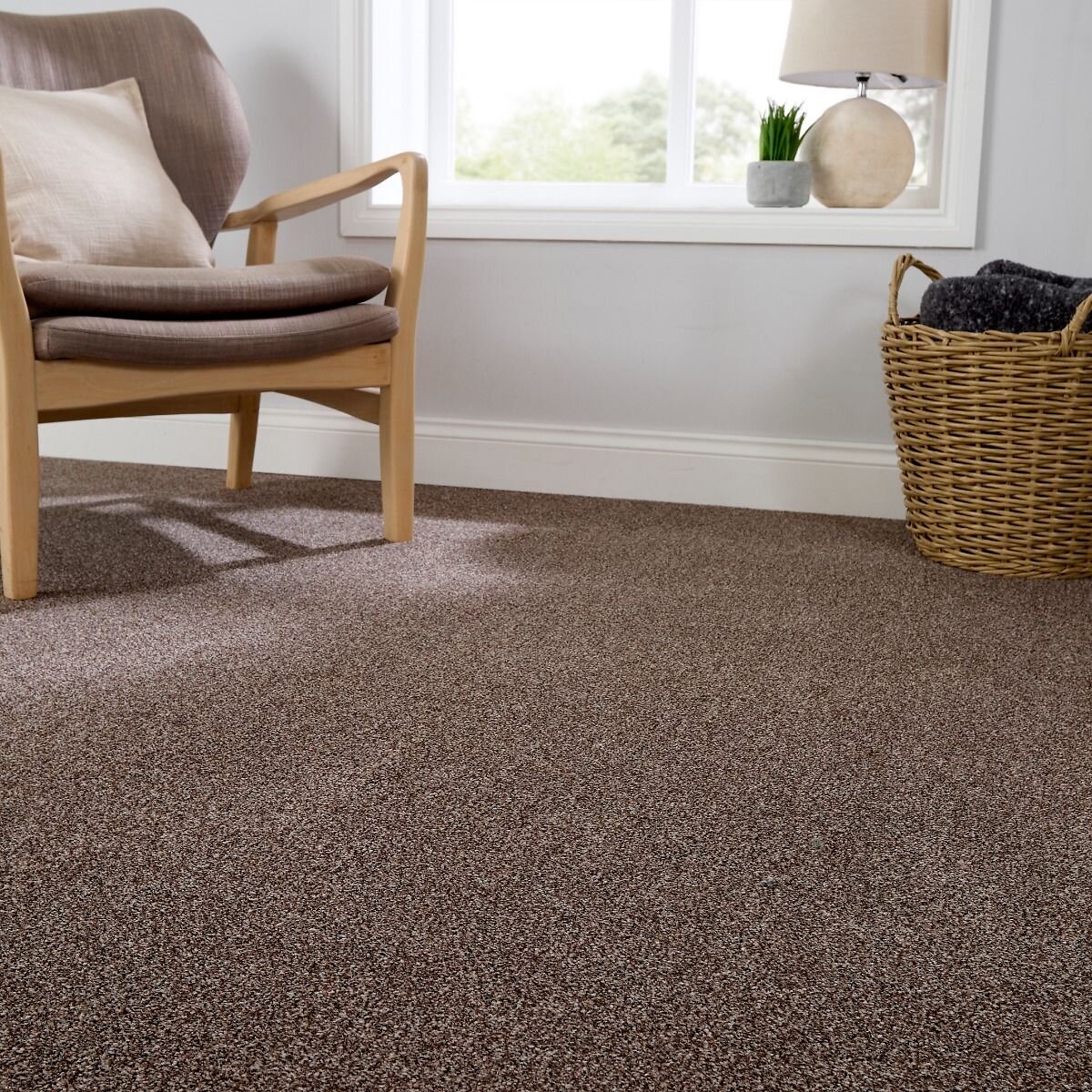
Twist pile carpets are a popular choice for this reason. Their fibres are tightly twisted, which helps them spring back after being walked on. They handle high traffic areas well and are forgiving when it comes to marks and shading.
A good example is the Leo Twist Oreo Carpet, which offers a tight, resilient pile.
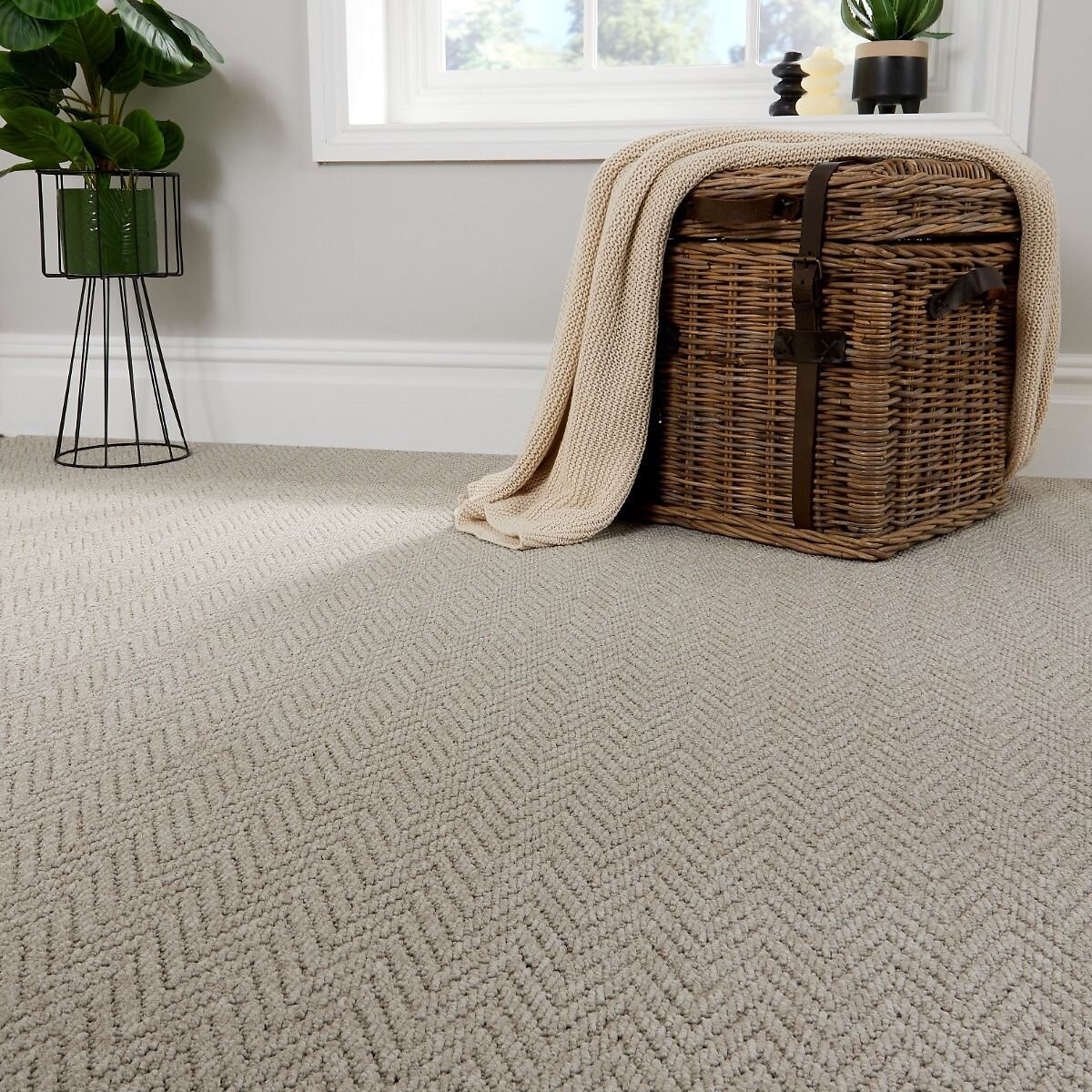
Loop pile carpets, such as Berber styles, are harder-wearing and hold their shape well. Loop carpets work especially well in busy living rooms, but feel firmer underfoot and the looped fibres can snag if you have pets with claws. See our guide on choosing the best carpet for pet households for more advice.
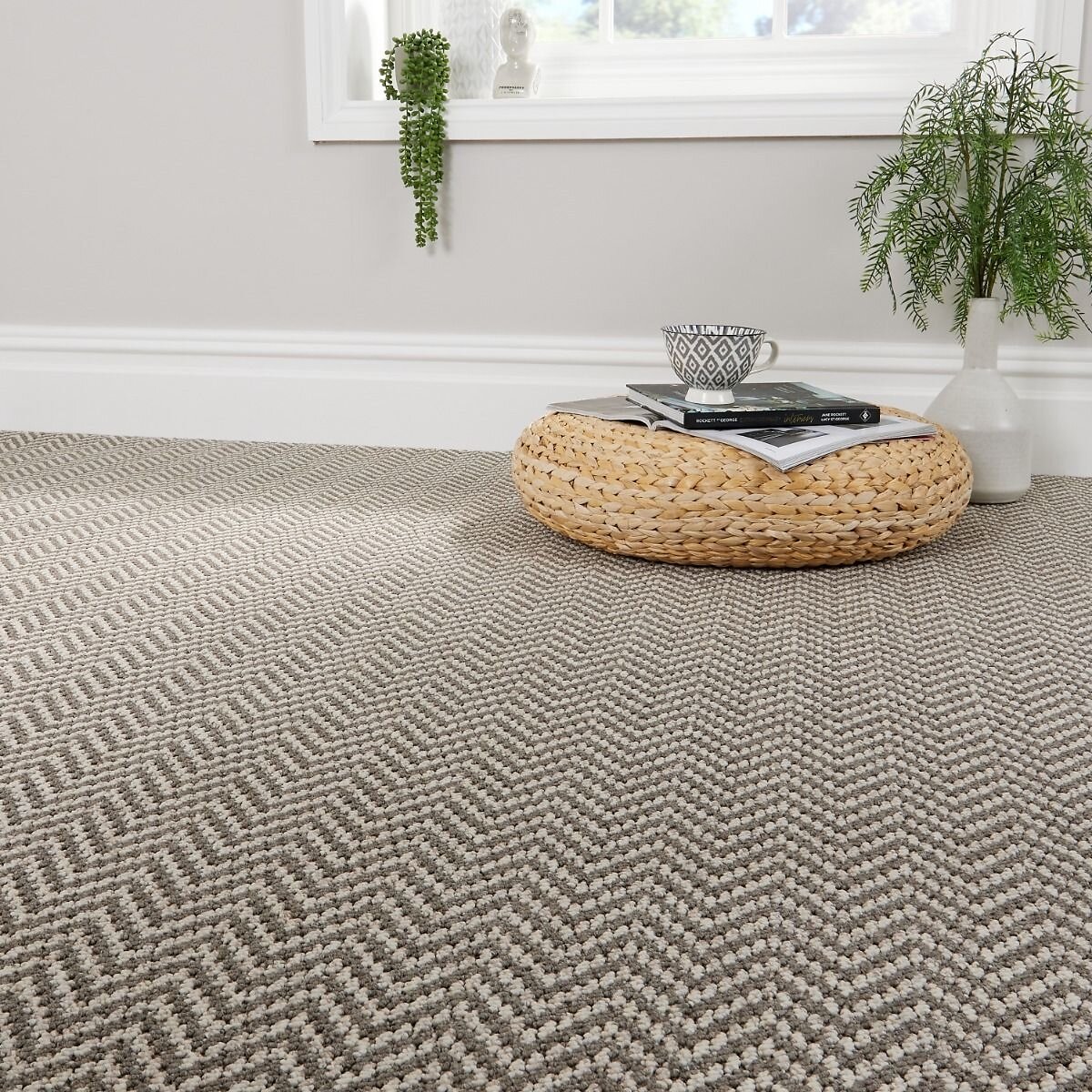
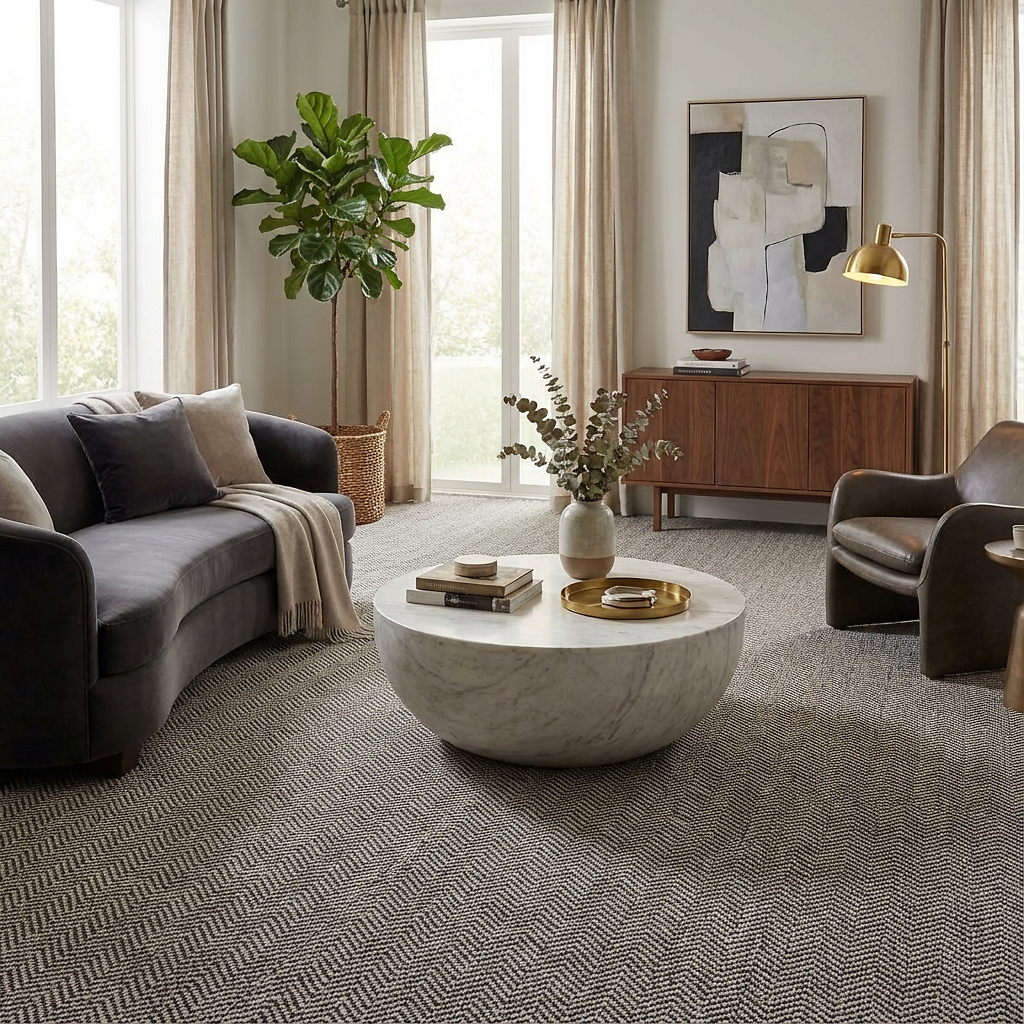
Styles like the Odin Ivar Chevron Berber Carpet help disguise marks and movement while adding visual interest.
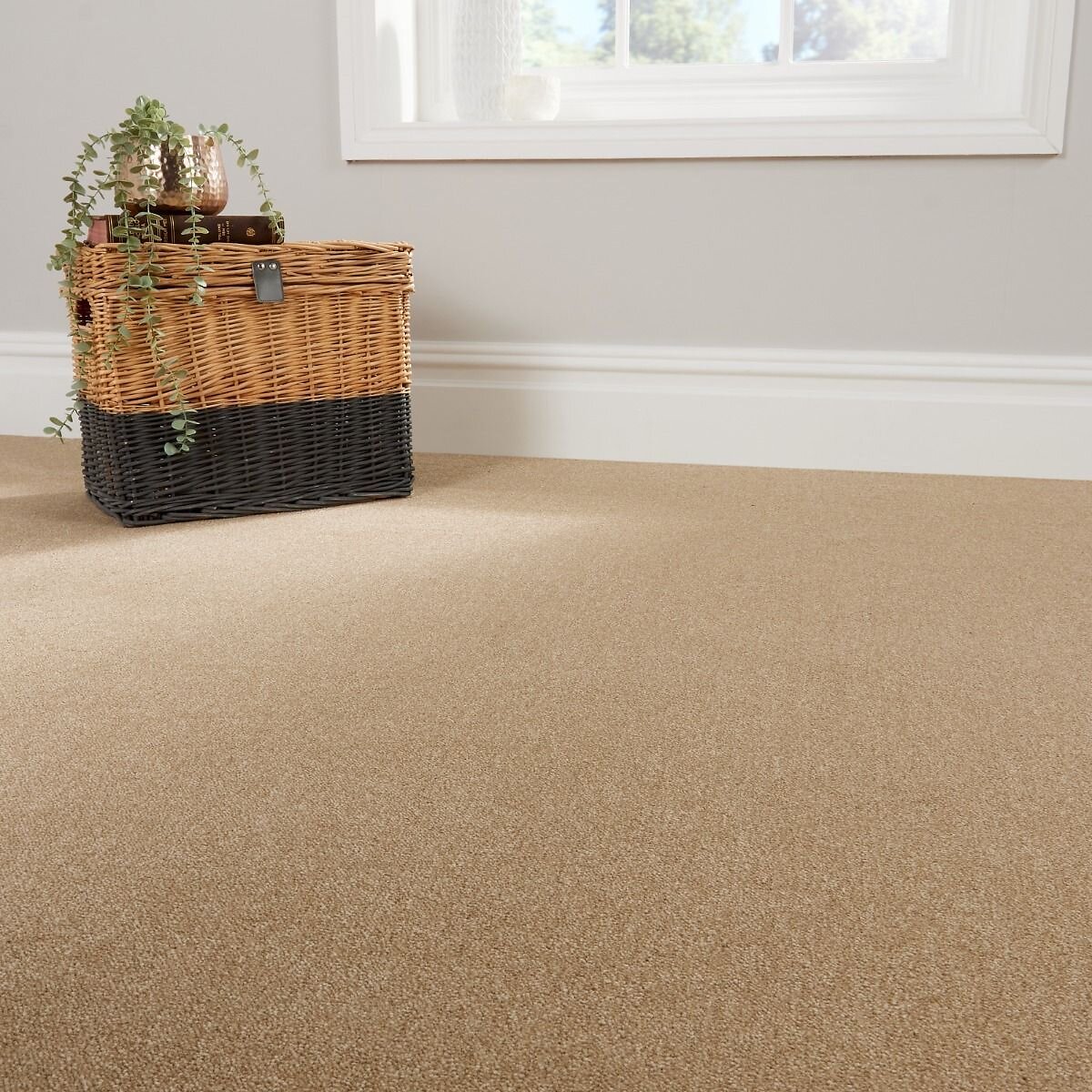
For a softer feel, saxony and deep pile carpets feel more luxurious underfoot. High pile carpets such as the Cosy Saxony Stardust Carpet suit quieter 'comfort-first' spaces, but they do tend to show footprints more easily than shorter piles.
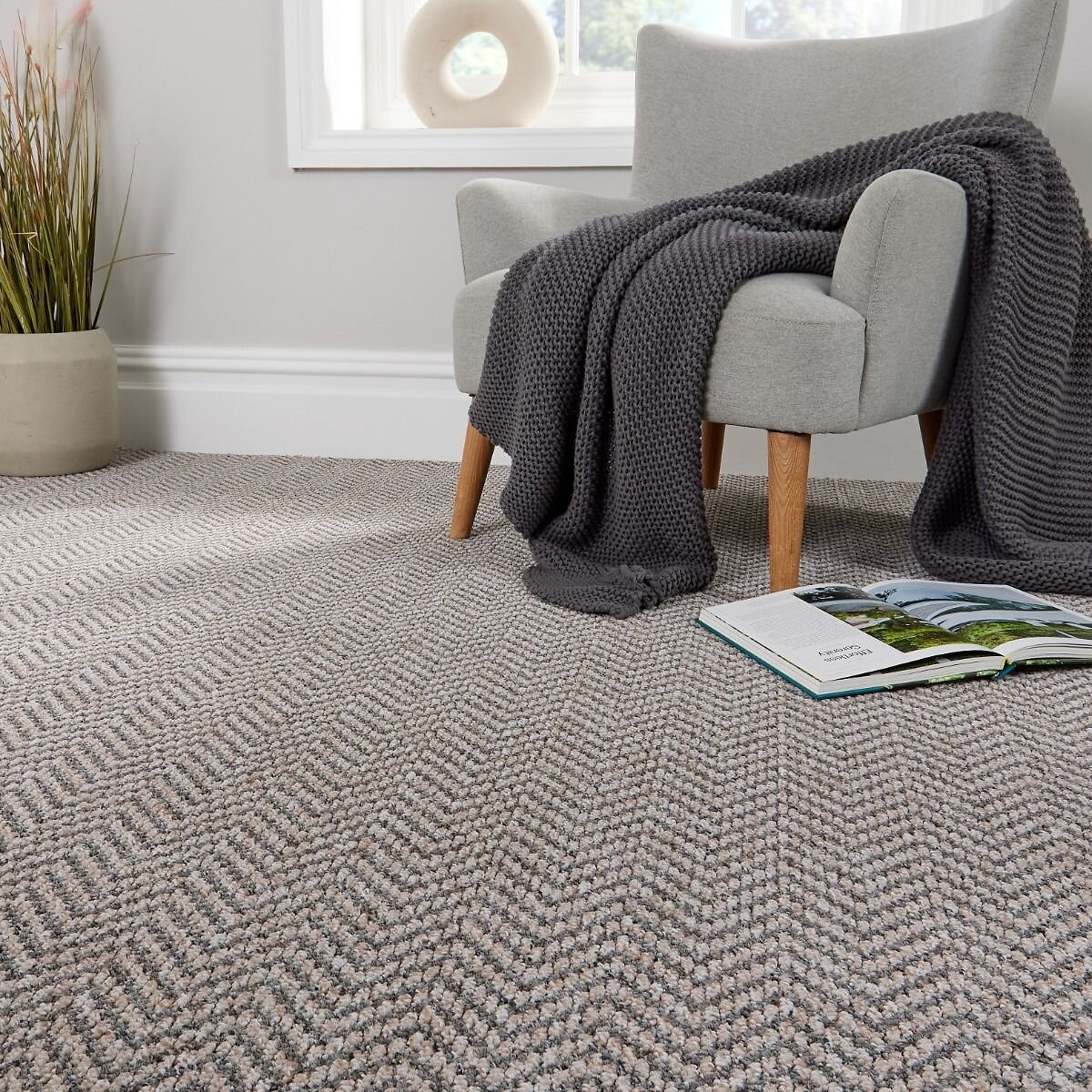
Patterned or textured piles can also be worth considering. They help disguise footprints and everyday marks; a practical option if your living room sees a lot of use.
Patterned loop carpets, like the Pattern Play Greige Zigzag Loop Pile Carpet, sit somewhere in the middle, the texture and design helping to hide wear and shading.
The key is matching the pile to how the room is actually used. A pile that suits your lifestyle will stay looking better for longer, with less effort. See our guide to different types of carpet to help you choose.
Choosing the Right Carpet Materials
Fibre choice is the next decision that really affects how a living room carpet performs over time - it affects how soft the carpet feels, how much effort it takes to keep it looking good and how long it lasts.
Most of our living room carpets fall into two fibre types: polypropylene and polyester. Both are synthetic, widely used in modern homes, and suit living rooms well.
Polypropylene carpets for everyday living rooms
Polypropylene is the most common fibre used in living room carpets, and there’s a reason for that. It’s hard wearing, colourfast, and naturally resistant to stains. Spills tend to sit on the surface rather than soaking in straight away, which makes everyday accidents easier to deal with.
This makes polypropylene a strong choice for busy living rooms. Homes with children, pets, or regular visitors love how forgiving it is. In terms of feel, polypropylene can vary. Some options are firm and practical, others are surprisingly soft underfoot, especially when paired with a deeper pile or good underlay.
Polyester carpets for added softness
Polyester carpets are often chosen for comfort-first rooms as they tend to feel softer and warmer underfoot. They also handle colour well and can offer a richer look in certain shades.
However, polyester is usually better suited to lower or moderate traffic living rooms. It doesn’t always recover from compression as well as polypropylene, so in very busy spaces it may show wear sooner. If your living room is more about relaxed evenings on the sofa, polyester could be a good fit.
A quick note on alternative flooring materials: You may also come across carpets made from natural fibres such as sisal, jute or wool carpets. These materials are often discussed for their natural origins and texture, and they can work well in certain settings.
That said, they are not always the most practical choice for a busy living room. Wool carpets can be more sensitive to moisture, harder to clean, and overall less forgiving. Some also require more specialised maintenance to keep them looking their best.
For most modern homes, synthetic materials remain the more practical option. They continue to be the go-to choice for rooms that are used every day, not just admired.
Best Carpet Colours for Living Rooms
Colour is where most carpet decisions either come together or fall apart. It affects how big the room feels, how often the carpet needs cleaning, and how forgiving it is once the room is actually being used.
It can be tempting to follow trends, but you'll want your carpet to last as long as possible, so the safest approach is to find something you love that suits how the space is lived in. In smaller spaces, a lighter carpet combined with neutral shades can help to make the room feel more spacious, darker carpets can give a more cosy feel, while bold colours or patterns can create a focal point.
Greys and greige tones are popular for a reason. They sit comfortably between warm and cool, work with most wall colours, and hide everyday marks better than very light shades. They also cope well with changing decor, which is useful if you like to refresh a room without replacing the floor.
Warm neutral carpets, such as oatmeal and beige tones, are a good choice if you want your living room to feel calm, bright, and welcoming. They soften the space giving a cosy feel without drawing attention to the floor, which makes them easy to live with and simple to style.
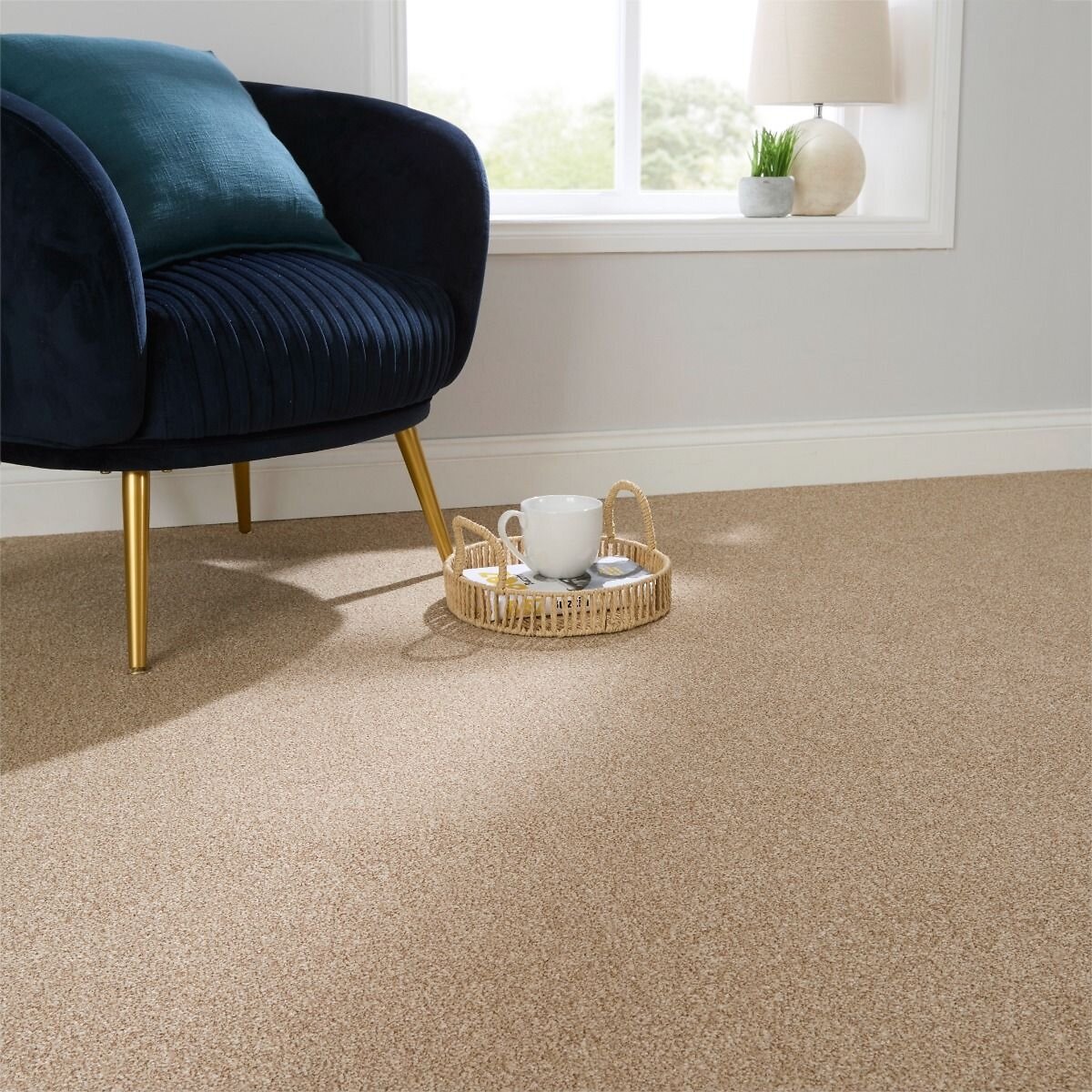
An oatmeal shade works particularly well with natural light, pale walls, and warm textures like wood, linen, and soft furnishings. It brings warmth into the room without feeling heavy and helps the space feel more relaxed overall.
For a living space that's more about creating a luxurious feel and atmosphere than hiding heavy wear, warm neutrals are often a safer choice than very pale creams or stark whites.
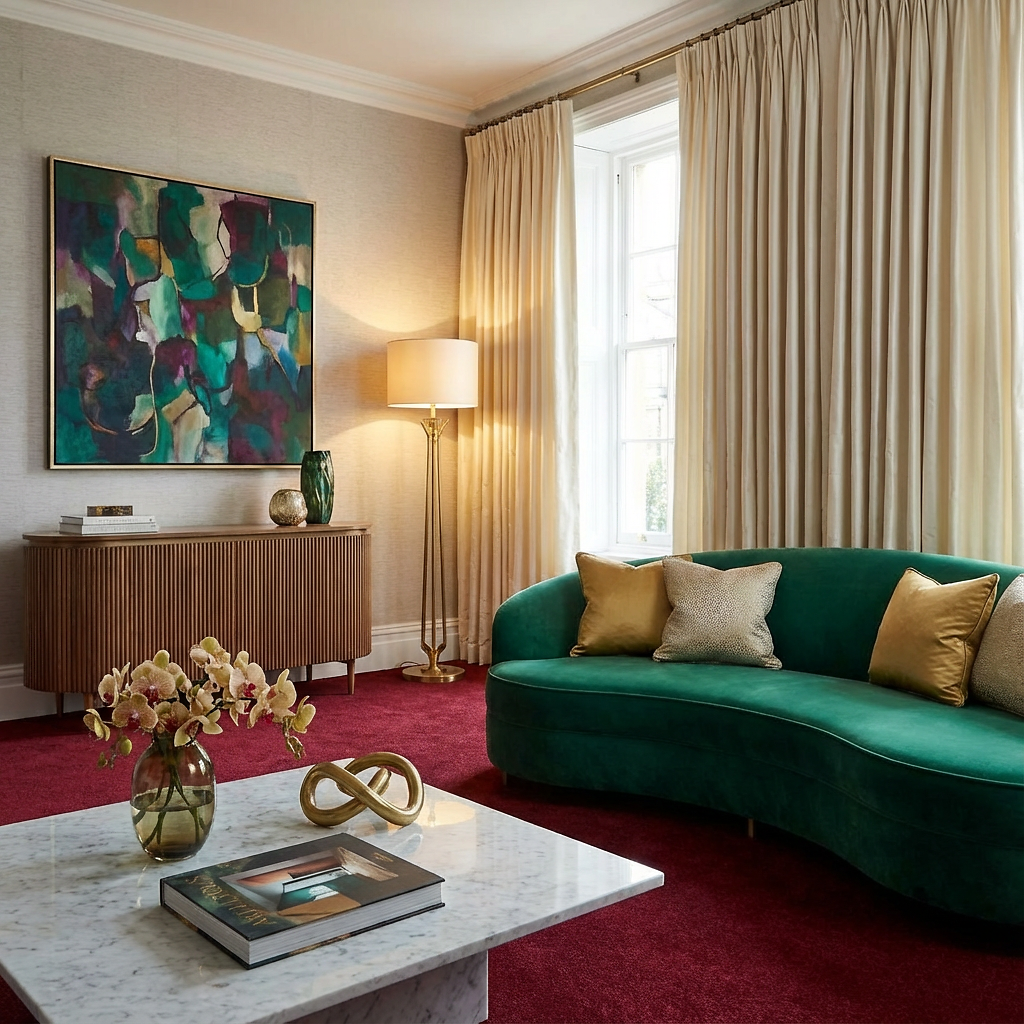
Bold statement colours like burgundy give an opulent feel to even the most drab rooms. Deep reds, charcoals, and other vibrant colours tend to suit spaces where atmosphere matters more than keeping things light and neutral.
Used well, a darker carpet can ground the room and make it feel warm and inviting. It works best when balanced with lighter walls, plenty of natural light, and softer furnishings. Without that balance, darker shades can quickly feel heavy or closed in.
This type of colour choice is less forgiving than mid-tones, but it can be very effective in living rooms designed for evenings, entertaining, or relaxing.
If you're drawn to a darker shade, it's worth viewing a sample in your own space.
Warm neutral carpets, such as oatmeal and beige tones, are a good choice if you want your living room to feel calm, bright, and welcoming. They soften the space giving a cosy feel without drawing attention to the floor, which makes them easy to live with and simple to style.
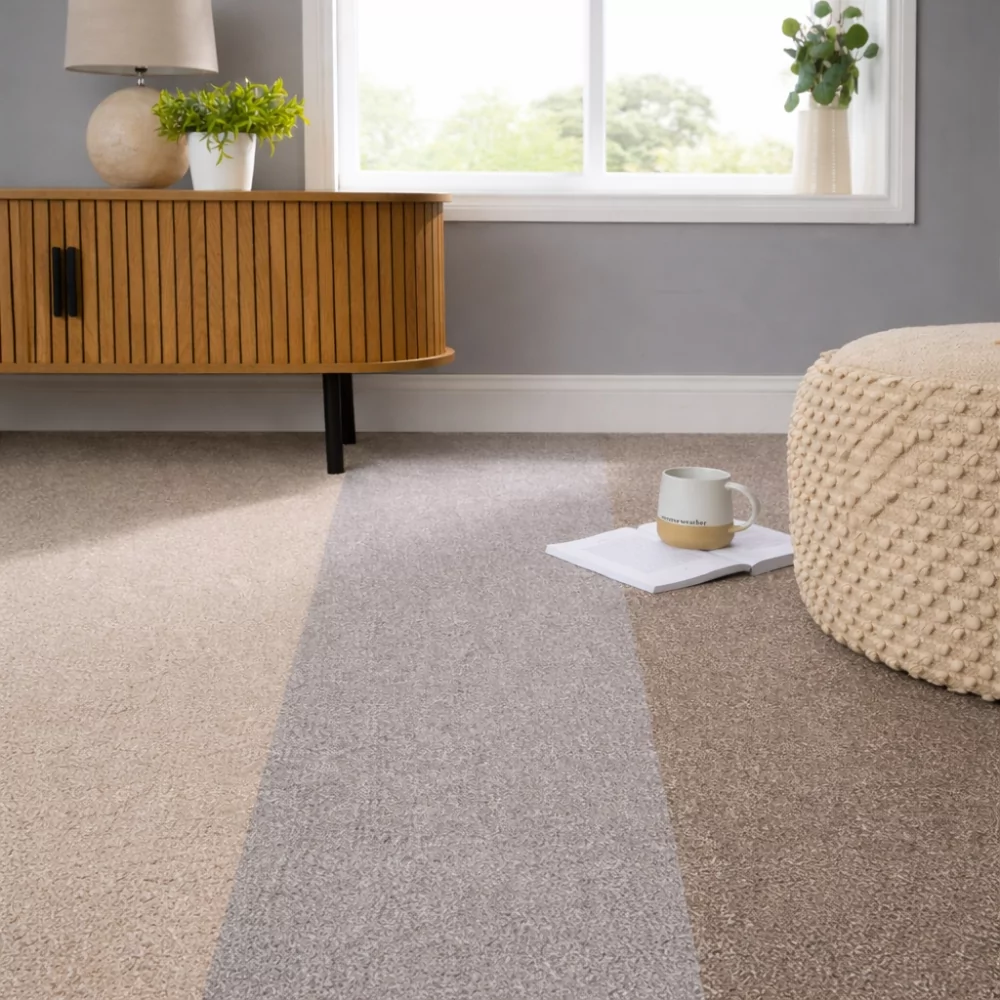
A note on carpet samples: One thing worth keeping in mind is that carpets rarely look the same across the whole floor as they do in a small sample. Light changes, pile direction, and room size all affect how a colour reads once it is fitted.
Choosing a colour that is slightly more forgiving than your first instinct usually pays off in the long run. For tips on finding the right shade for your space, read our guide on choosing your carpet colour.
How to Keep Your New Carpet Looking Good
Even the best carpet will struggle if it's not looked after properly. The good news is that keeping your new carpet in good condition doesn't need to be complicated or time-consuming.
You just need to be consistent.
Regular vacuuming makes the biggest difference. In busy homes, two or three times a week (or even every day) helps stop dirt from settling deep into the pile, where it causes fibres to flatten and wear faster. Focus on high-use areas such as doorways, as these tend to show wear first.
Spills are best dealt with straight away. Blotting rather than rubbing helps prevent marks from spreading or working their way into the fibres. With synthetic carpets like polypropylene and polyester, most everyday spills are easier to manage than people expect, especially if caught early.
Professional cleaning every so often (around 12-18 months) can help refresh the pile and lift dirt that regular vacuuming misses. For most homes, this only needs to be done occasionally - not as a routine chore.
Heavy furniture can take its toll over time. Using furniture cups or occasionally shifting heavier pieces slightly helps avoid permanent dents. Rotating rugs or changing the layout now and then can also spread wear more evenly across the floor.
A quality underlay supports the carpet, improves comfort, and helps it recover better from foot traffic. It also reduces wear by absorbing some of the impact that would otherwise go straight into the carpet fibres.
With the right care, your carpet should continue to look and feel good long after the novelty has worn off. See our step-by-step guide for more tips on how to clean carpets.
FAQs
What's the best carpet for living rooms?
Polypropylene carpets are a top choice because they're stain resistant, colourfast, and easy to clean. Polyester carpets can also work well in low-traffic living rooms where comfort is the priority.
Should your carpet be lighter or darker than your walls?
A carpet that is slightly darker than your walls is common, but the choice is up to you. The best way to decide is to view samples in your own home, as natural light can change how both wall and carpet colours appear at different times of day.
How much does carpet cost for a living room?
The cost of carpet varies depending on the style, fibre, and pile type. At Best4Flooring you'll find carpets for less than £12.99 per square metre, with underlay and fitting costed separately. Avoid velvet carpets if you're on a budget, as these can be much more expensive!
Are natural fibre carpets suitable for living rooms?
Natural fibres like wool carpets are often less forgiving than synthetic materials and tend to be more sensitive to moisture and staining. Synthetic carpets are generally a more practical choice.
What are the alternatives to carpet for a living room?
Common alternatives include laminate flooring, luxury vinyl tile (LVT), and sheet vinyl. They are easy to clean and hard wearing, but they can feel colder and noisier than carpet. Carpet is the warmer, quieter choice for living rooms where comfort matters most.
Which carpet colour is best for a living room?
Neutral colours like greys, greige tones, and warm beiges are the easiest to live with. They work well with most décor styles and hide everyday wear more than very light shades. Patterned or textured neutrals can also help disguise footprints and shading.
What's the most durable carpet for a living room?
Twist pile carpets are one of the best carpet options. Their tightly twisted fibres help them bounce back after being walked on and reduce the appearance of footprints and furniture marks. Cut and loop carpets are also hard wearing, although they can be less suitable in homes with pets. Low pile carpets are better in these areas than a plush pile, which are more suited to quieter rooms.
What is the most popular carpet style right now?
Textured carpets in neutral tones like mid-tone greys, warm beiges, and subtle patterns remain popular. Browse our guide for stylish carpet ideas and inspiration to help you choose the perfect look for every room.
Do patterned carpets work in living rooms?
Yes, patterned carpets can work very well. Subtle patterns and textures help disguise wear, footprints, and shading, making them a good option for rooms that are used frequently while still adding visual interest.
Related Posts