

The Best Carpet for Stairs: A Complete Guide
- 13 Mar 2026
- Sam Jackson
Stairs are some of the most used areas in any home. They take a real beating from high traffic, wear and tear, and constant use on a daily basis. Over time, your stair carpet can start to show signs of age sooner than other flooring in your home.
Choosing the best carpet for stairs means getting the balance right between durability, safety, and style. The right carpet adds warmth, cuts down noise, and creates a smooth flow from hallway to landing. It also lasts longer and needs replacing less often.
Let's learn what makes a great choice for stair carpet, or start browsing stair-ready carpets today.
Why Choose Carpet for Stairs?
Stair carpets are not just about looks. They add grip, which helps prevent slips and falls. They also reduce noise and provide insulation, which makes your home warmer and quieter. Carpeted stairs feel more comfortable with that extra bit of cushioning.
Carpeting also brings warmth and character to your home, and links the hallway, landing, and staircase with a unified feel - what's not to love!
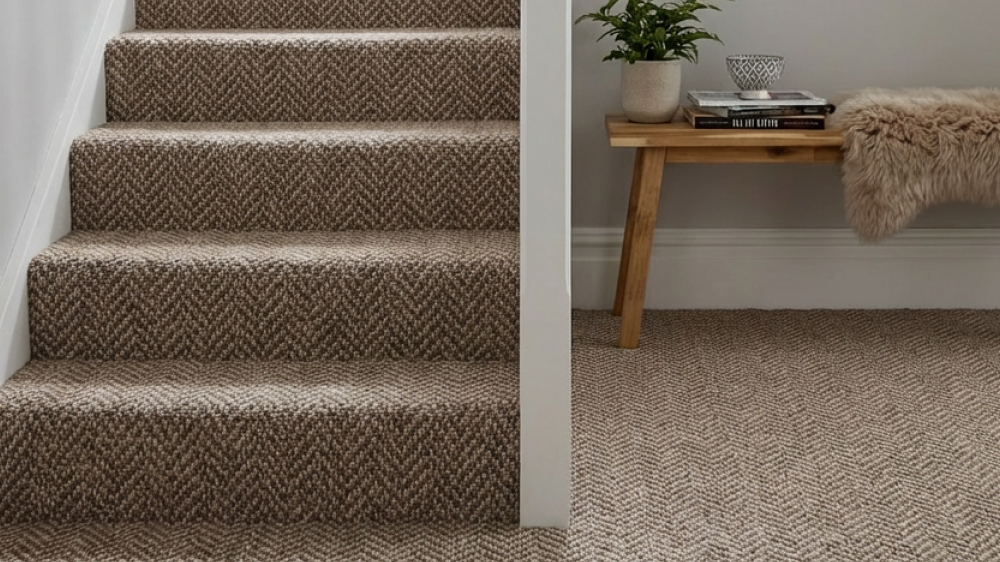
Best Carpet Materials for Stairs
We know it can be confusing to compare different types of carpets. Here's a quick guide on what to look for.
| Material | Key Benefits | Considerations | Best For |
|---|---|---|---|
| Polypropylene Stair Carpets | Excellent stain resistance, budget-friendly | Can flatten sooner than wool or nylon | Homes with pets or young children |
| Polyester Stair Carpets | Soft, colourful, good value | Not as durable as nylon | Low traffic stair areas where comfort comes first |
| Blended (Wool + Nylon) Stair Carpets | Strong, resilient, easy to care for | Mid to higher price range | Families wanting durability and comfort |
| Nylon Stair Carpets | Very durable, keeps colour, stain resistant, affordable | Slightly less natural feel than wool | High traffic stairs and hallways |
| Wool Stair Carpets | Naturally durable, breathable, resilient, insulating, soft underfoot, flame-retardant | Higher price point | Busy homes that want long-lasting quality |
Carpet Pile Type and Height
Both the pile type and the pile height matter on stairs. Aim for a total height of around 10 to 12 mm (including the backing) to avoid trip hazards, and choose the pile type that best suits your home.
“When selecting a stair carpet, I always encourage customers to prioritise density and fibre quality. High-density, low-pile options hold up well on busy staircases.”

Paul Humphries
Managing Director
- Twist pile carpets are the most popular choice for stairs. The twisted fibres hide footprints and wear, so they work well in high traffic areas. They are also more resistant to crushing and flattening.
- Loop pile carpets, including berber carpets, have tight loops that make them strong. They are durable and resist flattening well. However, they can be more prone to snagging, so they may not be the best choice of carpet for pet owners.
- Low-pile carpets, like the Leo Twist Range, are the most stable. They are easy to clean, cope well with heavy foot traffic, and short piles also resist flattening as there is less fibre height to collapse.
Stair Carpet Ideas
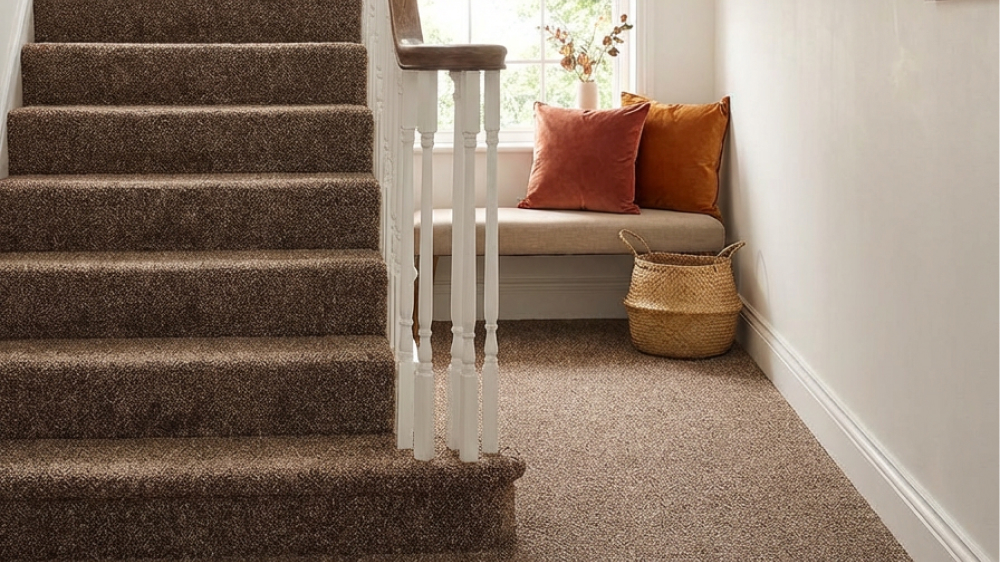
Often, our stairs are the first thing people see when they come into our home and set the tone for the rest of the space. From bold colours to intricate patterns, today’s stair and hallway carpet ideas mix classic style with unique personality and flair.
Colour Choices
You may choose to 'colour-drench' the space for a modern, pulled-together look - matching your walls, carpet, bannisters and even skirting boards in a single colour. Neutral tones like beige or grey work well for this, while staying versatile.
Mid-tone colours help to hide stains and dirt (ideal for busy households with pets!), while bolder designs in rust, mustard, or deep red add personality and a sense of drama to your space. See our blog on choosing the best carpet colour for more ideas.
Stripes and Herringbone
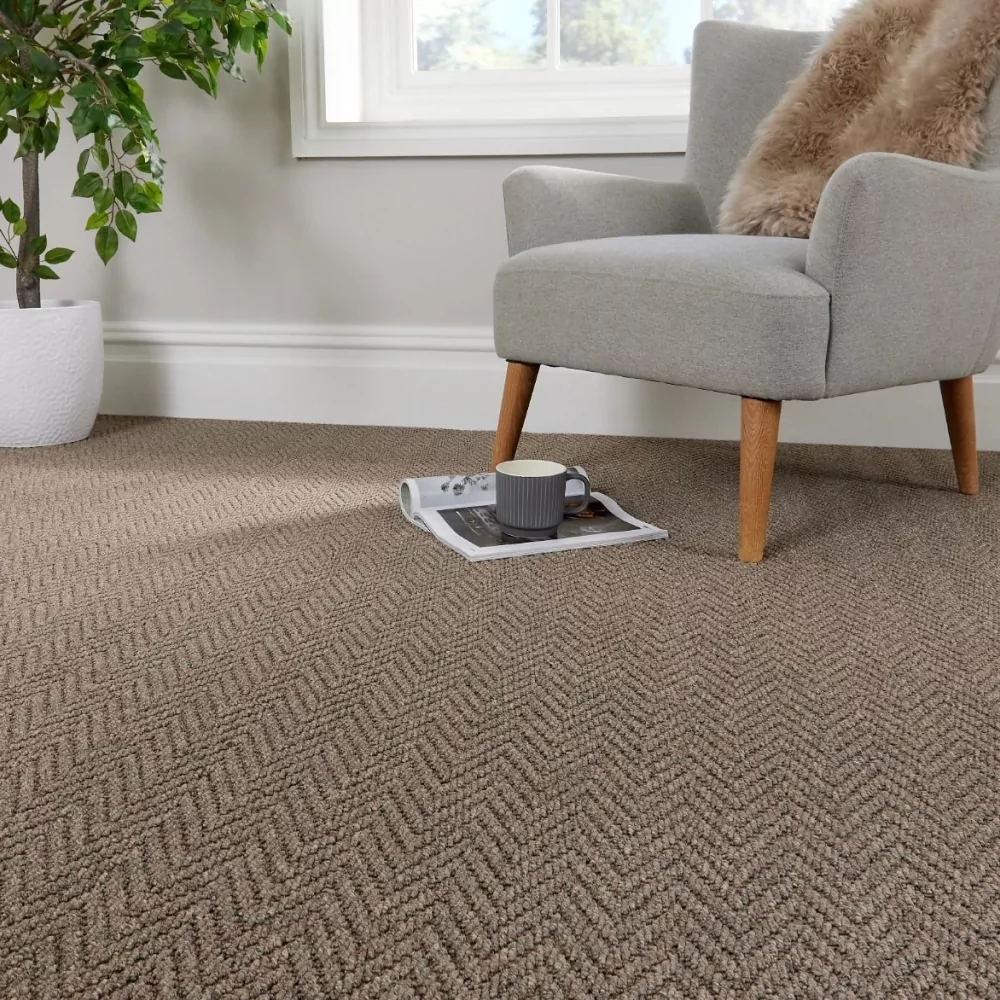
When it comes to patterned carpets, herringbone remains endlessly popular for its subtle movement and refined look. Striped stair carpets can make a staircase appear longer; vertical striped carpets draw the eye upward, which helps a narrow staircase feel more open. Geometric patterns are another popular choice - find more carpet inspiration on our blog.
Note: Just be careful when choosing a patterned carpet, as it may make the edge of the stair nose harder to see. Go for small, repeating patterns rather than large, bold motifs, ideally featuring low‑contrast patterns in similar tones.
Stair Runners
Stair runners are long strips of carpet fitted down the middle of stairs. They leave borders of exposed wood or flooring for contrast. They suit narrow staircases and can highlight wall colours and accessories. Installation methods like Hollywood (tight over each edge) or Waterfall (draped from tread to riser) suit different homes.
Coordinating Your Stairs and Landing Carpet
The staircase, landing, and hallway should work together visually. Using the same or complementary tones throughout keeps your home feeling larger and more connected. See our blog on hallway flooring ideas for more inspiration.
For more stair carpet ideas, visit our advice centre or compare stair carpet now.
The Importance of Underlay
A good quality underlay is important on stairs. It increases comfort, supports long-term performance, and improves durability. It also helps reduce noise and limits wear over time.
Always buy an underlay suitable for stairs, which are typically made of rubber or high-density PU foam. Avoid thick 'luxury' underlay, which may be suited to comfy bedrooms but doesn't provide the flexibility we need for stairs. See our guide on choosing carpet underlay for more advice.
Caring for Stair Carpets
Did you know that how you look after your carpets can make a big difference to how long they last? Regular vacuuming prevents dirt and debris from settling deep into the pile and damaging the fibres. Deep cleaning every 6-12 months will refresh the appearance and help to extend the carpet’s life. Try to keep entrance areas clean to limit dirt transfer throughout your home.
See our guide on how to care for carpets for more advice.
Feeling Inspired?
Your staircase should look good and cope with everyday use. Whether you prefer neutral tones or bold patterns, Best4Flooring helps you find the best carpet for your stairs and landing.
Stair Carpet FAQs
What is the longest-lasting carpet for stairs?
Wool and wool-blend carpets are very durable because they are dense and naturally resilient; however, high-quality synthetic materials can match or outperform wool for wear and stain resistance. Both can offer a long lifespan on stairs when paired with the right construction. View our stair carpet collection for options.
Is dark or light carpet better for stairs?
Mid-tone carpets are a popular choice because they hide soiling and stay timeless, although dark or light shades can also be suitable depending on lighting, décor, and how much you enjoy cleaning! Browse neutral stair carpet colours.
Can I install carpet on stairs myself?
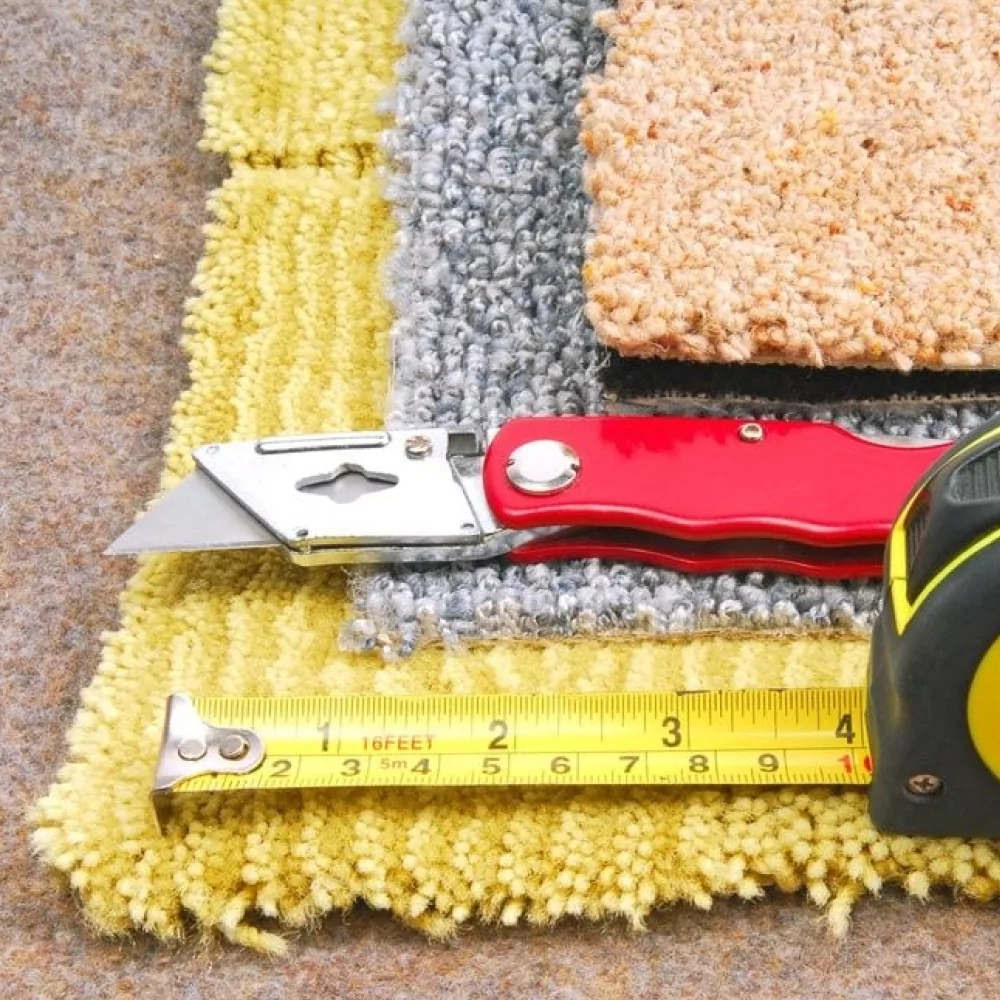
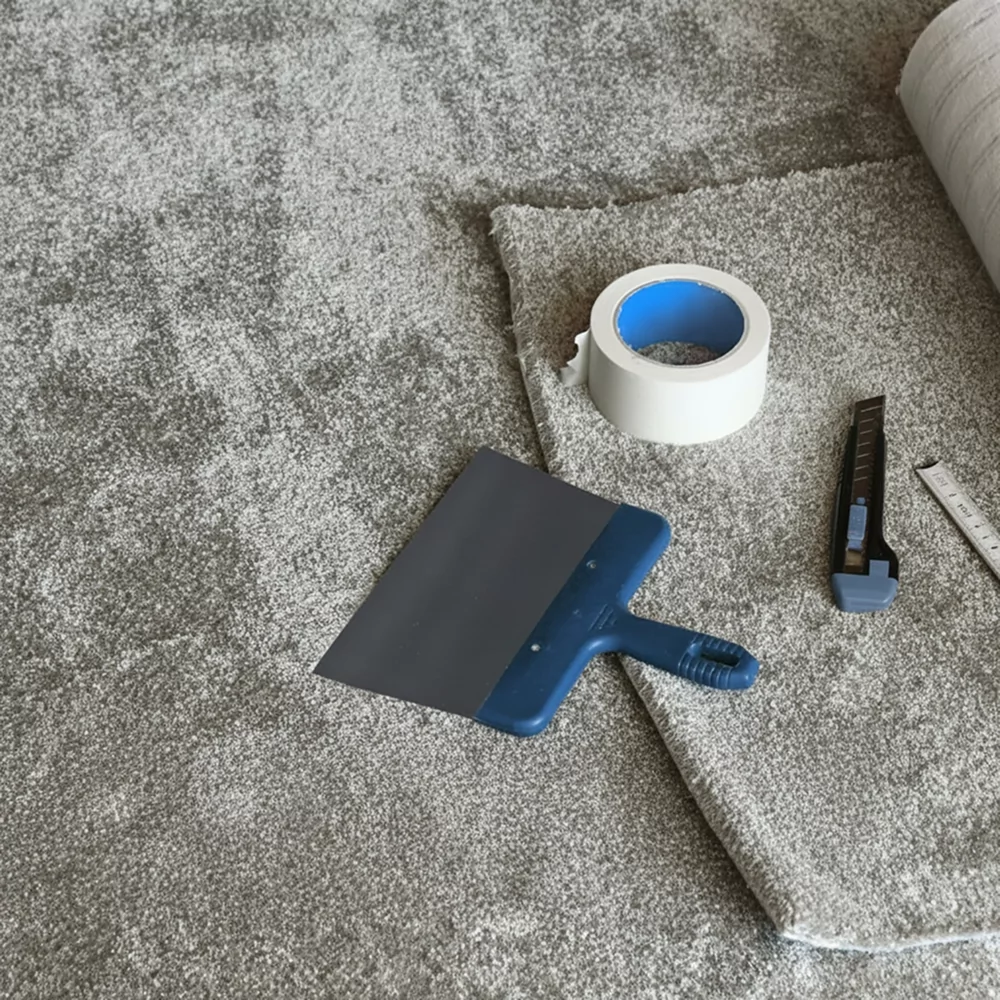
Yes. With the right tools, careful measuring and a healthy dose of patience, it's possible to install carpet as a DIY project. Read our guide on how to install carpet on stairs for all the info you need.
Is 100% wool carpet suitable for stairs?
Yes, provided the construction is appropriate. Wool is strong and elastic, however softer or loosely constructed wool carpets are less suitable than dense twist or loop options.
Should carpet be thick or thin on stairs?
A low-pile carpet, often under 10 to 12 mm in total thickness, is widely recommended for stability and safety on stairs to help reduce movement and wear. See our stair carpet collection for suitable options.
How much does it cost to carpet stairs in the UK?
Many UK homes spend between £120 and £300 on a straight staircase using budget to mid-range carpets, though costs vary with carpet grade, fitter rates and staircase design. Compare affordable stair carpet options.
How much carpet for 14 stairs in the UK?
Most 13 to 15 step staircases with a small landing need around 8 to 10 square metres of carpet, although exact measurements depend on tread depth, riser height, width and any winders. See our full guide to installing carpet in your own home for more advice.
What carpet is best for stairs and landing?
Wool, nylon and twist pile carpets are popular because they balance durability and texture. They help link the stairs and landing visually and manage areas with the most foot traffic. Explore stair and landing carpet.
What is the most durable carpet for stairs?
High-quality nylon and wool blends are strong choices for busy staircases. They resist wear, recover well, and maintain appearance over time.
What is the best carpet for stairs with pets?
Cut pile carpets made with stain-resistant fibres like polypropylene or nylon are often easier to maintain. Loop pile carpets can snag on claws, so many households with pets prefer cut pile. View our guide to pet-friendly carpets for more information.
Do you need underlay for carpet on stairs?
Yes. Underlay improves comfort, stability and lifespan. Some stick-down systems do not use underlay by design, but these are specialist installations. Visit our guide to carpet underlay for more.
What is the best underlay for stairs carpet?
Use firm, dense underlay rated for stairs or heavy traffic to add grip, support and longevity. Read our guide to carpet underlay.
What is the best kind of carpet to put on stairs?
Dense twist pile and certain loop carpets, like berber carpets, perform well because they resist flattening and show less wear. The best choice depends on your household, including children, pets and the overall feel you want underfoot. Browse durable stair carpets.
Related Posts