

What Flooring is Best for a Kitchen?
- 29 Jan 2026
- Sam Jackson
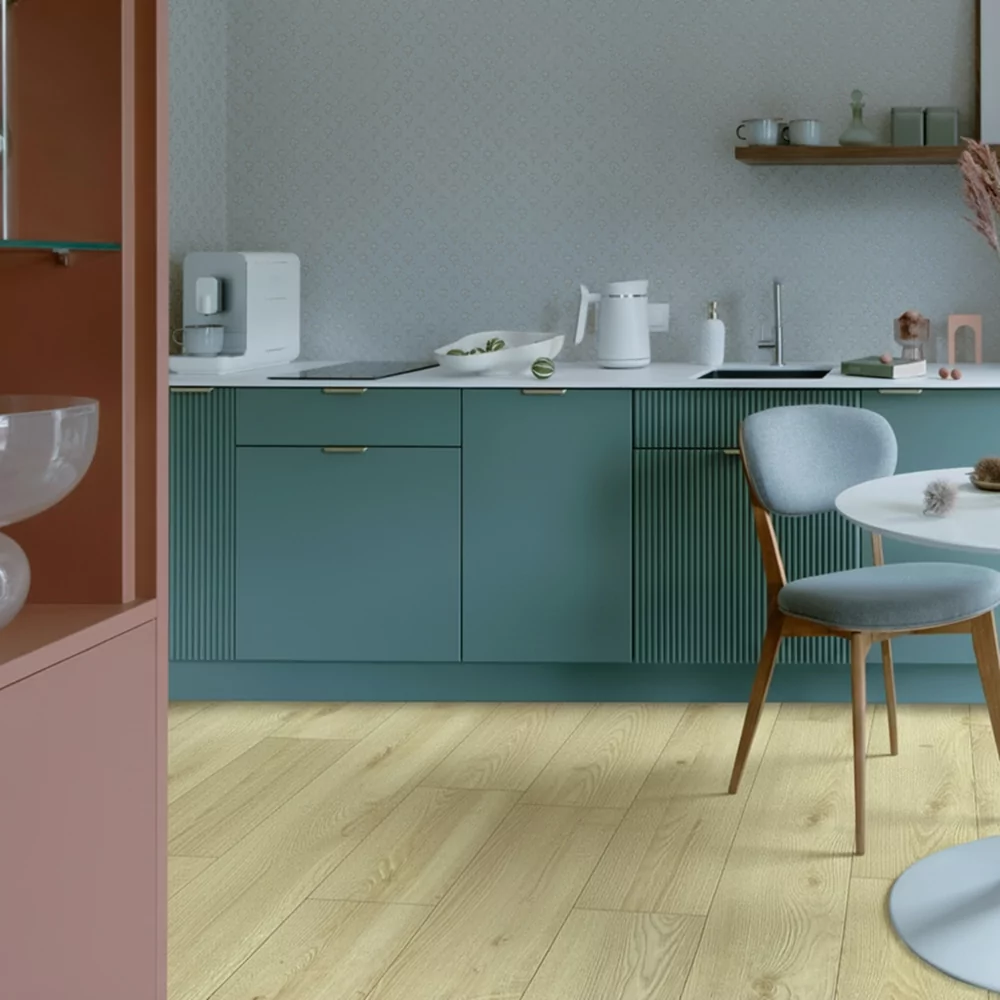
Kitchens take a beating—from spills and splashes to muddy shoes and paws—so the right flooring needs to be tough, waterproof, and easy to clean. This guide breaks down the best options, helping you choose a floor that fits your style, budget, and needs.
Fact: Every kitchen sees mess. Oil splashes, water, dropped food, muddy trainers, and paw prints are all part of the routine. It’s often the room that gets the most use, and suffers the most wear.
That’s why kitchen flooring needs to do more than just look good. It has to handle water, resist stains, stay clean, and stand up to constant daily foot traffic. If you’ve got kids, pets, or just cook often, the floor needs to cope with life, not just sit pretty.
So, what's the best flooring for a kitchen? That all depends on your space, your budget, and how you use the room.
This guide breaks down the most reliable flooring types for kitchens. From water-resistant laminate to luxury vinyl and tile, you’ll get a full comparison with practical insight to help you choose the right one for your home. Let's go!
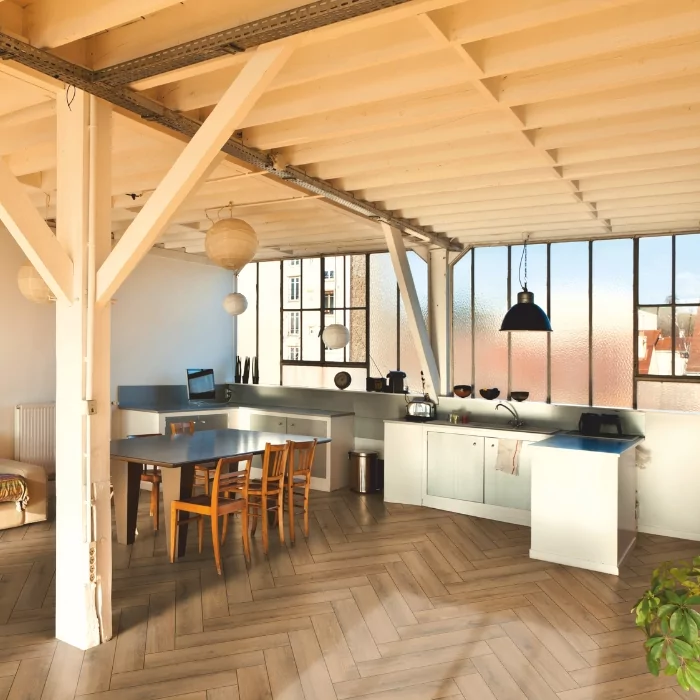
Key Considerations When Choosing Kitchen Flooring
Picking the right kitchen flooring starts with knowing what the space needs to handle. Here’s what to keep in mind.
1. Will It Last?
Let’s start with the obvious. The heart of the home, kitchens are high-traffic areas and all-round tough environments. Hot trays, sharp utensils, chairs dragged back and forth. A good floor should handle the wear and tear of daily life without wearing thin.
If you’ve got a busy household or pets, don’t go light on durability. It pays off quickly.
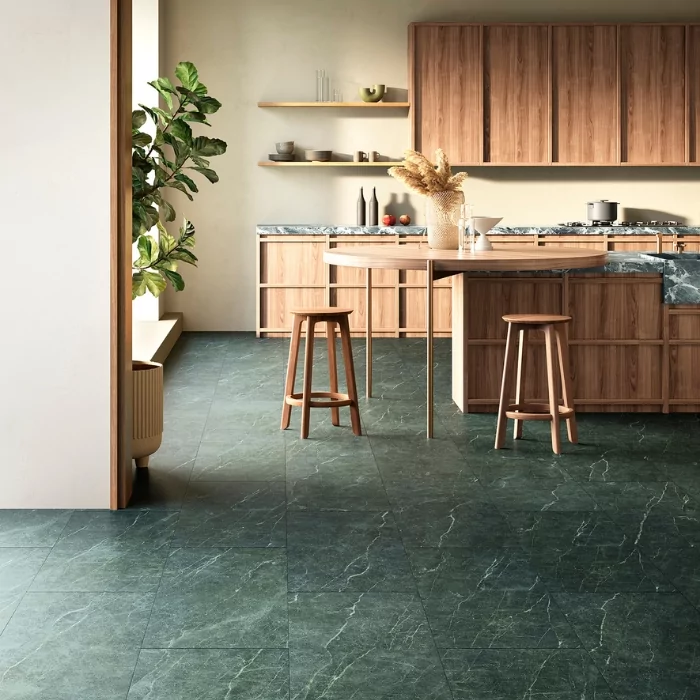
2. Can It Handle Moisture?
Even in a careful home, water gets everywhere. Around the sink, near the dishwasher, under the dog bowl. If your floor swells or stains from the odd splash, it's not going to last long.
- Some laminates are rated water-resistant for up to 48 hours.
- Vinyl tends to be fully waterproof, including around the edges.
- Porcelain tile shrugs off water but needs proper sealing at joints.
If you want zero stress about water damage, waterproof vinyl or specially designed laminate is the safest bet. Just check that the edges are sealed and the joins are tight.
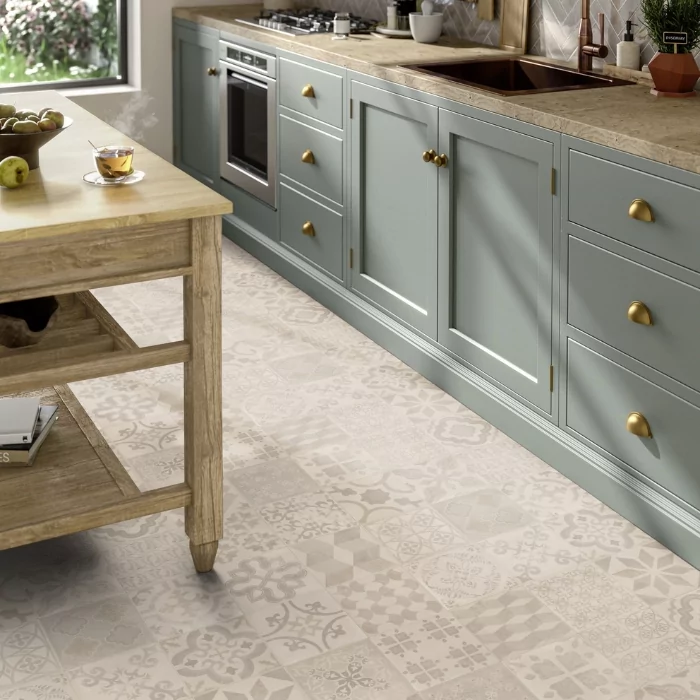
3. What About Heating?
Underfloor heating makes sense in kitchens with hard floors. It takes the chill off and spreads warmth evenly. But you can’t just lay it under anything.
Some materials warp when heated. Others expand and buckle. Always check the flooring spec, or better yet, ask our friendly team! If you're using underfloor heating, pick a floor that’s tested to withstand it long-term. Vinyls are typically solid choices.
4. Is It Easy to Clean?
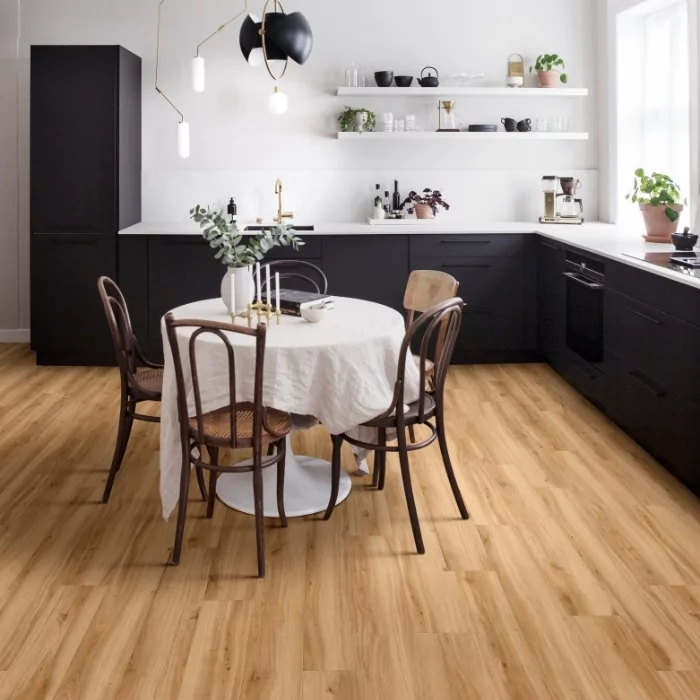
A mop shouldn’t be your best friend. A kitchen floor should clean quickly, with no drama. You want something that doesn’t trap grease or stain if you drop spaghetti sauce.
Avoid:
- Deep textures or grooves that catch crumbs
- Surfaces that need special cleaning products
- Open seams where dirt can gather
Floors with a smooth, sealed surface are usually easiest. Vinyl is strong on this front, simply sweep daily (or vacuum without the brush bar) and occasionally use a damp mop and you're good to go.
5. How Comfortable Is It?
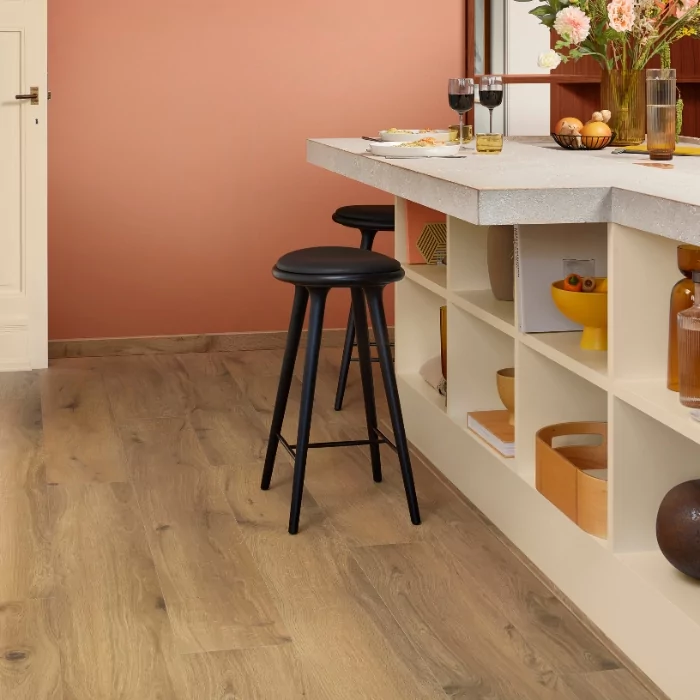
Ever spent a few hours batch cooking? Your feet and legs know when the floor's too hard.
Sheet vinyl flooring has a cushioned backing that gives it a softer, more forgiving feel underfoot. Click-fit LVT and laminate can also be installed with underlay, which helps reduce pressure and add warmth. Some click-LVT such as the Universal Click range already includes built-in underlay. If comfort matters (and it should) steer clear of rigid or cold materials unless you're using underfloor heating.
As for safety, the rule’s simple: smooth + wet = slippery. Look for lightly textured or matte finishes for better grip.
6. Does It Work with Your Style?
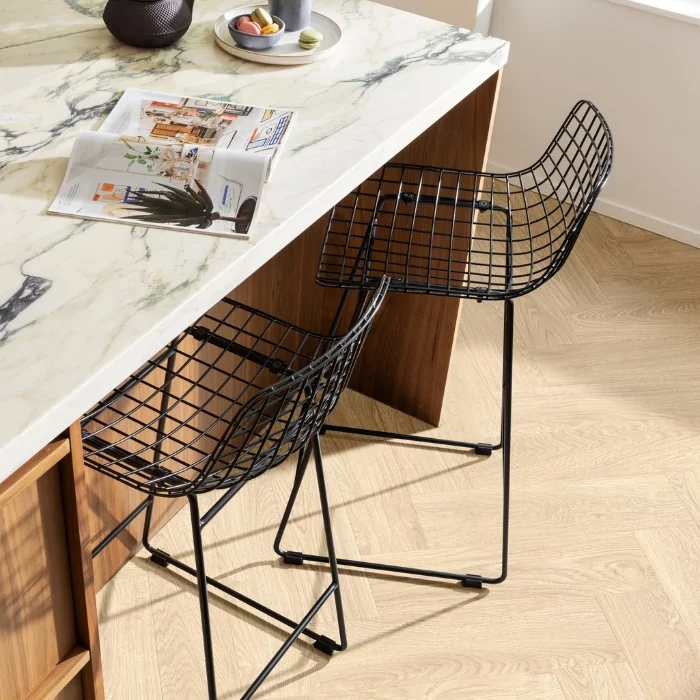
A kitchen floor doesn’t need to shout, but it should belong. The tone, finish, and size of the plank or tile affect how the whole space feels.
You might choose:
- A warm oak-effect plank for a cosy look
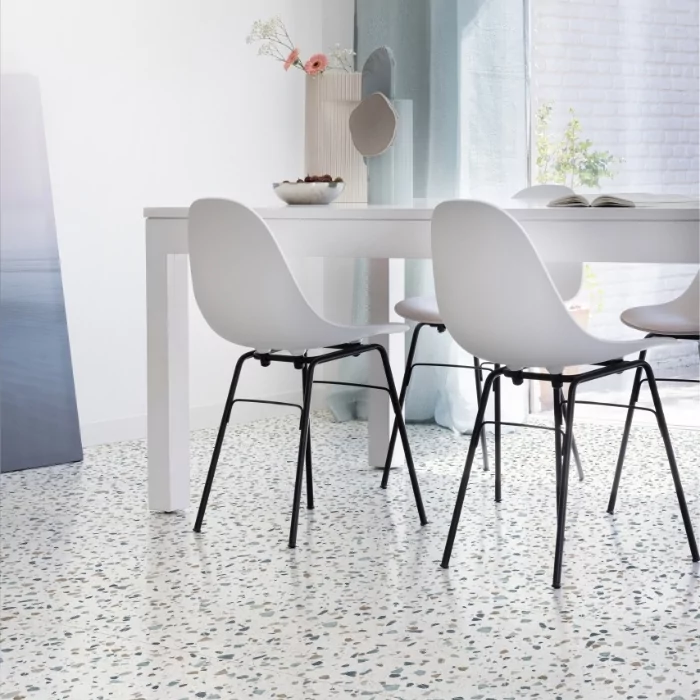
- Stone-look vinyl for something more minimal
- Large tiles for a clean, contemporary layout
Think about cabinet colour, wall finish, lighting and how the room is used. A small kitchen benefits from lighter tones and uniform patterns. Bigger kitchens can handle bolder looks.
7. What Will It Cost You Over Time?
Some floors are cheap to buy but cost you more later in damage, cleaning, or fitting. Others have a higher starting price but keep going for years with barely any fuss.
Instead of thinking of price per square metre, consider:
- Fitting method (click-together or glued?)
- Whether it needs sealing or regular treatment
- Lifespan and warranty
- DIY potential if you're doing the work yourself
Good flooring options made from durable materials pay off over time. A poor choice often ends up being replaced.
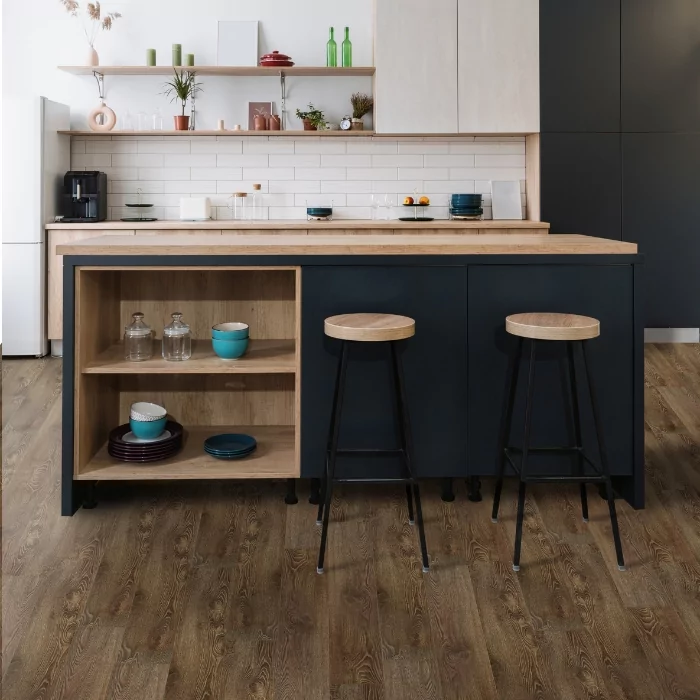
Quick Feature Comparison
| What You Need | Materials That Fit |
|---|---|
| Water resistance | Vinyl, water-rated laminate, sealed tile |
| Scratch resistance | Laminate, rigid vinyl |
| Comfort underfoot | Vinyl, Click LVT or laminate floors with underlay |
| Quick to clean | Laminate, vinyl, smooth tile |
| Style range | Laminate planks, tile effects, stone-look vinyl |
| Works with underfloor heat | Select laminate and vinyl, engineered wood, tile |
| Budget friendly | Sheet vinyl |
Luxury Vinyl Tile (LVT)
Luxury vinyl tile, or LVT, is one of the most practical kitchen flooring options available. It’s built to handle daily mess, looks stylish, and doesn’t complain when things get wet. Some LVT is plank-style. Others are cut into tiles. Both work well in kitchens because they’re strong, stable, and easy to clean.
Why it works in kitchens
- Fully waterproof means no swelling or lifting from spills
- Easy to mop or wipe clean
- Soft to walk on compared to stone or ceramic
- Handles pets, kids, and heavy use without scratching easily
- Works with underfloor heating in most cases
You also get a huge choice of styles: wood looks, stone effects, parquet, even slate. Most types can be fitted with a simple click system or glued down for extra strength.
Styles worth looking at
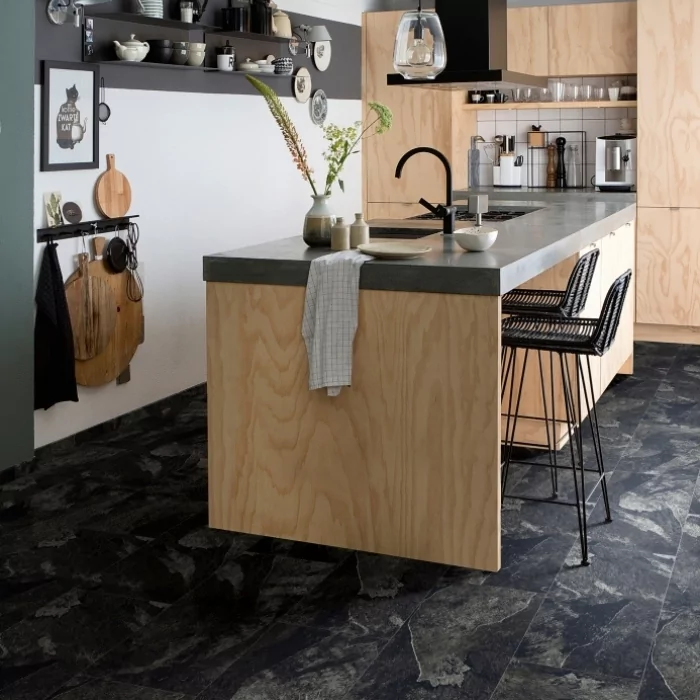
For a dark stone look, Moduleo Roots Mustang Slate 70998 offers a black slate finish with the texture of natural stone. It’s ideal for modern kitchens and small spaces, and is backed by a 25-year warranty.
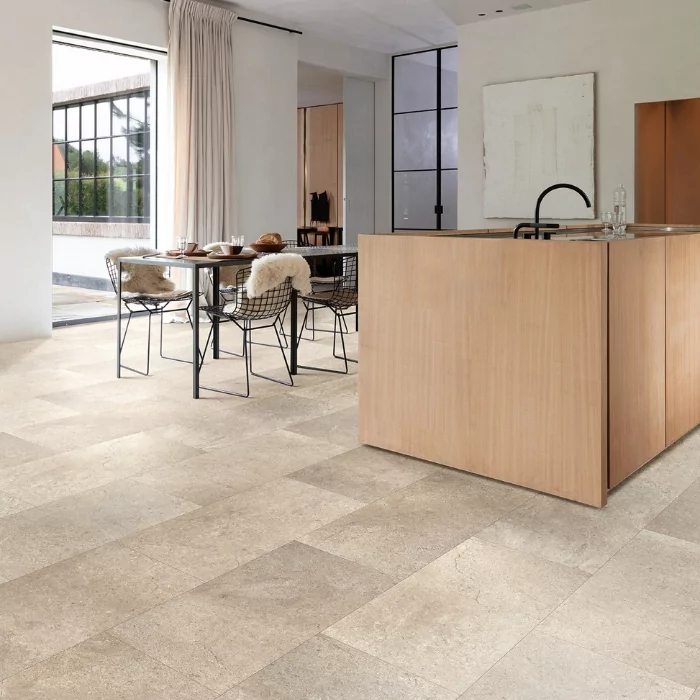
Fancy something a bit lighter? Try Moduleo LayRed Millstone 46200, it features a soft beige limestone look with delicate veining that brightens up any space. Its click-lock system makes it a quick, DIY-friendly option for kitchen renovations.
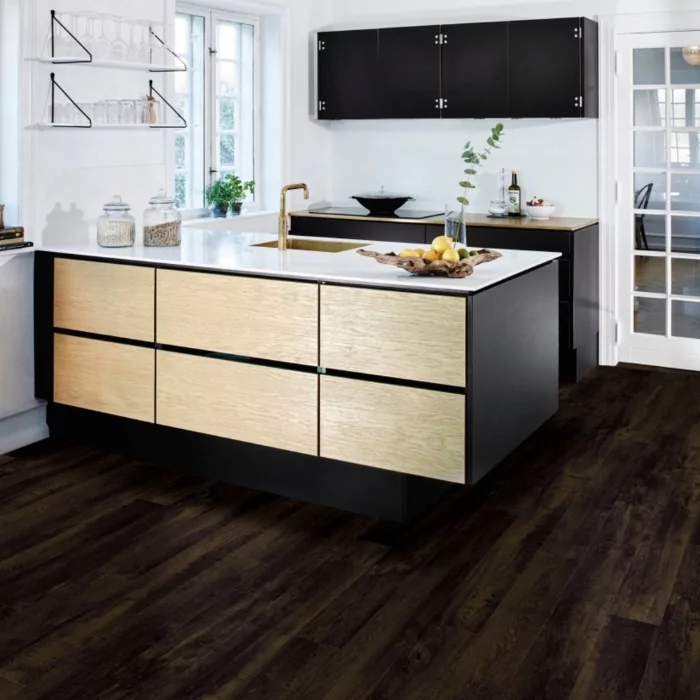
For classic wood style, Moduleo Roots Country Oak 54991 brings deep wood tones and a textured embossed finish that adds realistic character to traditional kitchens or period homes.
Anything to watch out for?
- Some LVT styles need glue-down installation, which adds cost but gives extra support under kitchen cabinets
- Very sharp furniture legs or heavy white goods can mark the surface if unprotected
- Budget versions may lack realistic texture and suitable wear layers
For more inspiration, explore our full kitchen LVT range.
Laminate Flooring
Laminate flooring has come a long way. What used to be a budget-friendly imitation of wood or tile is now a smart, hardwearing choice for kitchens. It’s affordable, scratch-resistant, and available in more styles than ever.
What makes it kitchen-ready?
Not all laminate flooring is suited to the kitchen. Moisture is the key factor. If you're choosing laminate floors for kitchen areas, water resistance should be a top priority.
While standard laminate can warp if water seeps through, modern options with built-in moisture resistance are specifically designed for exactly this kind of space.
Some ranges are rated for splash zones, meaning they can handle day-to-day spills as long as they’re cleaned up quickly. Others include waterproof technology that actively repels water; an excellent choice for kitchens (or bathrooms!) where the floor often gets wet.
Plus, it's easy to keep clean! Check out our laminate flooring care guide for all the tips you need.
Where it works well
Laminate is a strong choice in kitchens where style, scratch resistance, and easy cleaning matter. Many people choose kitchen laminate flooring for open-plan layouts, especially when they want the same floor to run through multiple rooms.
It’s particularly useful if you want the look of real wood without the high cost or maintenance. And it’s usually softer and warmer than tile underfoot, especially with the right underlay.
Products to explore
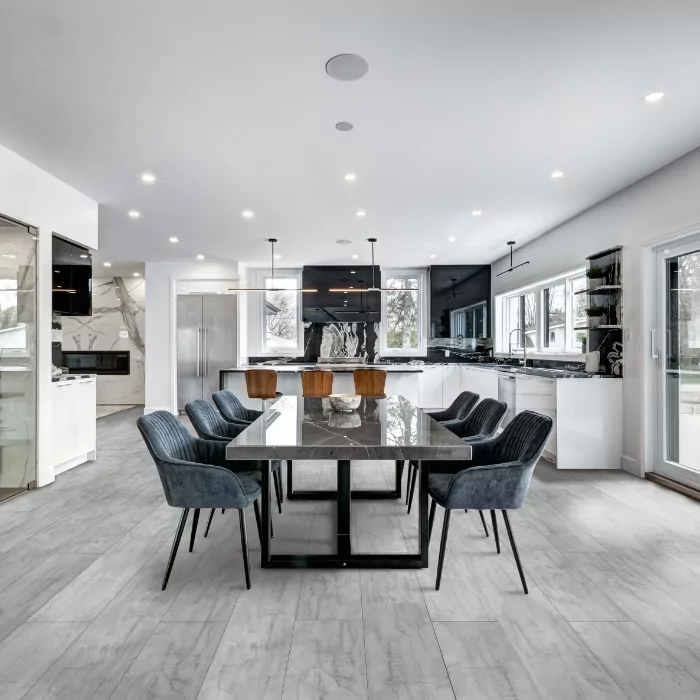
Stone look without the chill: Verdanti Majesty Imperial gives the visual effect of stone but feels warmer and softer underfoot. A good fit for bright and open spaces.
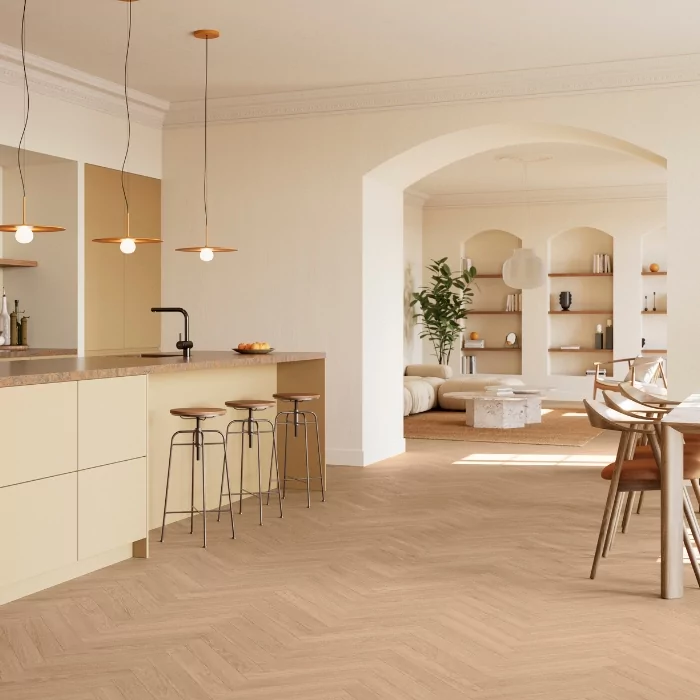
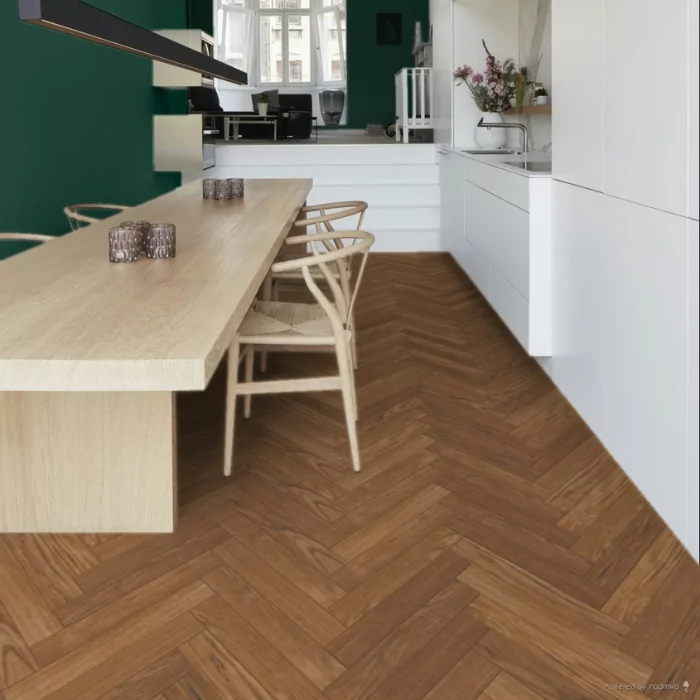
Herringbone with warmth: Berry Alloc Chateau+ Charme Light Natural has a parquet plank design with a warm, natural wood tone. It uses Hydro+ water resistance and a scratch-resistant surface layer, making it a durable pick for busy kitchens.
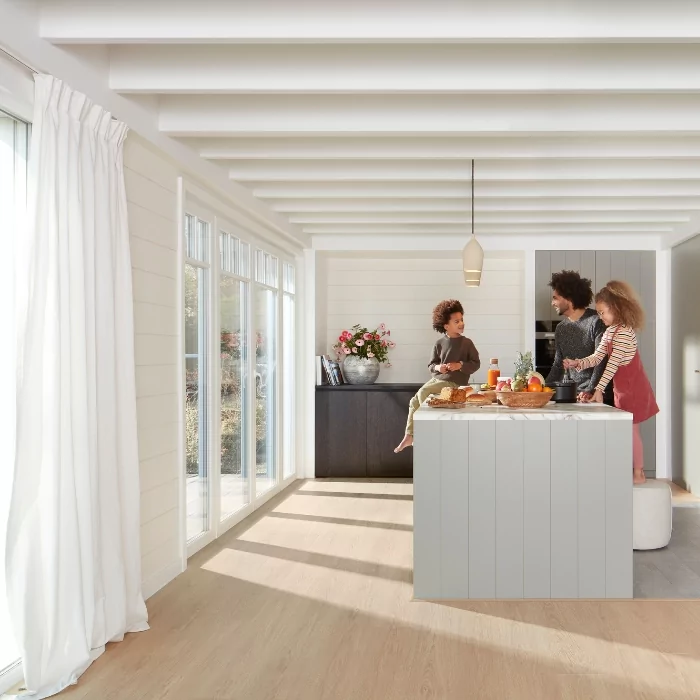
Love the design but prefer a more minimal, classic style? Berry Alloc Ocean+ Charme Light Natural delivers the same natural tones and durable finish, but with a sleek, straight plank layout for a timeless look.
What to check before you buy
- Make sure the product is rated as water-resistant or waterproof
- Click-system planks are usually easier to fit and repair
- Not all laminate flooring is suitable for underfloor heating (always confirm).
- Avoid unsealed edges in kitchens, especially near sinks and appliances
For more inspiration, explore our full kitchen laminate range.
Sheet Vinyl
Sheet vinyl, often called kitchen lino, is one of the most practical and affordable kitchen flooring options on the market. It’s a single layer of waterproof material, rolled out and cut to fit. That means no joins, no cracks, and no gaps for spills to sneak into. It's ideal for kitchens that need flooring to be fast, fuss-free, and family-proof.
What’s more, sheet vinyl offers the broadest range of design choices on the market. Whether you’re after the timeless elegance of standard wood or stone finishes, or you prefer something more vibrant like bright, bold patterned, tile-effect designs, there’s a style to suit every taste.
Why it works
- 100% waterproof
- Easy to mop and stain resistant
- Soft feeling underfoot, so it’s more comfortable to stand on
- Warmer than tile without needing heating
- Quick to fit, often in one piece
- Budget-friendly
Lino works especially well in high-use spaces like rental kitchens, utility rooms, or homes with young kids or pets. If you’re doing a fast kitchen refresh and need something that looks good and performs well, this is a strong option.
Designs to consider
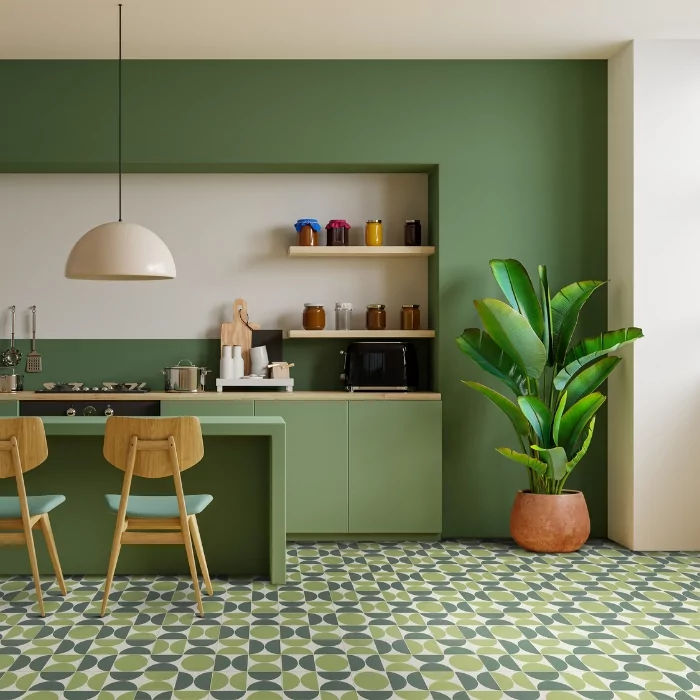
Looking for something bold? PopArt Avocado Green is a playful, retro-inspired design that turns your floor into a statement. It’s fully waterproof and comfortable underfoot, making it just as practical as it is fun.
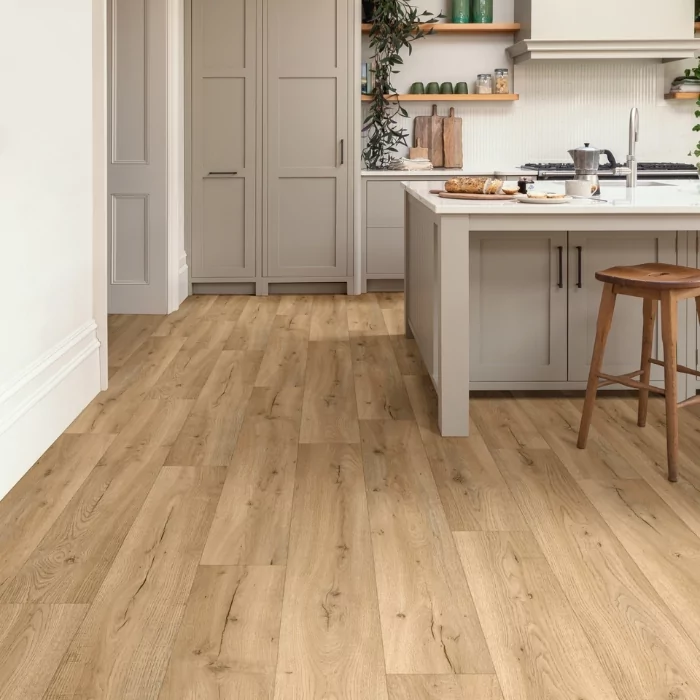
Want a classic wood look? Check out Arizona Reclaimed Oak. This sheet vinyl mimics real oak flooring but at a fraction of the cost, and with none of the maintenance. It has a felt backing for added comfort and warmth.
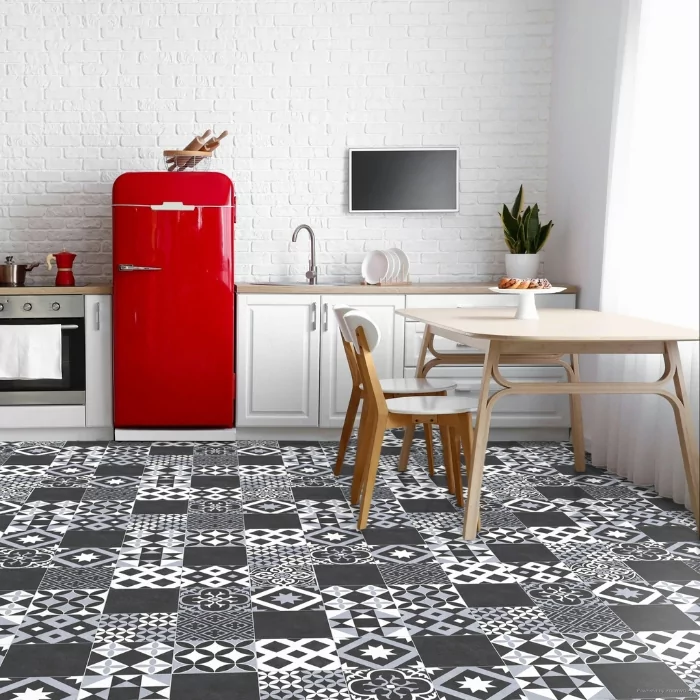
Need a soft finish with a pattern? Vivre 90 Cushioned Vinyl brings a timeless black and white patterned design that works beautifully in smaller kitchens. The cushioned base adds comfort and cuts down sound.
What to watch out for
Sheet vinyl isn’t the hardest-wearing surface out there. It can scuff or tear under sharp furniture legs or heavy appliances. And while it now comes in a wide range of finishes, some printed designs don’t always fully match the realism of tile or wood.
But if you need something waterproof, easy to clean, and comfortable to walk on, kitchen lino is a smart and accessible choice.
Other Options: Engineered Wood and Stone Tile
You might also be considering natural materials like wood, stone tile, or ceramic tile. Each has pros, but also key drawbacks in a kitchen setting.
Engineered wood flooring offers real wood on top but isn’t waterproof. It can warp or stain if spills aren’t cleaned up quickly.
Natural stone tile is hardwearing and long-lasting, but often cold, costly to install, and usually needs sealing.
Ceramic tile is durable and fully waterproof, but it’s hard underfoot and can become slippery when wet.
As for solid wood flooring, it’s not recommended in kitchens. It absorbs moisture, warps easily, and needs constant care to stay in shape.
For less upkeep and lower cost, consider:
- Wood-look kitchen laminate flooring with water resistance
- Stone-effect LVT that’s warmer and easier to clean
- Vinyl flooring with tile or stone patterns
These options offer the style without the stress.
What to Avoid in a Kitchen Floor
Some flooring types just aren’t built for kitchens. Here’s what to steer clear of:
| Material | Why to Avoid It |
|---|---|
| Standard laminate flooring | Not water-resistant. Swells and lifts with spills or steam. |
| Solid wood flooring | Absorbs moisture. Prone to warping and staining. |
| Carpet | Holds onto stains, smells, and bacteria. Hard to clean. |
| Low-end vinyl | Thin, easy to puncture. May peel or fade over time. |
| Glossy tile finishes | Slippery when wet. Increases risk of falls in spill-prone areas. |
Best Options by Use Case
| If You Need... | Try This... |
|---|---|
| A strong all-rounder | Luxury Vinyl Tile (LVT) – Waterproof, durable, and soft underfoot |
| High-end look | Stone-effect LVT or herringbone laminate – Premium finish, easier care |
| Budget-friendly choice | Kitchen lino or entry-level laminate – Affordable and easy to fit |
| Pet and family durability | Water-resistant laminate or rigid core vinyl – Tough and low-maintenance |
| Quick DIY install | Click-fit laminate or LVT – No glue, no fuss |
| Works with underfloor heating | Vinyl, tile, and some laminate, always check the spec |
Conclusion
The best kitchen flooring depends on how you use the space. Some homes need something fully waterproof. Others are looking for style without constant upkeep.
Luxury vinyl tile (LVT) and kitchen laminate flooring are top choices if you want comfort, durability, and an easy clean. For tighter budgets or fast updates, kitchen lino is hard to beat for practicality.
Whatever you need your floor to handle, we have a solution that fits. Explore our full range of kitchen flooring to find the create the perfect match for your space or check out our room-by-room flooring guide for more tips.
Related Posts