


Period Flooring Ideas
Your floor does more for a room than most people realise. Period flooring brings real history and elegance into your home, from the patterns and colour palettes to the textures that defined centuries of British interior design. Whether you're restoring an older home or bringing character to a modern build, the right flooring can anchor a room in a way that few other design choices can.
This guide covers the main period styles, what defined each era, and how to achieve an authentic result using modern, practical alternatives.
What Makes Flooring "Period"?
Period flooring isn't just about what it's made from. It's about where it comes from historically. The patterns and colours used in British homes changed dramatically from one era to the next, and understanding these differences is the key to getting it right.
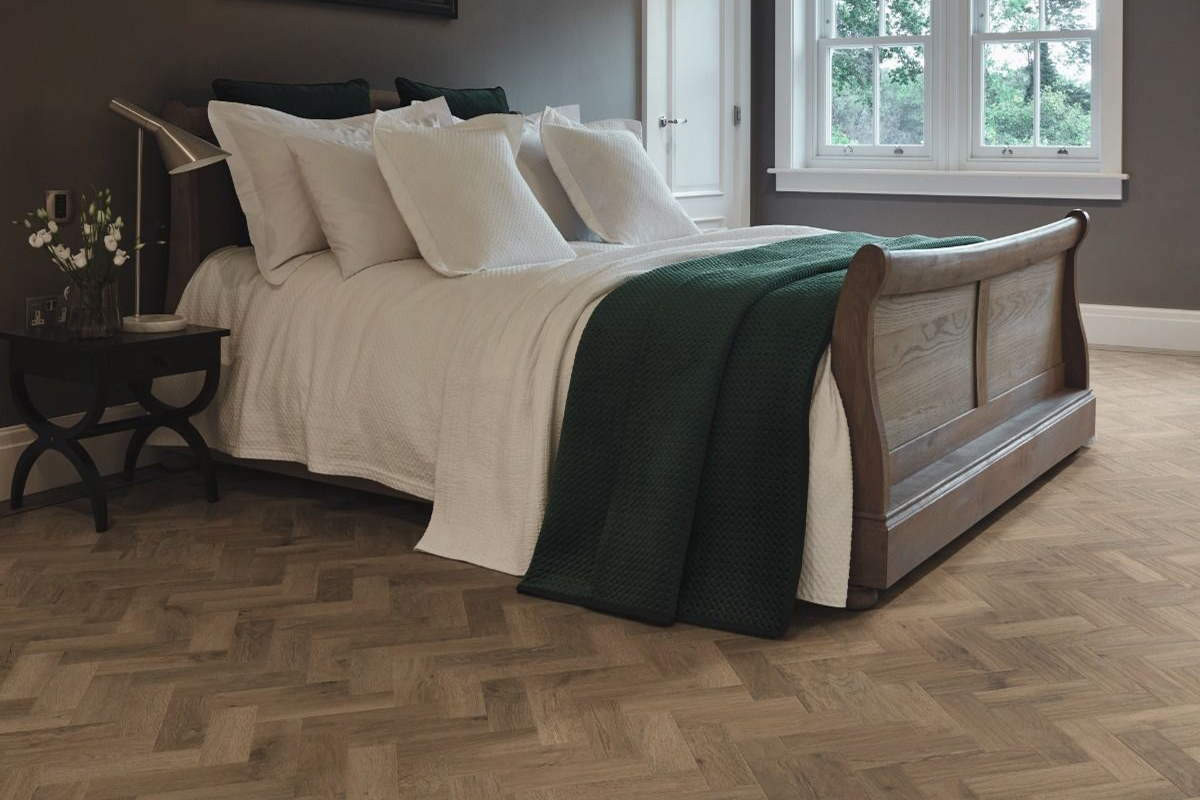
Georgian floors were all about symmetry and restraint. Think limestone and marble in checkerboard or herringbone layouts: cool, ordered, and quietly elegant. They often feature wide, polished, solid hardwood planks like oak in older or more rustic homes, whereas narrower boards were a status symbol for the wealthy in Georgian formal rooms.
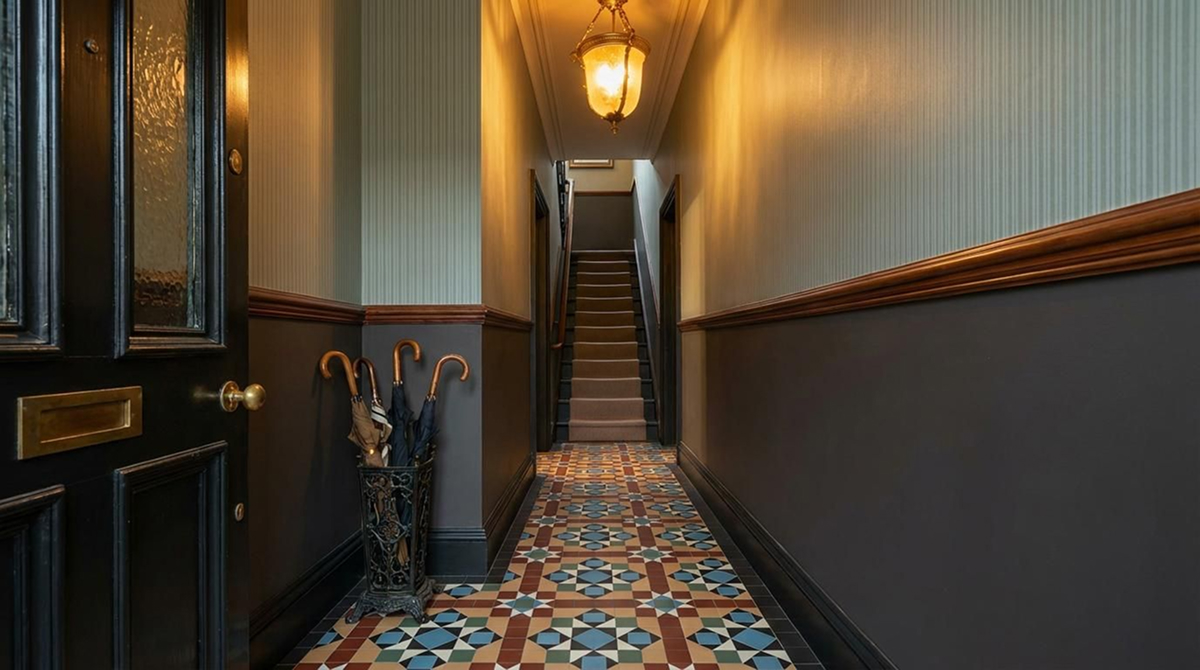
Victorian floors took the opposite approach entirely. Ceramic encaustic tiles in bold colours, deep reds, rich greens, and intricate geometric patterns became the hallmark of the era, particularly in hallways and entrance porches.
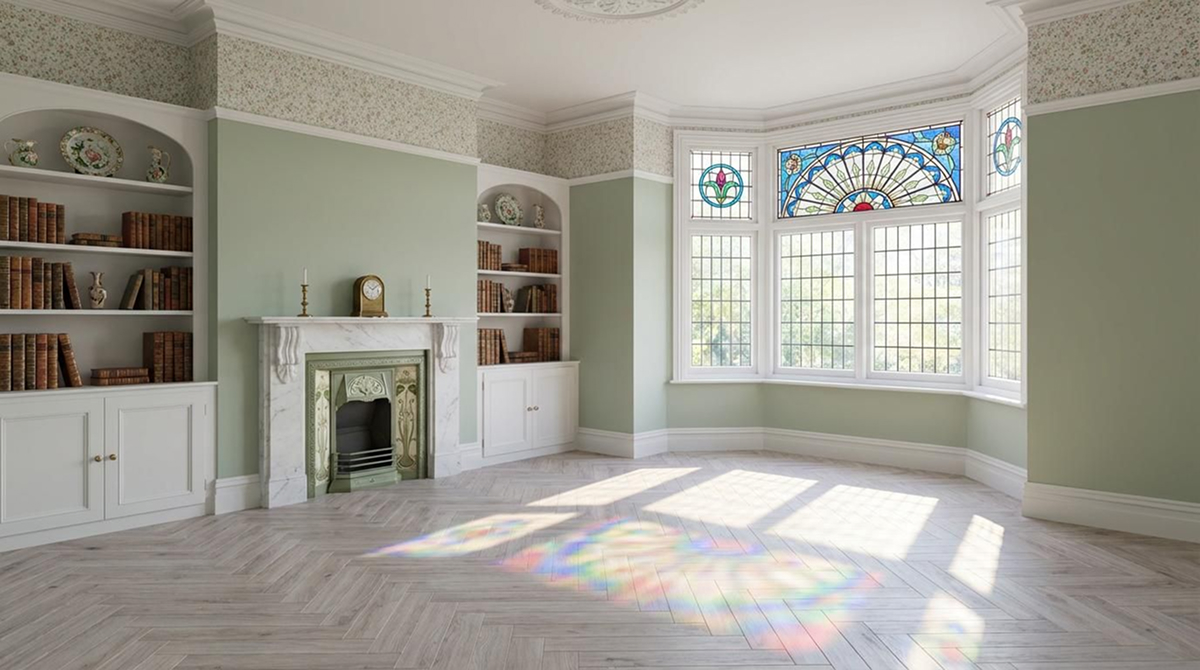
Edwardian floors were more low-key, using softer colours, floral motifs, and natural stone or light wood parquet in simpler layouts.
The story of period flooring is really a story of craftsmanship. Each era brought its own approach to pattern, colour, and texture. Knowing which period your home belongs to, or simply which era appeals to you, is a good place to start when choosing flooring for your home.
Period Flooring: What Were the Original Options?
Original period floors were built to last, using natural materials chosen for both durability and elegance. Here are the main types you'll see in older homes, along with the modern alternatives that recreate each one without the drawbacks.
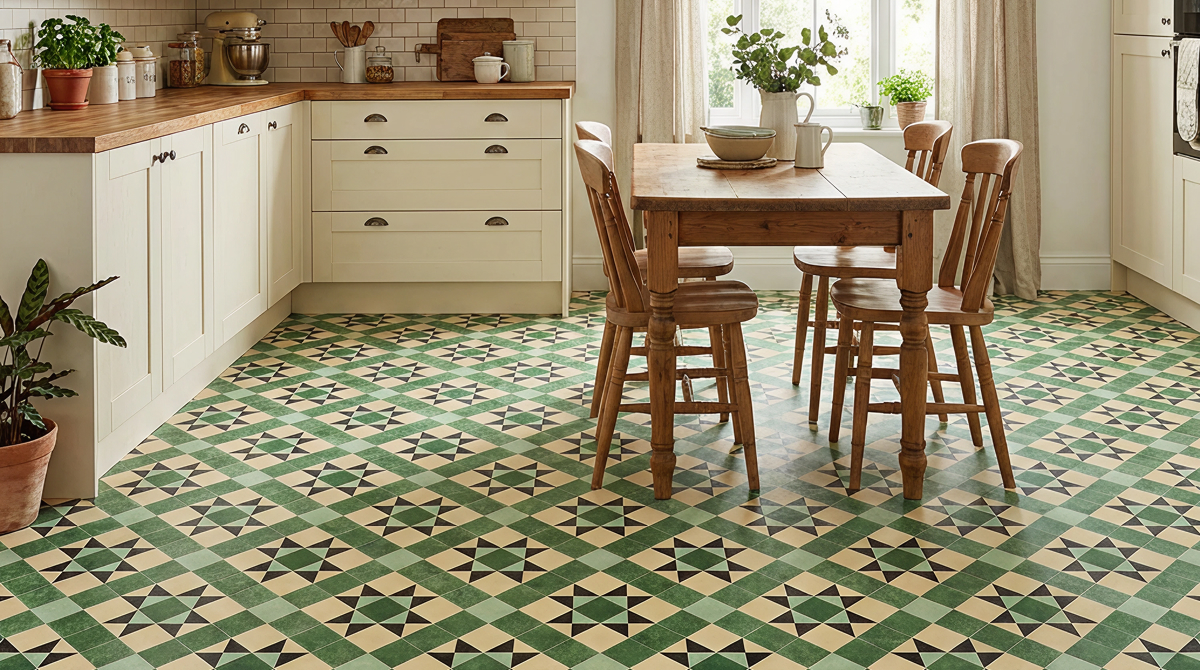
Ceramic and encaustic tiles were central to Victorian and Edwardian design. Encaustic tiles are made by pressing different-coloured clays together so the pattern runs through the full depth of the tile, not just across the surface. While originals can be expensive and difficult to source, our ERA sheet vinyl collection recreates authentic tessellated patterns in cushioned sheet vinyl. The ERA Atkinson features a classic black, green and beige geometric tessellation, while the ERA Barton offers a warmer star-and-square pattern in brown, cream, and black. Both are felt-backed, R10 slip-rated, and suitable for hallways, kitchens and bathrooms, delivering elegant results without the cost or complexity.
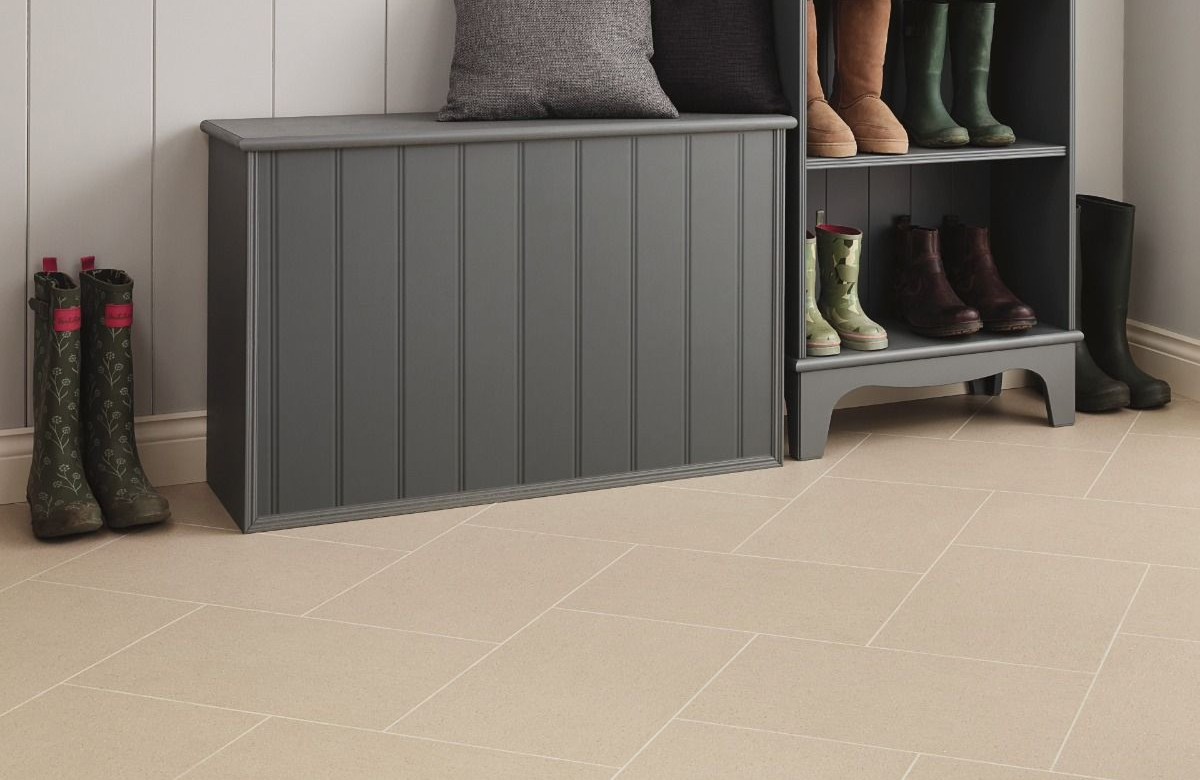
Limestone and marble were the go-to premium choices in Georgian homes. Yes, they're beautiful, but also heavy and cold underfoot, and require regular sealing. For a practical alternative, the Karndean Knight Tile Natural Stone ST29 is an LVT inspired by basalt stone, with subtle volcanic ash specks. It's waterproof, lifetime-guaranteed, and compatible with underfloor heating, giving you the same elegant aesthetic with none of the maintenance.
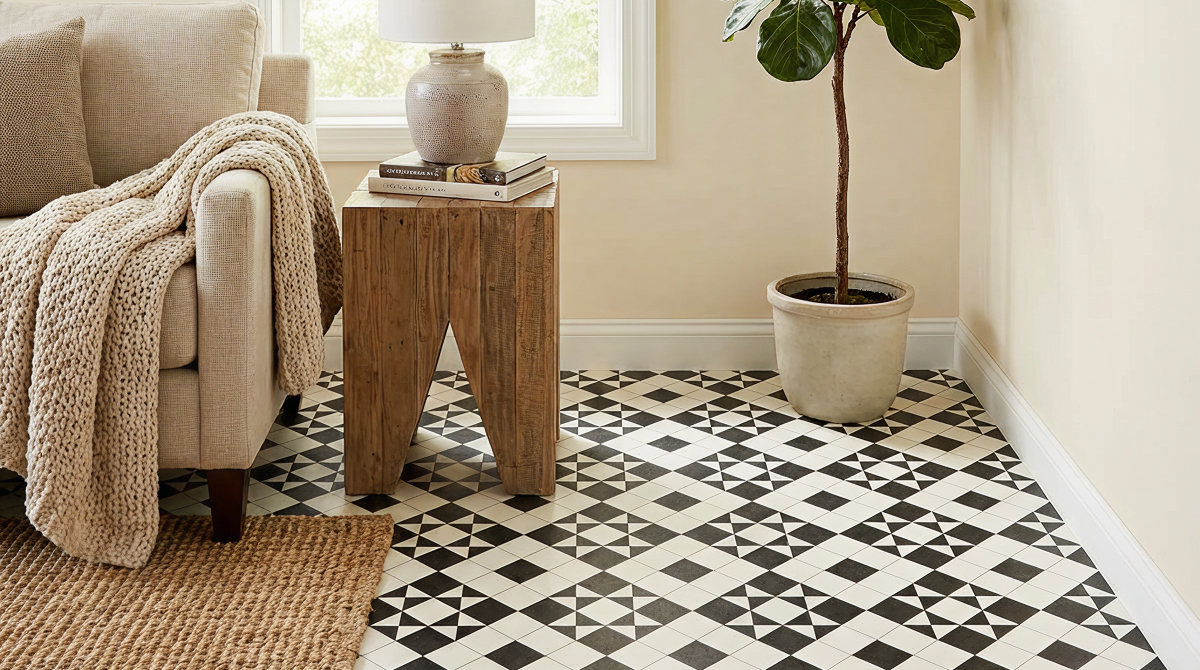
Mosaic tiles gave designers a huge amount of creative freedom. Small ceramic or marble pieces arranged into borders, centrepieces, and geometric repeats could transform a plain hallway into a statement space. Our ERA Brunel sheet vinyl captures the timeless elegance of black-and-white mosaic tilework, with a striking pattern of stars and diamonds.
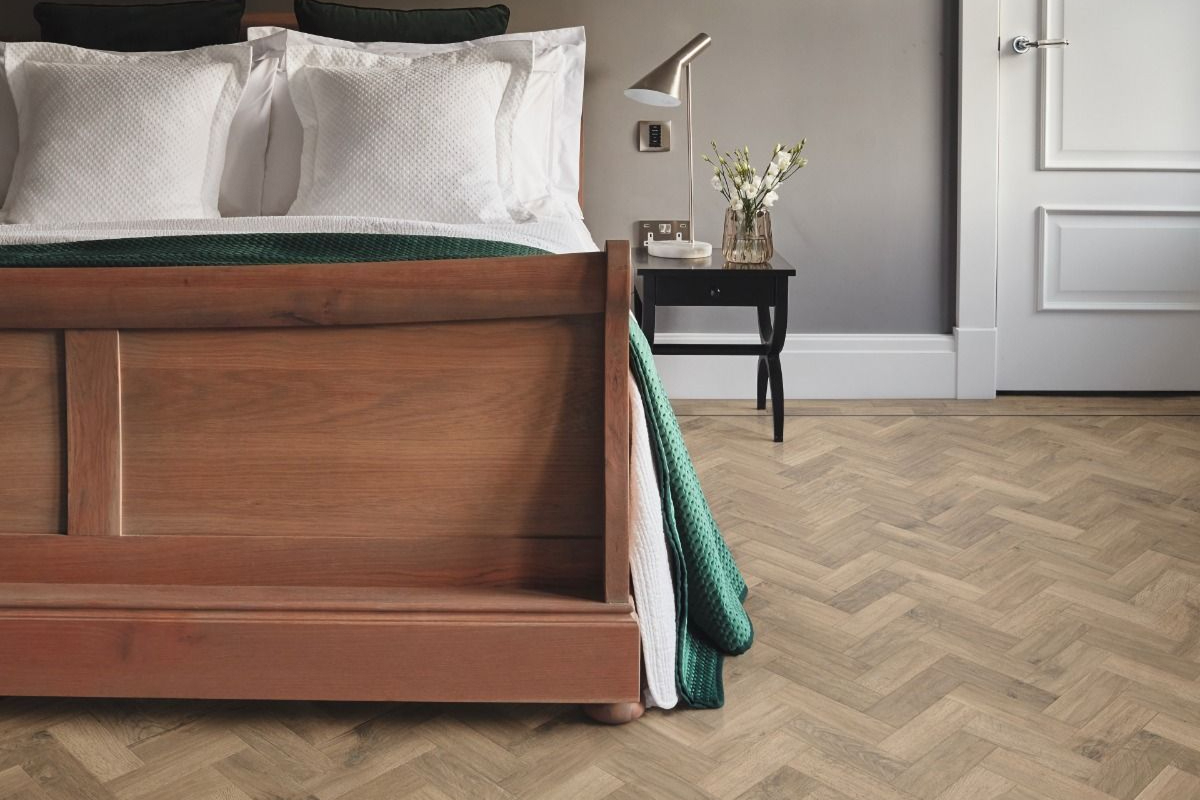
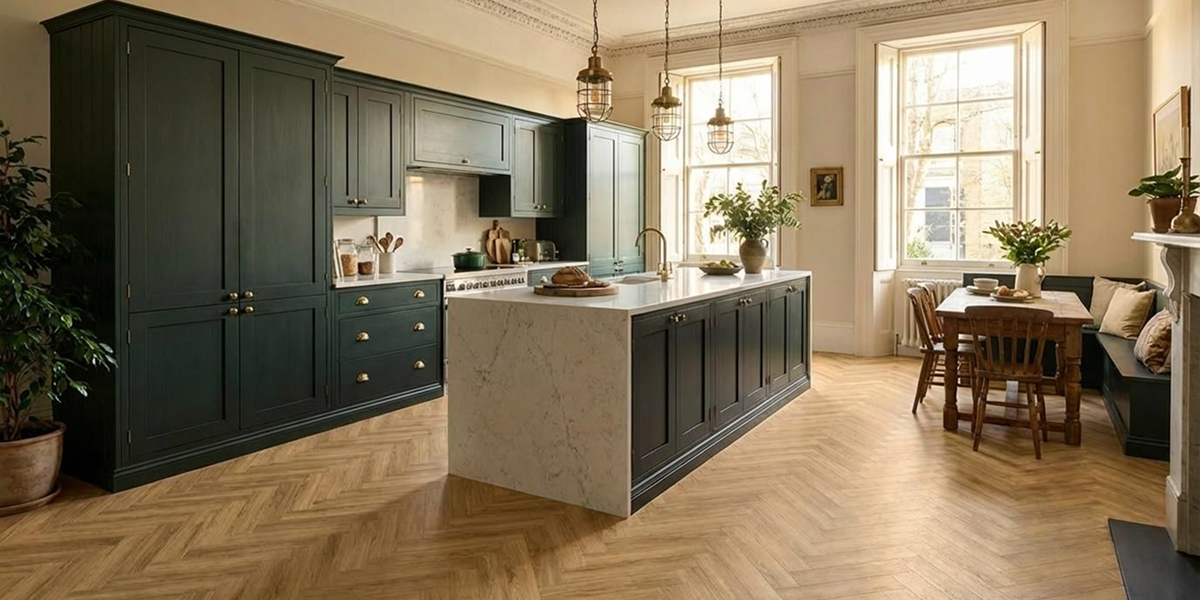
Hardwood and parquet are a natural fit for Georgian reception rooms. Parquet has genuine period pedigree, originating in seventeenth-century France before becoming a defining feature of British homes.
Solid wood can be expensive and prone to movement, but the Karndean Art Select Salon Oak Parquet AP08 is a premium LVT alternative with a hand-scraped finish in natural oak tones. It carries a lifetime residential guarantee and works in every room of the home, including kitchens and bathrooms where real wood would be a risk. Our herringbone flooring range offers a variety of LVT and laminate options for clients who want the parquet style across a range of price points.
Patterns That Define the Period
Tile layouts from the 19th and early 20th centuries have a clear logic: a central pattern, a border, and plain tiles to hold it all together. The arrangement varies, but the structure stays consistent.
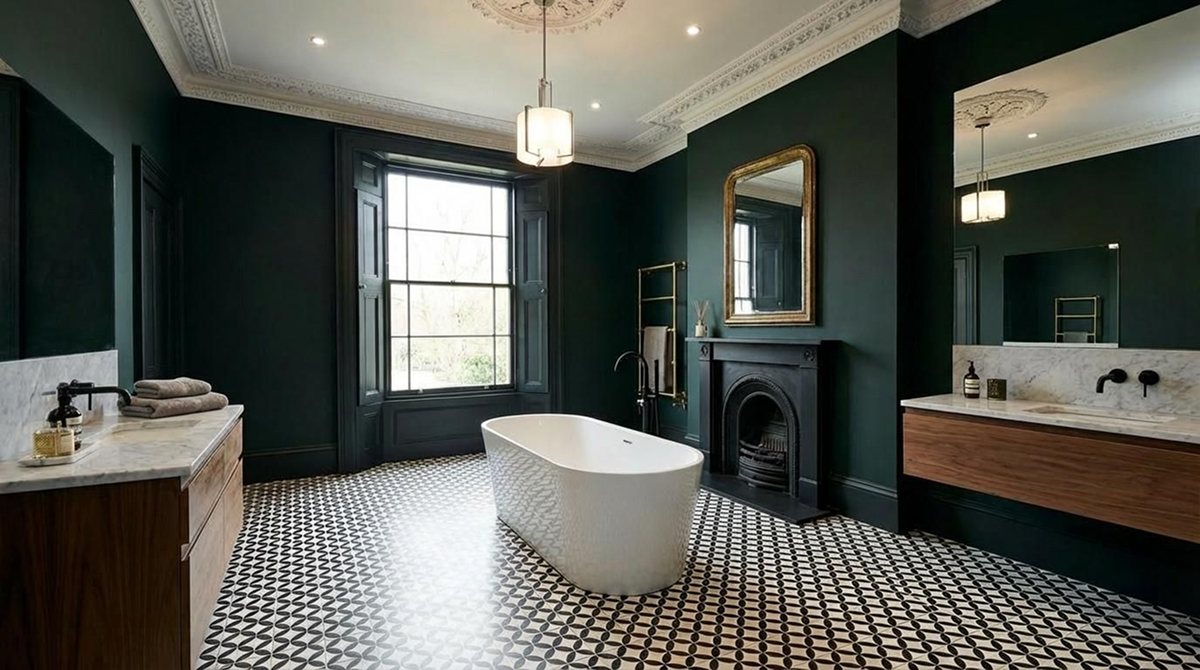
- Checkerboard: Classic black and white squares, either straight or at 45 degrees. Our Palace Buckingham sheet vinyl recreates this in a foam-backed, R10 slip-rated format, making it a practical entry point for the monochrome hallway aesthetic.
- Encaustic geometric: Multi-colour geometric designs in combinations of terracotta, blue, cream, grey, and black. Our ERA collection captures this precisely. The ERA Atkinson delivers the classic green, black and beige tessellation, while the ERA Barton offers warmer tones.
- Mosaic border with plain field: A decorative border containing a plain central area. Common in porches and hallways of terraced houses.
- Herringbone and chevron: More common in timber floors than tile, but used in both. Our Karndean Knight Tile offers this in ten oak finishes in LVT, all waterproof and built for high-traffic areas.
Colour plays a significant role. Georgian floors lean heavily on grey and off-white. Victorian floors are bolder: terracotta, deep red, dark green, cream, and black. Edwardian palettes sit between the two, more muted, with pastel tones and warm neutrals.
Modern Alternatives for Period-Style Floors
Authenticity is appealing, but it's not always practical. Moisture, budget, and subfloor condition can all rule out traditional materials. The good news is that modern alternatives deliver elegant results that are almost indistinguishable from the originals, and often outperform them on durability and ease of installation.
Luxury Vinyl Tile (LVT) is the most popular choice for clients who want a hard-wearing, period-inspired floor. Our LVT flooring range includes stone effects, wood effects and herringbone patterns from Karndean, Moduleo and Quickstep. The quality of today's LVT is remarkable: textured surfaces, realistic grain, and bevelled edges deliver results you can feel as well as see. All are waterproof, compatible with underfloor heating, and carry long residential warranties.
Sheet vinyl deserves serious attention for period-style hallways and kitchens. Our ERA collection makes it easy to replicate tessellated tile floors at a fraction of the cost. You get a felt-backed, R10 slip-rated floor that can be loose-laid or glued down. For stone effects, the Larache Slate comes in six colourways (including Chalk, Clay, Graphite, Jade, Obsidian and Slate) and mimics the elegance of natural flagstone. A practical choice for period homes, cottages, and farmhouse-style kitchens.
Laminate offers another hard-wearing route, particularly for herringbone designs. Our New Forest Herringbone Laminate range comes in eight oak colourways with click-fit installation, making it one of the most DIY-friendly options for achieving a parquet-style floor. Best suited to dry rooms like living rooms, bedrooms, and hallways.
Don't hesitate to order your free samples to check colours and textures in your own space before committing.
What Is the Rule of Three in Flooring?
The rule of three refers to the three-part structure used in period tile design: the pattern at the centre, the border framing it, and the fill connecting the two. This approach keeps complex designs visually balanced and ensures that cuts fall on plain tiles rather than patterned ones, which simplifies installation and reduces waste.
Practical Advice Before You Buy
A few things worth confirming before you place an order:
- Check your subfloor. LVT is forgiving but benefits from a smooth surface. Sheet vinyl is the most forgiving, as the felt backing smooths minor imperfections. Laminate needs a dry, level base with quality underlay.
- Consider moisture. LVT is the safest choice for wet areas. Sheet vinyl also handles kitchens and utility rooms well. Only water-resistant laminate is suitable for moisture-prone areas.
- Think about traffic. Hallways take more punishment than bedrooms. The Karndean Knight Tile is rated for both residential and light commercial use.
- Order before you commit. Period colours, particularly grey tones and earthy hues, vary between products. Take the time to view them in your own lighting. We offer free swatches across our full variety of flooring.
- Budget for fitting. Herringbone patterns take longer to lay. Click-fit laminate can reduce costs for confident DIYers, while sheet vinyl is one of the simplest floors to install.
Frequently Asked Questions
What type of period-style flooring is trending?
Heritage-inspired formats are performing strongly, including checkerboard designs, herringbone patterns, and natural stone effects. Our herringbone flooring range covers LVT and laminate options.
Which rooms suit period flooring best?
Hallways are the most traditional choice for geometric tile designs. Reception rooms suit herringbone and parquet patterns, while kitchens and bathrooms benefit from waterproof LVT. Every home is different, so visit our advice centre for room-by-room inspiration.
How much does period-style flooring cost?
It depends on the product and pattern complexity. Sheet vinyl options can often be loose-laid without adhesive, keeping both material and fitting costs down. Order a free sample to compare at home.
What period is parquet flooring?
Parquet has French origins from the 1600s and became a defining feature of British homes in the 19th century. Today, LVT and laminate deliver the same results without solid wood. Browse our herringbone flooring range for the full variety.
What is the best period flooring for bathrooms?
LVT handles moisture well and comes in a variety of designs suited to every period. The Karndean Knight Tile Natural Stone ST29 is a popular choice, as is sheet vinyl from the ERA or Larache collections.
Get in Touch
If you're not sure which direction to take, contact our team.
Whether you need help choosing a product, matching a period style, or working out quantities for your room, our flooring experts are here to help.