


What Is the Best Carpet for Pets?
Pets are part of the family, and the flooring choices you make in a pet-friendly home shape everyday life for both of you. From traction for pets running through hallways, softness for tired joints, noise reduction as claws move between rooms, and clean-ability when real life happens, carpet can be a great choice for you and your furry friends.
This guide covers the best carpet for pets and homes with pets, fibre by fibre, style by style, so you can choose carpets that will still look amazing when the puppy is all grown up. For the full range, start with pet friendly flooring, or browse our complete carpet collection.
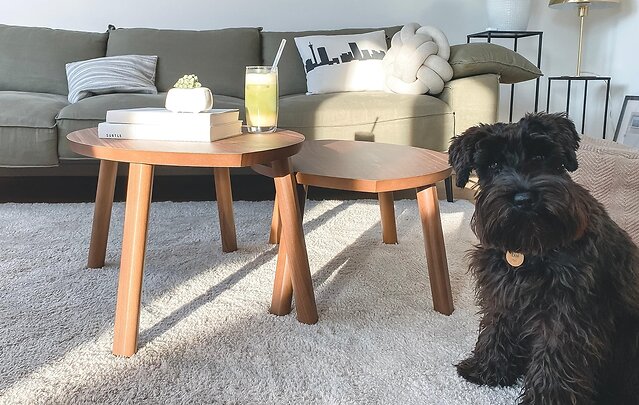
Can carpet really be pet-friendly?
It's true, vinyl and laminate flooring have their place in pet-friendly homes: easy to wipe, almost impossible to stain, and no fibre to hold fur. But when you compare flooring options for the main living spaces, carpet does three things hard flooring options cannot match.
Extra traction for four-legged friends. Hard flooring is slippery for pets running indoors. Older dogs in particular struggle to get purchase on a smooth floor, and a dog with hip issues is more comfortable on carpet than on hard flooring. Carpet is non-slip by default, and that traction matters most on stairs and in hallways where pets change direction at speed.
Soft underfoot for pets. Dog beds sit better on carpet. Cats that sleep stretched on the floor pick carpet over a cold floor any day of the year. A carpet provides warmth and comfort underfoot that hard flooring options cannot match, which is part of why carpet is still among the most common flooring in homes with pets.
Noise reduction. Claws on a hard floor are audible two rooms away. Carpet absorbs the sound of pets running, muddy paw prints moving between the kitchen and the back door, and the general bustle of four-legged friends going about everyday life.
Carpet does have honest downsides compared to hard flooring: it holds more pet hair, and a spilled water bowl takes longer to dry. Many pet owners consider carpet in living spaces and hard flooring in entrances, porches, and utility rooms where muddy paws come in from the garden.
What makes a carpet pet friendly?
A pet friendly carpet needs to tick a few practical boxes. It should be tough enough for pets tearing up and down the hall, stain resistant enough to handle spills, and easy to clean when fur, dirt and muddy paws come home. Here's what sets a pet friendly carpet apart from the rest:
- Durability against daily wear and sharp claws
- Stain resistance built into the fibre or added as a treatment
- A pile that won't snag on pets' claws
- Colours and patterns that hide fur and dirt between cleans
- Soft underfoot comfort for people and pets alike
Cut pile vs loop pile
This is the single biggest decision when you're choosing a carpet for a home with pets. Cut pile carpets are generally easier to clean than loop pile carpets because they don't have loops that can snag pet claws, making them a better choice for (most) homes with pets.
When you should avoid loop pile carpets
Loop pile carpets are made from uncut yarn loops that sit proud of the backing. They look smart and wear well in busy areas, but those little loops can be exactly the wrong shape for claws. Sharp claws (especially cat claws) can catch in the loops, threads pull, and before long your carpet looks tired. If you've got a cat that stretches out on the stairs, or a dog that skids round corners, avoid loop pile. It can work in some homes, if claws are kept short and behaviour is more mild.
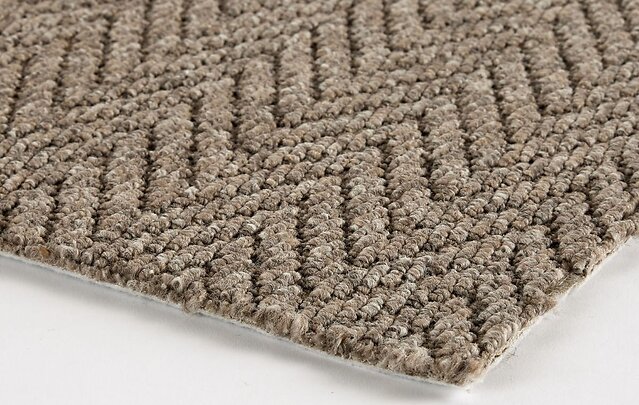
Odin Iverson Chevron Berber Carpet is a durable loop pile example that can work well for calmer pets. The patterned surface helps break up wear and dirt visually, so it stays looking cleaner for longer.
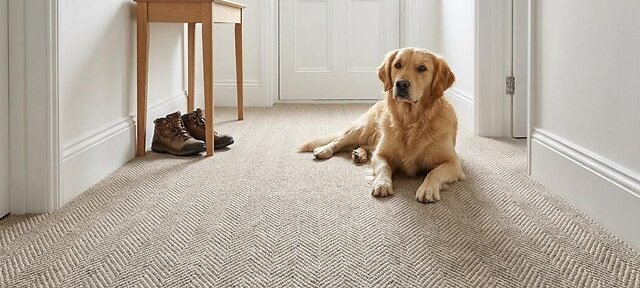
Why cut pile carpets are a safer choice
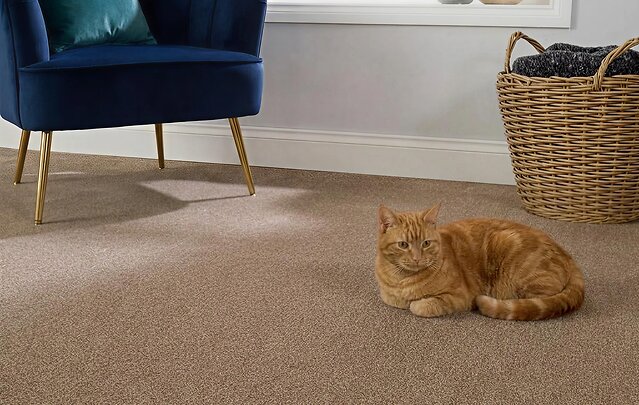
Cut pile carpets have the loops cut open, so there's nothing for claws to hook into. They feel soft underfoot, vacuum easily, and suit pet friendly homes of all sizes. Within the cut pile family, twist pile is the standout choice for most pet owners.
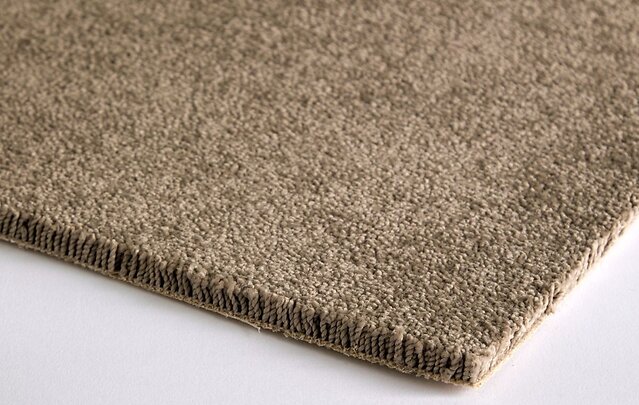
The fibres are tightly twisted, which makes twist pile hard wearing, scratch resistant and far less likely to flatten in busy spots. A higher face weight also adds density, which means the pile holds up better under daily traffic and resists compression over time. For example, Dominance Bran Flake combines a tight twist pile that resists flattening with a flecked design that hides dirt and hair. It’s also bleach cleanable and designed for heavy domestic use. Low-pile carpets are easier to vacuum pet hair from and less likely to hide pet odour.
The best carpet fibres for pets
Synthetic carpets made from polypropylene, polyester or nylon are the most pet-friendly fibres.
Polypropylene carpets
Polypropylene carpets are a firm favourite in homes with pets. The fibre is naturally stain-resistant, bleach-cleanable, and kind to your budget. You can tackle pet accidents with a diluted bleach solution without fading the colour, which is a huge help when a pet is still learning the rules. Polypropylene is also moisture resistant, so spills sit on the surface rather than soaking in. In busy households with young dogs or cats, those extra seconds to mop up make all the difference!
Polyester
Polyester is another budget-friendly synthetic option. Polyester is good at shrugging off water-based spills because the fibre does not absorb moisture, but bleach-cleanability is range-dependent rather than a given. Polyester suits bedrooms and quieter rooms better than the main pet routes through the house.
Synthetic carpets more broadly
Synthetic carpets, including polypropylene, nylon and polyester blends, are usually easier to clean than natural fibres. They resist stains, dry quickly, and cope with plenty of vacuuming.
Natural wool carpets
Natural wool carpets are beautiful and naturally flame-resistant, but they need a bit more care in homes with pets. Wool soaks up liquid, so pet accidents need quick attention. Go for a tightly woven twist pile if you love wool, and keep a good enzyme cleaner to hand.
The best carpet colours for pets
Colour matters more than most people expect. The right carpet colour can hide shedding fur, muddy paw prints and the odd tea spill without constant vacuuming.
Go for darker shades and patterns
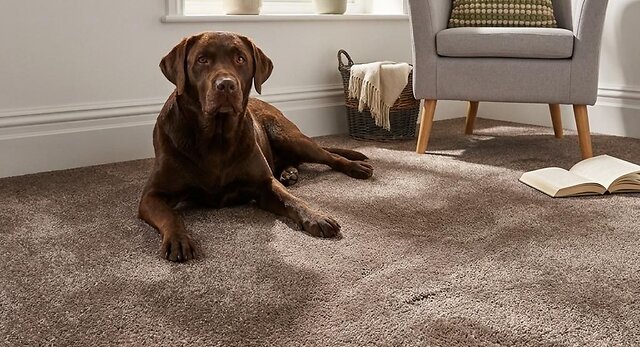
Darker shades such as charcoal, chocolate and deep grey disguise dirt brilliantly. A darker carpet is far more forgiving than cream or ivory when a wet dog wanders through. Flecked, tonal and patterned carpets are even better. The mix of tones breaks up the surface, so stray hairs and small marks simply disappear into the design. For example, Aspire Stalk Twist Pile Carpet is a mid-toned, earthy brown that adds warmth and elegance to any space, offering cosiness and everyday practicality for your furry friends.
Match the carpet to your pet
A handy trick: pick carpet colours that match your pet's fur. A golden retriever household suits warm beige flecks, while a black cat family might lean towards darker carpet with grey tones. Shedding becomes almost invisible between cleans.
Stain resistance and pet accidents
Pet accidents are the test every pet-friendly carpet has to pass.
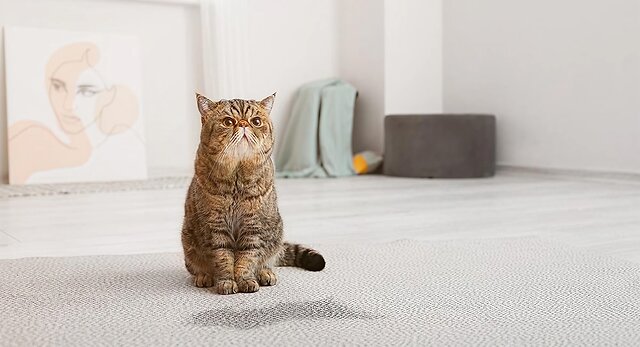
A stain resistant fibre does not let liquid bond with the fibre surface, so spills can be blotted before they set. Polypropylene and polyester both resist stains well, and carpets with built-in, lifetime stain resistance technologies are common in polypropylene ranges.
Polypropylene is naturally stain resistant and, on most ranges, cleans with a diluted bleach solution. Roughly one part household bleach to ten parts water is the standard ratio; test on a hidden corner first, blot (don't scrub), and rinse with clean water once the stain lifts. That's what makes polypropylene carpets the easy-to-clean carpets of choice for most pet owners.
For deeper stain work, see our guide on removing different stains from carpet or check out out guide on how to clean carpets for your weekly routine.
Underlay for pet friendly flooring
The underlay beneath your carpet matters more than many people realise, particularly in pet households. A moisture-resistant underlay protects the subfloor if a spill or accident soaks through. Some underlays also include an antimicrobial treatment, which helps keep odours under control over time. Choosing a good quality underlay is one of the simplest ways to extend your carpet's life and keep it smelling fresh. See our carpet underlay range for options suited to pet households.
Keeping your carpet looking good
Even the best carpet for pets needs a routine. A little regular care goes a long way.
Everyday care
- Vacuum two to three times a week to lift fur before it settles
- Brush your pets regularly to reduce shedding indoors
- Keep a doormat at every entrance to catch muddy paws
- Trim your pets' claws to reduce snagging and wear and tear
- Low or tight-pile carpets keep pet hair on top for easier vacuuming.
Read our Guide on How to Clean a Carpet for all the tips you need.
Dealing with pet accidents
Act quickly. Blot, don't rub, and work from the outside of the stain inwards. Bleach-cleanable carpets can handle pet accidents effectively. For nylon and wool, use an enzyme cleaner designed for pet accidents, which breaks down odours rather than masking them. Professional deep cleaning once a year keeps the pile looking fresh and lifts anything your vacuum has missed.
Check out our Complete Guide to Removing Carpet Stains for more advice.
Carpet vs hard flooring in pet households
Plenty of pet owners ask whether laminate or vinyl would be easier. Both are low maintenance and wipe clean in seconds, but they can be slippery for older dogs and noisy when pets are running about. For a head-to-head between the two main contenders, see our guide on choosing between carpet and laminate flooring.
Carpet is warmer, quieter and gentler on ageing joints. Many families use both: hard-wearing vinyl in the kitchen and utility room, and a pet-friendly carpet in the living room, on the stairs and in bedrooms. That balance gives you easy clean comfort where it matters most and wipeable flooring where muddy paws arrive first.
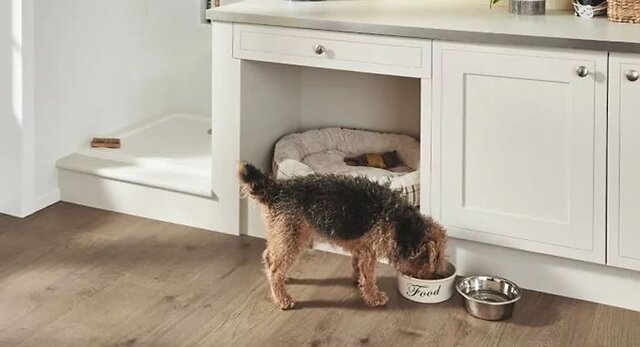
If you are weighing up flooring across the whole house, our carpet collection sits alongside a full range of vinyl flooring and laminate flooring so you can mix and match room by room.
Our pick
If you want a simple recommendation, here is what we would choose for most pet-friendly homes:
| Factor | Our recommendation | Why it matters for pets |
|---|---|---|
| Fibre | Polypropylene for stain resistance and value | Resists stains and moisture, easier to clean |
| Construction | Twist pile, cut rather than looped | Reduces risk of claws snagging and improves durability |
| Colour | Flecked or tonal darker shade | Helps hide pet hair, dirt, and everyday wear |
| Pile height | Short to medium | Easier to clean and less likely to trap hair and debris |
| Underlay | Quality moisture-resistant underlay | Protects the subfloor and helps control odours |
FAQs
Is there such a thing as a truly pet proof carpet?
No carpet is fully pet proof, but some come very close. Pet-friendly carpets are designed to be durable and resistant to stains and odours, making them suitable for homes with pets that may have accidents or shed fur. A polypropylene twist pile with built in stain resistance in a darker, flecked shade handles the realities of everyday life with cats and dogs very well. Pair it with a moisture resistant underlay, act quickly on accidents, and vacuum regularly, and you will get many years of reliable use. Browse our full range of carpets to see what's available.
Does baking soda (bicarbonate of soda) remove carpet stains?
Baking soda is an absorber rather than a cleaner. Sprinkle baking soda onto grease, oil, vomit, or a wet mark, leave for 15 minutes, then vacuum. It pulls moisture and odour from the fibre before you treat the stained area with a cleaning solution.
What is the best carpet colour for hiding pet hair?
Flecked and patterned carpets in mid to dark shades work best. Charcoals, warm browns and tonal mixes hide shedding, dirt and minor marks between vacuums far better than plain pale colours. The most forgiving approach is to match the fleck tones to your pet's coat colour, so stray hairs simply disappear into the design. Explore our full carpet collection for a range of pet-friendly shades and finishes.
Is carpet or laminate better for dogs?
Carpet is warmer, quieter and kinder to older dogs' joints. Laminate and vinyl are easier to wipe down in kitchens and entrance areas, making them a practical choice where muddy paws arrive first. A combination of both works well for most homes: carpet in living rooms, stairs and bedrooms, and hard flooring in utility areas and hallways. See our vinyl flooring range for durable options to use alongside your carpet.
Are loop pile carpets ever suitable for pets?
In most cases, no. Loop pile snags easily on pets' claws, and one pulled thread can run right across a room, leaving the carpet looking worn and unravelled well before its time. Browse our twist pile carpets for pet-friendly options.
How do I clean pet urine from carpet?
Blot with a clean cloth straight away, removing as much liquid as possible before it sets. Rinse gently with cool water, then treat with an enzyme cleaner suited to your carpet fibre. Enzyme cleaners break down the proteins in urine that cause lasting odour, rather than just masking the smell. Polypropylene carpets also respond well to a diluted bleach solution. Avoid scrubbing, which damages the pile. For more detail, see how to remove stains from carpet.
How long does a carpet stain have before it will not come out?
Most carpet stains are easiest to remove within the first hour. After 24 hours, most liquids have dried into the backing and need two or three treatment passes. A fresh stain is always easier to clean than an old stain that has set into the carpet pile.
Which carpet is best for cats with claws?
A cut pile in nylon or polypropylene is the safest choice. Cats' claws catch easily in loop pile carpets and pull threads out of the backing, which causes permanent damage. Cut pile removes that risk entirely. A shorter pile height also makes it harder for cats to dig in and scratch. A tight twist pile works particularly well because the fibre density gives extra resistance to claw wear. Explore our twist pile carpets for suitable options.