


What Is the Best Carpet for Stairs?
For many families, carpet is the only choice when it comes to stairs, and it's easy to see why. Carpet creates that beautifully cosy feel that adds warmth and character to your home, making your staircase softer, warmer, and safer to walk on. A well-chosen stair carpet cushions every step, acting as a sound insulator that softens footsteps between floors. Ideal for busy homes with small children or elderly relatives, carpet also provides traction that reduces the risk of slips and falls, as well as a softer landing.
But not all carpet is well-suited to stairs. This guide gives you all the tips and advice you need to choose the right carpet for stairs. To start browsing, take a look at our full range of hard wearing carpet for stairs and landing, or browse all types of stair flooring.
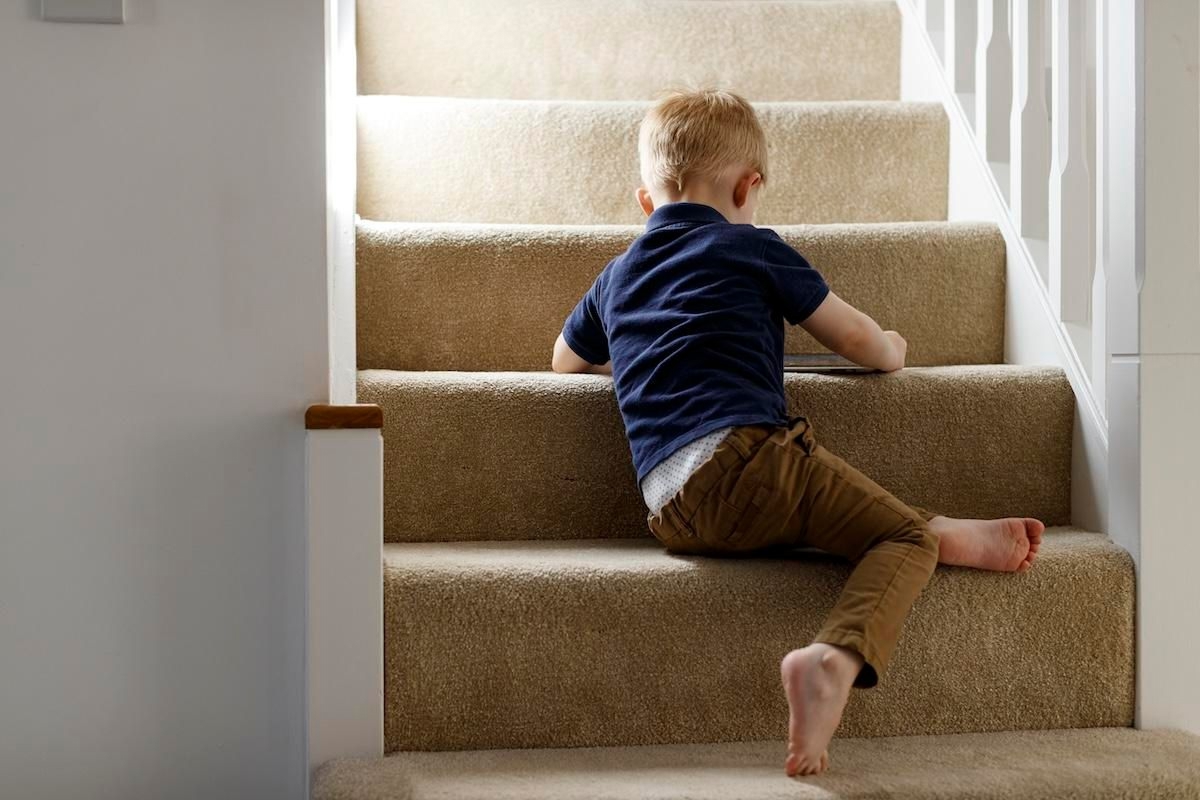
So, what makes a good stair carpet?
Carpets on stairs take more punishment than almost anywhere else in the home; feet land with greater force on a tread than on flat ground, and they see plenty of foot traffic. Here are the features to look for:
A short, low pile. Aim for a pile height of 12mm or less; thick plush carpets can be unsafe on stairs because the pile gives way under your foot at the nosing. The 8.5mm Leo Twist Nut Shell is a solid choice.
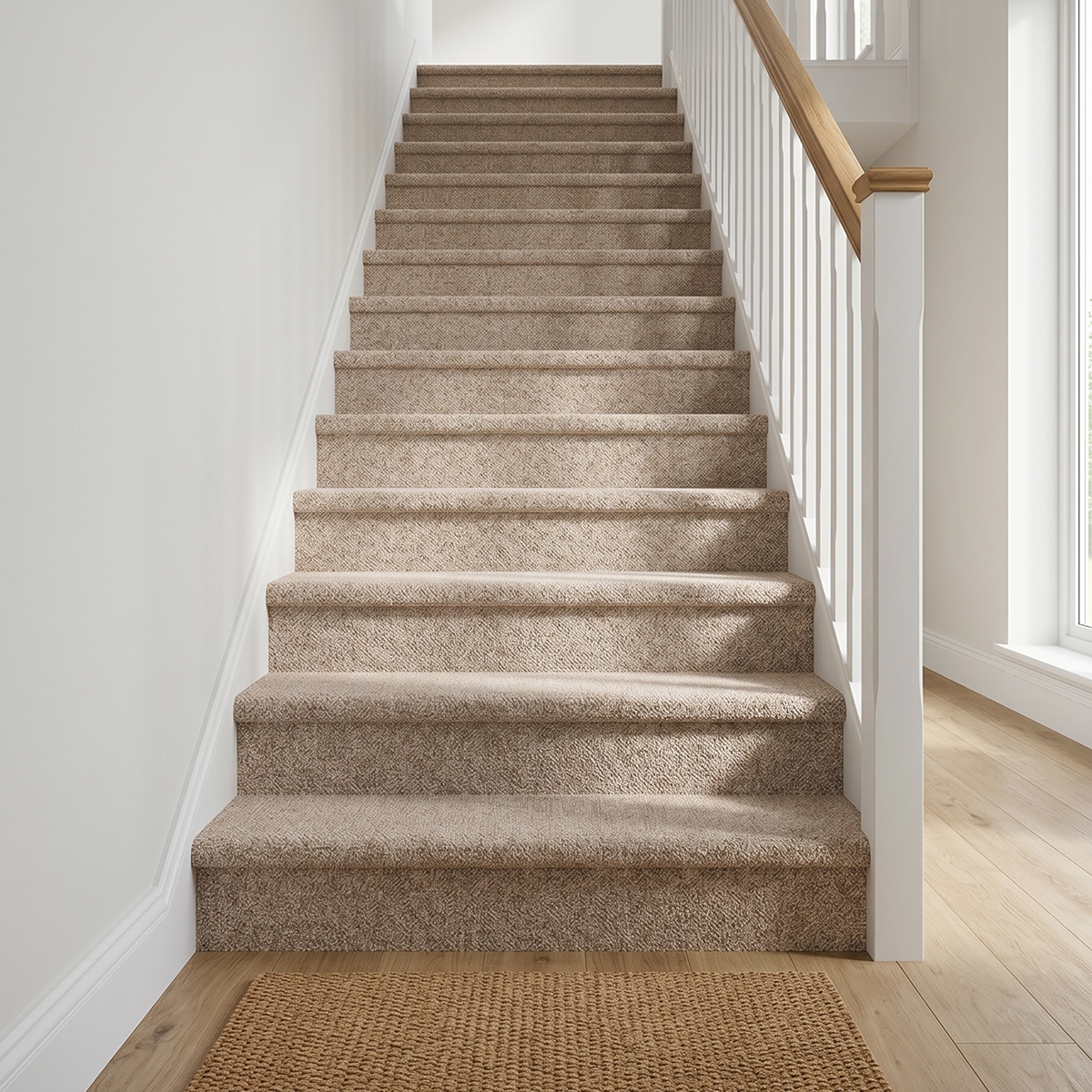
A dense tuft. The tighter the yarn, the harder it is to crush. Density keeps a carpet looking new after years of school shoes.
A Heavy Domestic rating. The British Standard for stairs and hallway flooring.
A fibre suited to heavy foot traffic. We'll cover this in the next section.
“When selecting a stair carpet, I always encourage customers to prioritise density and fibre quality. High-density, low-pile options hold up well on busy staircases.”

Paul Humphries
Managing Director, Best4Flooring
Which carpet fibres work best for stairs
Polypropylene is our everyday answer for stairs: stain-resistant, bleach-cleanable on most ranges, and priced to fit a real budget. The fibre is extruded as a solid strand rather than spun from a natural material, so water-based spills sit on the surface rather than soaking in; wipe quickly and you'll rarely see a mark.
Polyester is the other budget-friendly synthetic, with a slightly different strength set. The fibre has a softer, silkier hand feel than polypropylene; it suits cut-pile and saxony ranges and is often the carpet that looks most "luxurious" at an entry price point. The colour and pattern range is wide and polyester takes print well, which is why you'll see a lot of patterned polyester ranges.
Nylon carpets are known for their durability and stain resistance, which makes them a popular choice for high-traffic areas like staircases and hallway spaces; nylon is the hardwearing middle ground between premium wool and budget polypropylene. However, nylon sits at the top of the synthetic price bracket and most nylon ranges aren't bleach cleanable the way a polypropylene twist is.
Wool carpets are a classic choice for stairs thanks to their natural resilience and comfort underfoot. Wool twist carpets in particular are extremely hard-wearing and well suited to high traffic areas, although they need more maintenance than synthetic options. Wool is also more expensive and more difficult to keep clean and stain-free.
Here's a quick guide on what to look for.
| Material | Key Benefits | Considerations | Best For |
|---|---|---|---|
| Polypropylene Stair Carpets | Excellent stain resistance, budget-friendly | Can flatten sooner than wool or nylon | Homes with pets or young children |
| Polyester Stair Carpets | Soft, colourful, good value | Not as durable as nylon | Low traffic stair areas where comfort comes first |
| Blended (Wool + Nylon) Stair Carpets | Strong, resilient, easy to care for | Mid to higher price range | Families wanting durability and comfort |
| Nylon Stair Carpets | Very durable, keeps colour, stain resistant, affordable | Slightly less natural feel than wool | High traffic stairs and hallways |
| Wool Stair Carpets | Naturally durable, breathable, resilient, insulating, soft underfoot, flame-retardant | Higher price point | Busy homes that want long-lasting quality |
Carpet styles for stairs
Short-pile twist
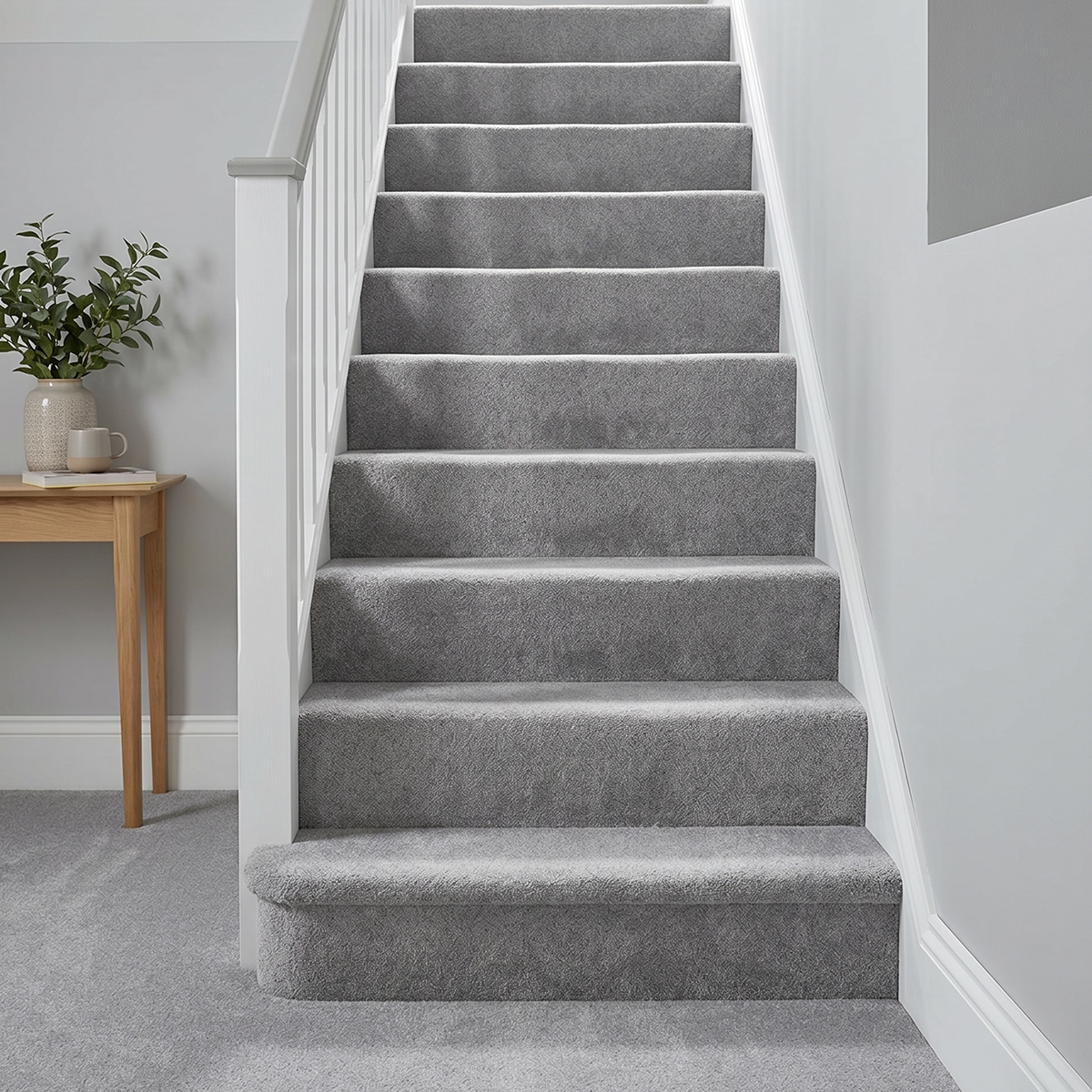
Twist pile is our default recommendation. The fibres are spun tight and heat-set, so they spring back after compression. Our Aspire range is a good option, with a 10mm pile that is short enough for a staircase, dense enough for family traffic in a range of colours to match your decor.
Loop pile and Berber
Loop pile carpets, such as Berber carpets, are incredibly durable and stain-resistant, which makes them a practical choice (in households without cats!). Loop pile grips underfoot and resists crushing, whereas cut pile carpets offer a softer, plusher feel. Cat-owners beware: cats can catch a loop and pull a strand; cut or twist pile carpets are recommended to avoid this.
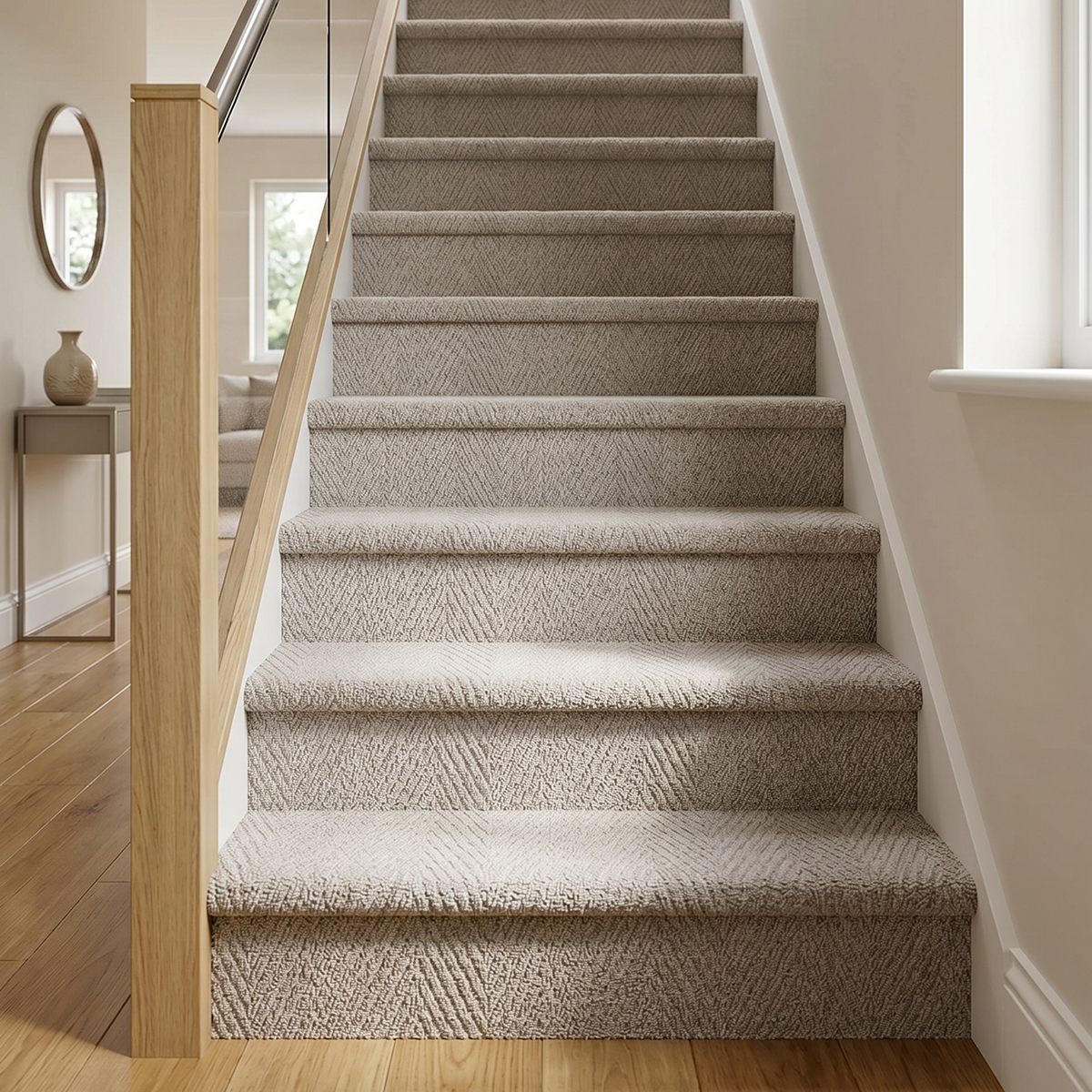
A great example is the Mouse Herringbone from our Resilience range; a soft greige carpet in a modern patterned texture to add visual interest that brings your stairs to life.
Patterned, striped, and herringbone carpets
Patterned carpets are a practical choice for stairs because a pattern hides dirt and stains better than solid colour, and a good pattern adds visual interest to what is often the first space a visitor sees. There's a growing trend towards bold colour and intricate patterned carpets on stairs, including herringbone design, geometric patterns, and floral designs.
Striped carpets are increasingly popular; a stripe pattern visually widens a narrow staircase and camouflages daily wear. Roger Oates is the best-known name in this classic design and still sets the reference point, and many an interior stylist will reach for stripes when dressing a period staircase.
The herringbone design is becoming increasingly popular on stair carpets (and throughout all flooring types!) A herringbone pattern offers structure and timeless elegance that complements both traditional and modern interior style, and a tight, low-pile weave is a strong all-rounder.
Find more stair carpet ideas in our advice centre.
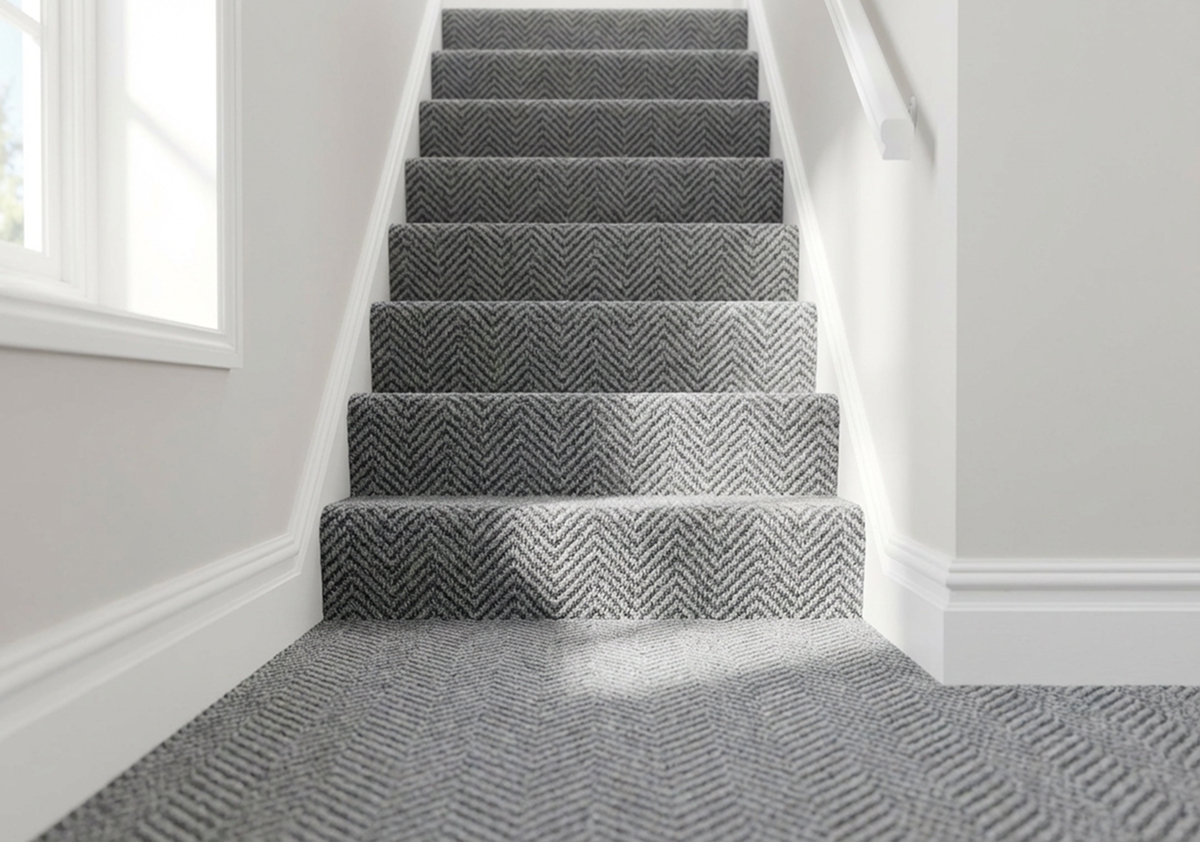
Pattern Play Grey ZigZag is built for staircases: the tight looped polypropylene pile holds its shape under constant footfall, the fibres are stain resistant and bleach cleanable for muddy shoes, and the busy herringbone pattern neatly disguises wear marks.
What to avoid
Avoid a deep-pile carpet that moves under your foot the moment you step on it. Any cut pile over 13mm on a busy family staircase flattens at the nosings within a year, and loose loop not fitted to proper grippers can lift at the tread edge.
Carpet and stair safety
Stair carpets provide traction that helps prevent slips and falls, which is especially important in households with small children or elderly residents.
A few more safety tips:
- Keep the pile short and dense.
- Avoid loose loop that isn't fitted to proper grippers.
- Think about the stair nosing: bold colour and high-contrast patterns can make the front edge of each tread harder to see on a dim staircase.
- If you want strong colour, consider it for just the risers or in the runner rather than across the whole tread.
For fitting advice, see our installing carpet on stairs guide and our tips on fitting a carpet at home.
Wall-to-wall carpet vs stair runners
A wall-to-wall stair carpet covers the whole tread, riser, and landing in one continuous flow, helping to add a sense of space.
Stair runners sit down the centre of the staircase with painted or stained wood showing at the sides. A stair runner carpet suits period homes, open-tread staircases, and anywhere you want to show off original wood in your hallway. Stair runners let you be bolder with colour and pattern; the stripes and patterns that look too busy across a whole floor are often perfect as a stair carpet runner.
Stair carpet shortlist
| Range | Type | Pile | Strength |
|---|---|---|---|
| Resilience | Loop | 6.1mm | Maximum durability on a budget |
| Stockport | Twist | 11mm | Budget-friendly wall-to-wall |
| Leo Twist | Twist | 8.5mm | Value with everyday comfort |
| Dominance | Twist | 9.5mm | Practical performance |
| Aspire | Twist | 10mm | Comfort with longevity |
Don't forget about underlay
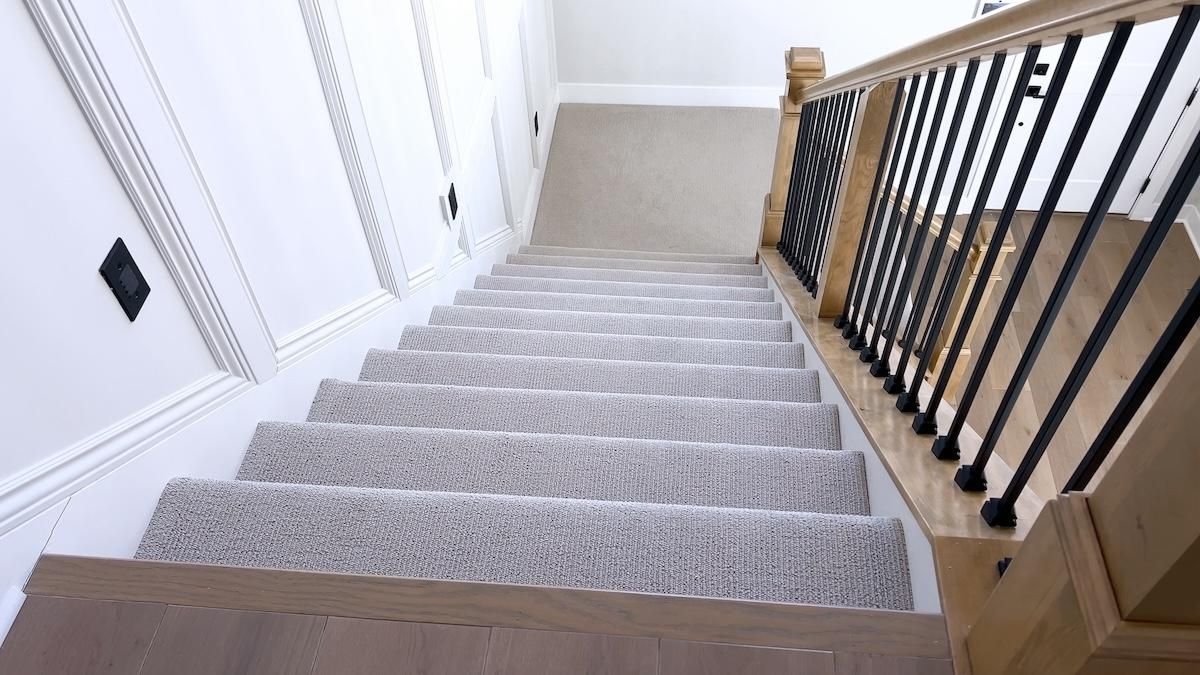
A good quality underlay helps your stair carpet last longer. A dense layer of around 9mm thick extends the life of your carpet and provides essential cushioning that protects carpet fibres from being crushed on the step edge. The right underlay also enhances safety: proper cushioning helps reduce the risk of slips and falls.
Too soft a layer can be a safety issue. Too thin and the carpet wears out twice as fast. Look for a quality underlay that's firm, dense, and rated for stairs.
Tredaire Chromium is our first pick: 9mm PU foam, premium density, and rated for stairs. Compare the full selection of carpet underlay, and for more advice see our guide to choosing carpet underlay. When you buy underlay for a staircase, match the width to the carpet or runner rather than ordering a wide roll and cutting on site.
How much carpet do you need?
Allow around 40cm per step (tread plus riser), plus the landing measurement and a small nosing allowance. A typical thirteen to fifteen step flight with a small landing comes out around 8 to 10m2.
Winders and quarter-turn landings change the calculations. For a stair carpet runner, measure the centred width, the total length, and any landings the runner continues across; add an allowance for the final turn.
Fitting: DIY or professional?
On a simple straight flight, with the right tools and a long afternoon, you can do it yourself. Our guide to installing carpet on stairs walks you through the steps, covering proper stapling technique, gripper placement, and the order in which to tension each tread. If your staircase has a winder, a quarter-turn, or an open riser, you may choose to hire a carpet fitter.
For inspiration, our stair carpet ideas and inspiration roundup covers neutral schemes, bold colour choices, classic stripes, and patterned looks, so you can see how different styles sit before you choose carpets for your own staircase.
Keeping a stair carpet looking good
Three simple habits protect your lovely new carpet.
Vacuum at least twice a week. A motorised brush head lifts the grit that abrades carpet fibres before it works into the pile.
Adopt a no-shoes policy. Shoes carry in abrasive soil that degrades carpet quality faster than anything else; a no-shoes policy significantly extends the life of stair carpet, especially in busy households with children.
Spot clean with mild detergent. Act fast on stains and scuffs; they're harder to lift once set. Once a year, a professional deep clean resets the carpet for another twelve months.
Check out our guide on how to clean carpet for routine advice or learn how to remove stains from carpet.
FAQs
What is the longest-lasting carpet for stairs?
A heavyweight, high-twist polypropylene with a short to medium pile is a hard-wearing option for stairs. Pair it with a quality underlay rated for stairs, and you can achieve 10 to 15 years of wear. Shop our stair carpet collection for options.
Can I install carpet on stairs myself?
Yes. With the right tools, careful measuring and a healthy dose of patience, it's possible to install carpet as a DIY project. Read our guide on how to install carpet on stairs for all the info you need.
Should carpet be thick or thin on stairs?
A low-pile carpet, often under 10 to 12 mm in total thickness, is widely recommended for stability and safety on stairs to help reduce movement and wear. See our stair carpet collection for suitable options.
How much carpet for 14 stairs in the UK?
Most 13 to 15 step staircases with a small landing need around 8 to 10 square metres of carpet, although exact measurements depend on tread depth, riser height, width and any winders. See our full guide to installing carpet in your own home for more advice.
What is the best carpet for stairs with pets?
Cut pile carpets made with stain-resistant fibres like polypropylene or nylon are often easier to maintain. Loop pile carpets can snag on claws, so many households with pets prefer cut pile. View our guide to pet-friendly carpets for more information.
What is the best underlay for stairs carpet?
Use firm, dense underlay rated for stairs or heavy traffic to add grip, support and longevity. Read our guide to carpet underlay.
Is dark or light carpet better for stairs?
Mid-tone carpets are a popular choice because they hide soiling and stay timeless, although dark or light shades can also be suitable depending on lighting, décor, and how much you enjoy cleaning! For help picking the right shade, read our guide on choosing the best carpet colour, or browse popular shades like beige and grey, alongside our full collection of neutral stair carpet colours.
Is 100% wool carpet suitable for stairs?
Yes, provided the construction is appropriate. Wool is strong and elastic, however softer or loosely constructed wool carpets are less suitable than dense twist or loop options.
How much does it cost to carpet stairs in the UK?
Many UK homes spend between £120 and £300 on a straight staircase using budget to mid-range carpets, though costs vary with carpet grade, fitter rates and staircase design. Compare affordable stair carpet options.
What carpet is best for stairs and landing?
A dense, hardwearing polypropylene twist pile in a neutral colour is a solid choice for creating flow within the spaces. See our stair carpet collection for suitable options, and our hallway flooring ideas for matching looks across the spaces.
Do you need underlay for carpet on stairs?
Yes. Underlay improves safety, comfort, stability and lifespan. Visit our guide to carpet underlay for more.
What is the best kind of carpet to put on stairs?
Dense twist pile and certain loop carpets, like berber carpets, perform well because they resist flattening and show less wear. The best choice depends on your household, including children, pets and the overall feel you want underfoot. Browse durable stair carpets.