


Victorian Terrace Flooring Transformations
A Victorian terrace is one of the most rewarding homes to renovate. The bay windows, the high ceilings, the original cornicing, the patterned hallway tiles that catch the morning light through the front door, all of it gives the house its character before you've added a single piece of furniture. The challenge is combining that character with a flooring that works for modern living.
The good news is that you no longer need authentic ceramic or porcelain tiles to achieve the look. Modern sheet vinyl and luxury vinyl flooring now replicate Victorian floors with remarkable accuracy, at a fraction of the cost, with none of the sealing, specialist installation, or subfloor preparation that traditional tiles demand.
Flooring choices, paint pairings and small period details that bring a Victorian home back to life, with examples from real customer homes and the products that have made it possible.
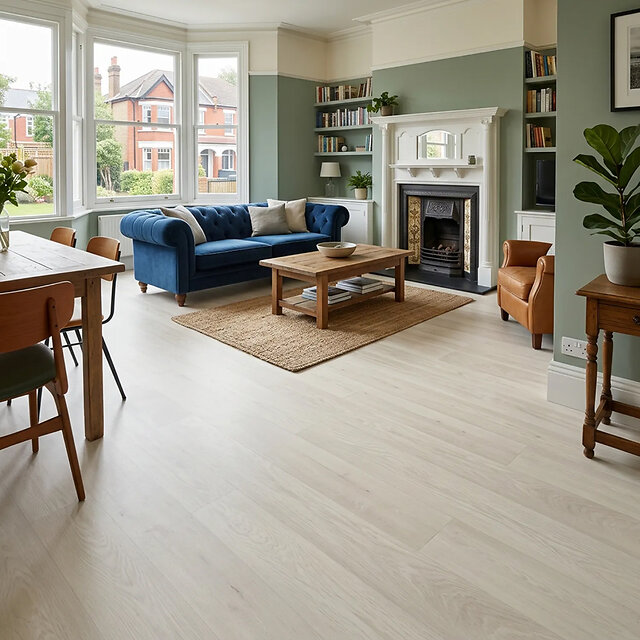
Characteristics of Victorian Flooring
Victorian-era floors each had a specific role. The hallway needed to handle muddy boots and visitors before the carpets started; the kitchen and scullery needed something that wiped clean; the parlour and bedrooms received a softer treatment. So when you walk into an original Victorian home today, the floors fall into three rough buckets:
- Encaustic and geometric tile in entrance halls and porches. These are heavily patterned, often monochrome black-and-white check or richly coloured tessellated designs.
- Solid pine floorboards in living rooms and bedrooms, usually wide, often originally stained.
- Quarry tile or stone in kitchens and pantries, which are more practical than decorative.
A period home transformation usually keeps two of those three intact while modernising one. Most homeowners restore the boards (or replace them with wide-plank LVT or laminate), keep something soft for the bedrooms, and embrace patterned tile-effect flooring for the hallway, kitchen or bathroom where the period detail does the most visual work.
How to Achieve Period Character with Modern Materials
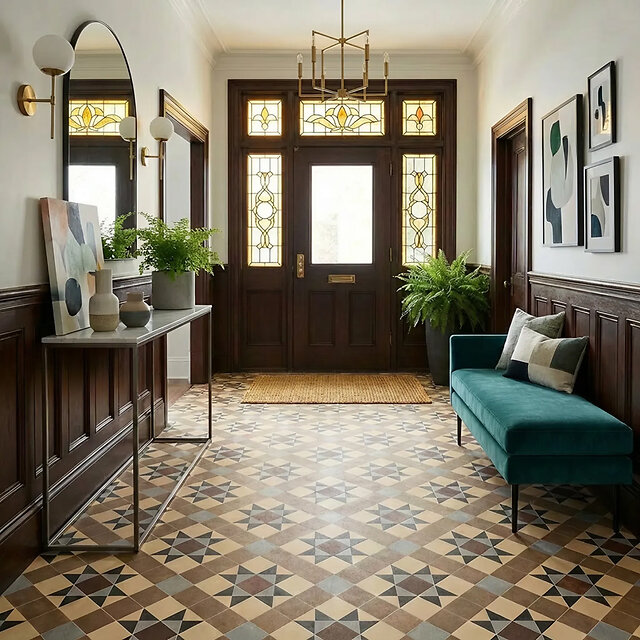
Traditional Victorian decorated tiles are beautiful, expensive, and a real commitment to install or restore. For a transformation that respects the period without taking out a small loan, modern vinyl gives you the look at a fraction of the cost, in a single piece that handles muddy boots, dropped toiletries and everyday family life.
Common Victorian Floor Patterns and Designs
Victorian terrace flooring designs are built from numerous small, individual pieces in various geometric shapes. Common patterns in Victorian floor tiles include classic black and white chequerboard designs, as well as more complex geometric compositions like star and box motifs, fitted together with the precision of a puzzle. Common Victorian floor patterns include classic black and white chequerboard, octagon and dot, and intricate mosaic designs, each with its own period character.
Our Era Victorian collection is designed to recreate the tessellated geometric patterns Victorians used in entrance halls and bay windows. Six designs, each in the same 2.5mm felt-backed format, all suitable for hallways, bathrooms, kitchens and conservatories.
Black and White Tessellated
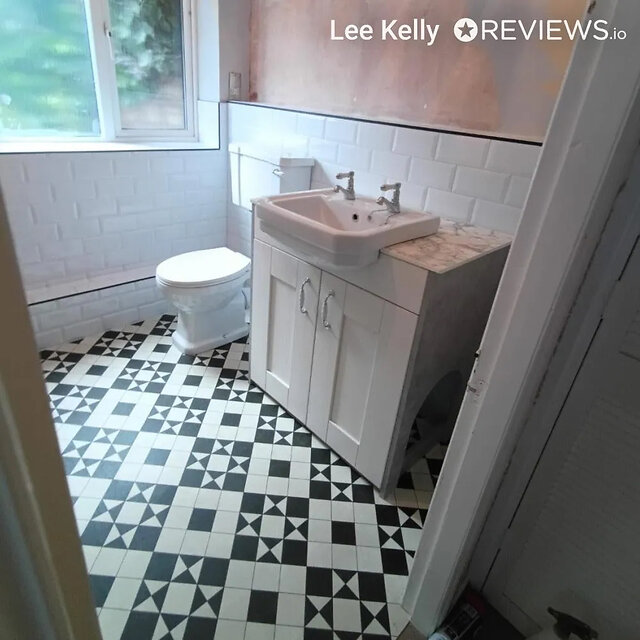
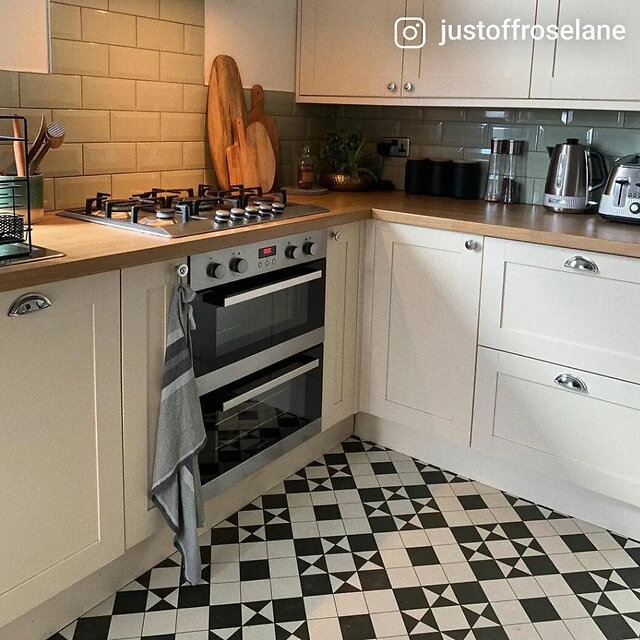
The classic black and white chequerboard, reimagined as a modern tessellated geometric, with the more complex star and box motifs of late-Victorian tile work also showing through. Era Brunel is the most direct callback to the late-Victorian and Edwardian hallway floors that defined the era, the original high traffic areas of a terraced home. Bold, graphic, and confident enough to anchor a narrow entrance corridor without competing with framed prints or coat hooks.
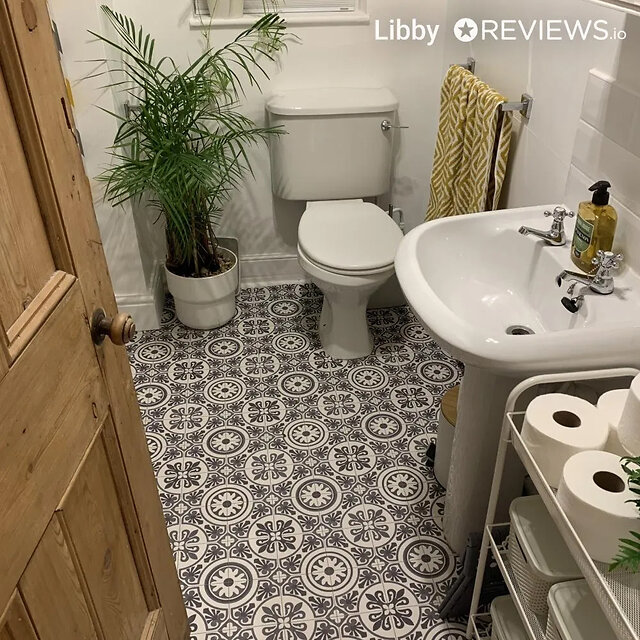
The pattern translates beyond the hallway too: Lee Kelly’s Victorian bathroom uses Era Brunel with white metro-tiled walls, keeping the period reference intact in a smaller, less obvious space.
@justoffroselane chose the same Era Brunel pattern for a kitchen extension on Instagram, pairing the bold tessellated with beautiful shaker cabinetry and warm wood worktops, and the pattern carries the heritage detail of a Victorian hallway through to a modern, well-used room without the upkeep of original encaustic.
Warm Tessellated Tile
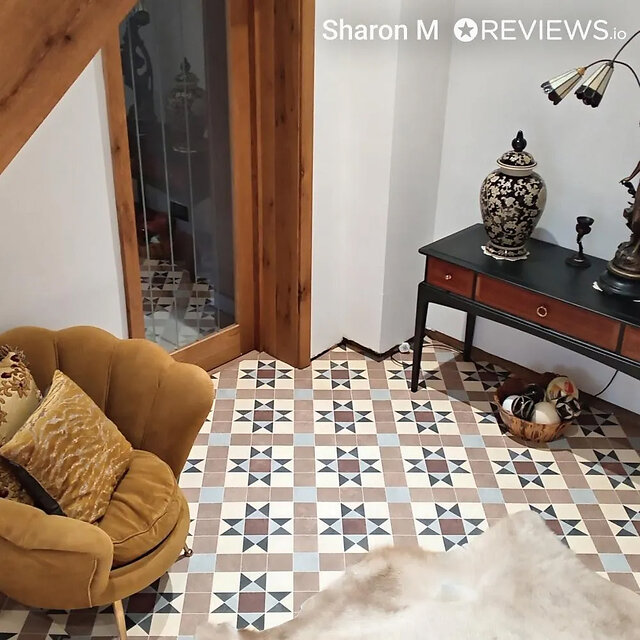
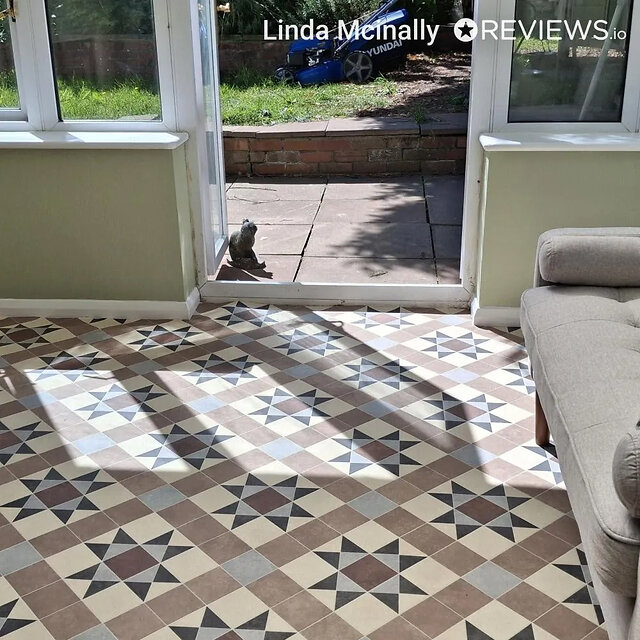
Era Brindley brings warmer tones into the same tessellated geometric structure: black, grey, brown and cream working together to give the depth of an original encaustic floor. Particularly good in north-facing hallways and bathrooms where the warmer palette compensates for cooler natural light.
Sharon M paired Era Brindley with a polished console table and a Tiffany lamp in a Victorian hallway, where the terracotta and slate tones match the period furniture alongside the carved woodwork.
Linda McInally took the same pattern into a conservatory, where the warmer browns and greys match the patio brick outside.
Green and Black Geometric
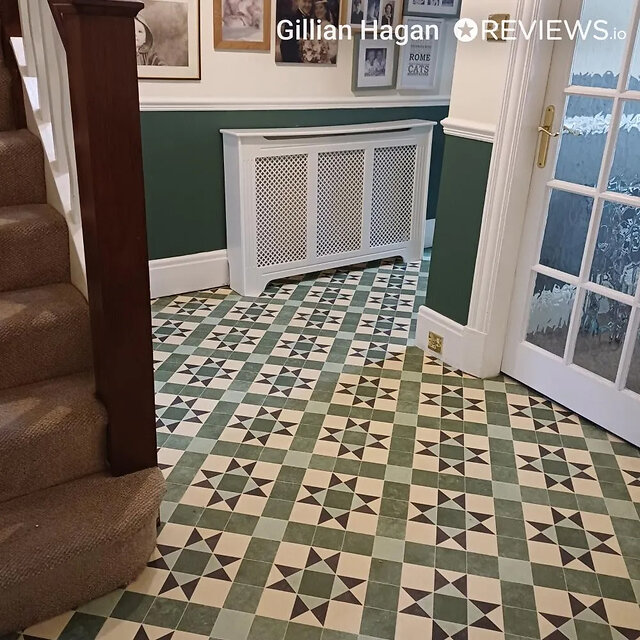
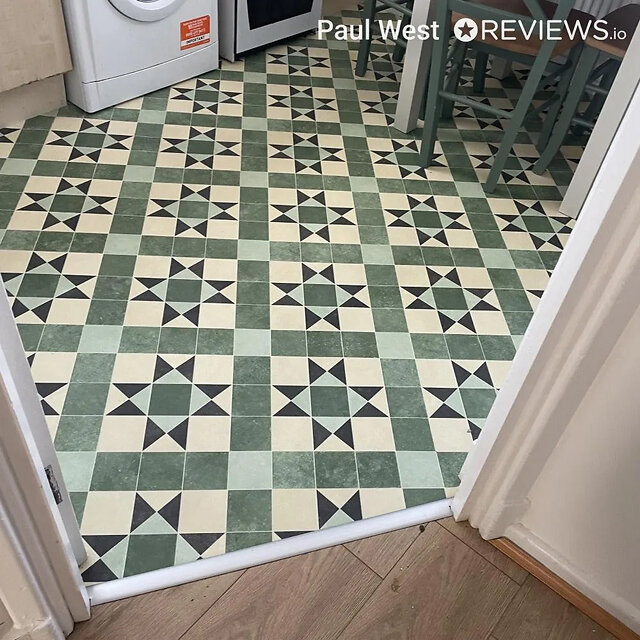
For homes leaning into the heritage colour revival, the Era Atkinson brings sage green into the tessellated pattern. It pairs beautifully with deep heritage paint colours and white-painted woodwork, working in both classic and more contemporary Victorian schemes.
Gillian Hagan’s Victorian hallway uses Era Atkinson against deep green and cream walls; the textbook palette.
Paul West fitted the same pattern in a working utility, where the tessellated suits the heavy traffic of a kitchen-adjacent room and meets the wood-effect floor beyond at the doorway.
The full Era range also includes the Era Barlow, Era Barton, and Era Parson designs, each interpreting a different Victorian era pattern. All six designs are a customer favourite for build quality. They are 2.5mm thick felt-backed sheet vinyl, hard wearing, built to stand up to family foot traffic, slip and water resistant, with built-in acoustic insulation and a 7-year residential guarantee that comfortably stretches into decades of practical use when properly installed.
Herringbone and Parquet
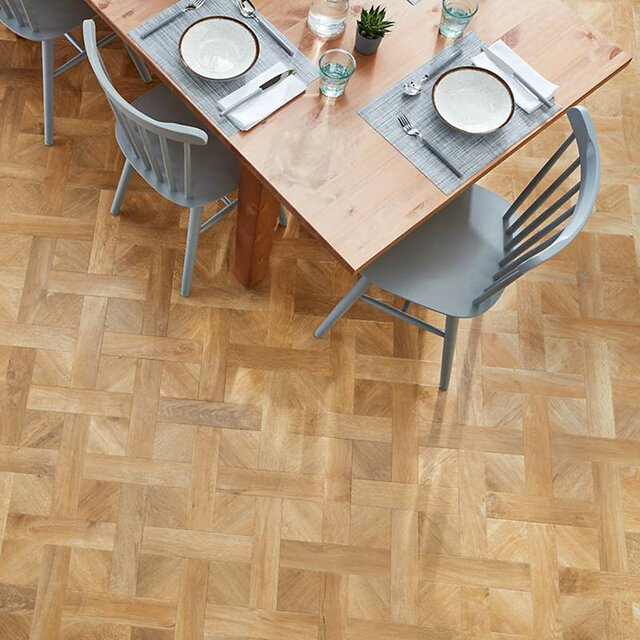
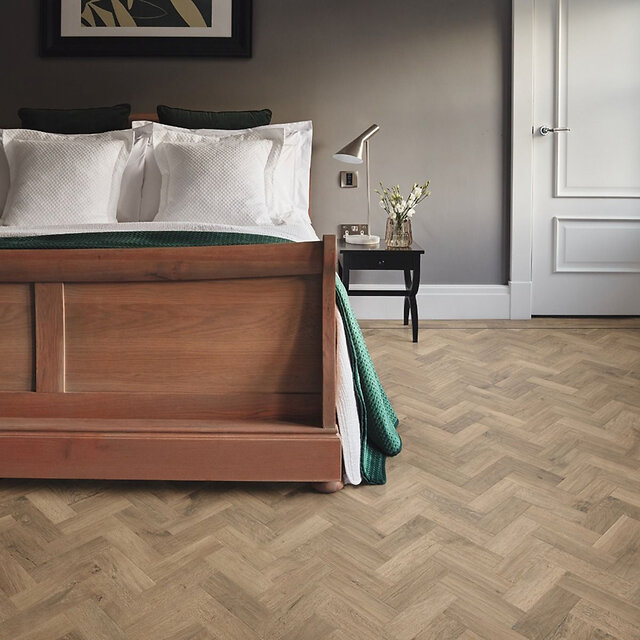
Parquet was a hallmark of grander Victorian and Edwardian homes, often laid in herringbone, basket-weave or block patterns across drawing rooms and dining rooms. Today's parquet LVT recreates that look in a modular tile that can be laid at any angle. The Karndean Art Select range is one of the most authentic parquet collections in our catalogue. Its flexible glue-down construction and thinner, easier-to-cut planks make it ideal for creating custom layouts, from classic herringbone patterns to more intricate parquet designs. The result is a floor with all the timeless character of traditional wood parquet, but with far greater design flexibility and a much more practical installation process.
Herringbone has come back into favour in the last few years, and it suits a Victorian terrace particularly well because the pattern was already common in higher-end Victorian homes.
Herringbone LVT gives you the same visual rhythm as a traditional parquet block floor without the cost or the installation time. The Moduleo Roots Herringbone range is another strong collection for period homes. If you'd rather a click-fit install, the Moduleo LayRed Herringbone range gives you the same designs in a floating-floor format with built-in underlay.
Adding Decorative Borders
With LVT, you can get creative with decorative design strips, providing a polished transition between surfaces and adding depth to the overall design. A carefully arranged border gives the floor the considered, complete feel that defines a true period home, especially where the pattern meets the room corners and the doorway. Popular styles include diamond and dogtooth borders, and even a single line of border tile can lift a plain field of pattern into something that feels authentically Victorian and sharpens the sense of period detail in the room.
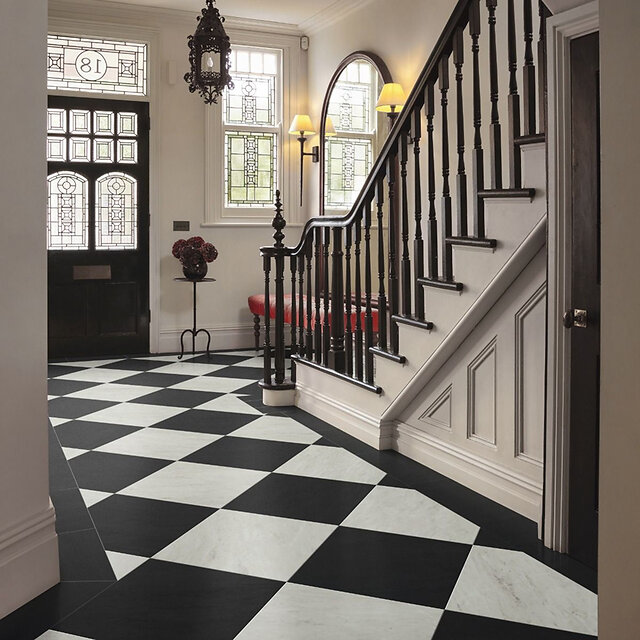
Karndean Art Select Corinthian Marble & Calacatta d'Oro LVT
Other Decorative Pattern Tiles for Period Homes
Not every Victorian terrace renovation needs to lean fully into traditional tessellated flooring. Some of the most successful period-inspired interiors soften the look slightly, blending Victorian character with more relaxed decorative influences. Cement tile and Moroccan-inspired patterns work particularly well here, keeping the sense of heritage and craftsmanship while feeling a little less formal than classic black-and-white encaustic designs.
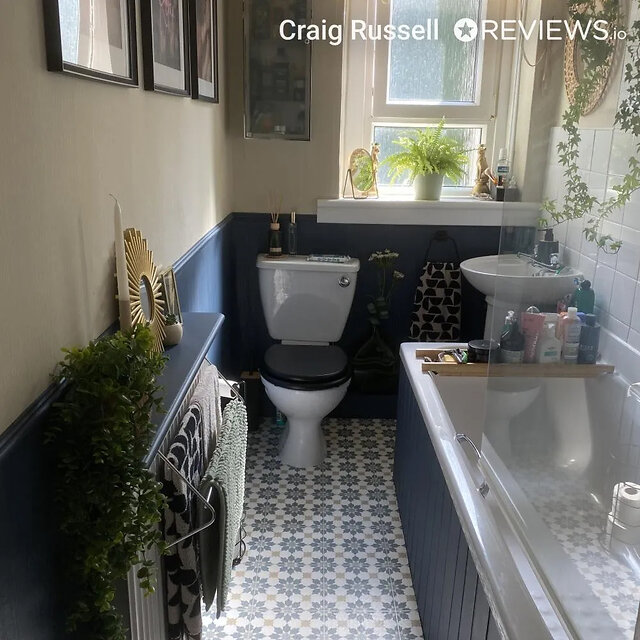
Craig Russell’s bathroom shows how Moroccan-inspired flooring can work beautifully in a darker Victorian scheme. Larache Fes sits beneath deep navy panelling and a charcoal bath surround, where the patterned tile softens the heavier colour palette and adds movement across the floor. The faded geometric design keeps the room feeling traditional rather than overly modern, while the monochrome tones stop the pattern from overwhelming the smaller space. It’s a great example of how patterned vinyl can become part of a layered heritage colour scheme rather than simply acting as a feature floor.
Janet Walne used Tangier 05 in a Victorian porch, proving how effective patterned flooring can be in smaller transitional areas. The warm brown and black medallion design gives the entrance immediate character while helping disguise the dirt and wear that naturally comes with a busy front doorway. Against painted woodwork and traditional detailing, the softer Moroccan-inspired pattern feels relaxed and welcoming, bridging the gap between classic Victorian style and more contemporary decorative trends.
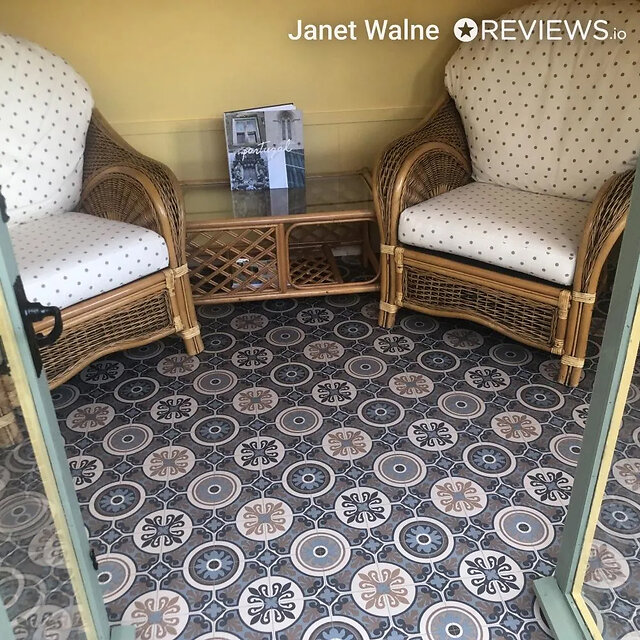
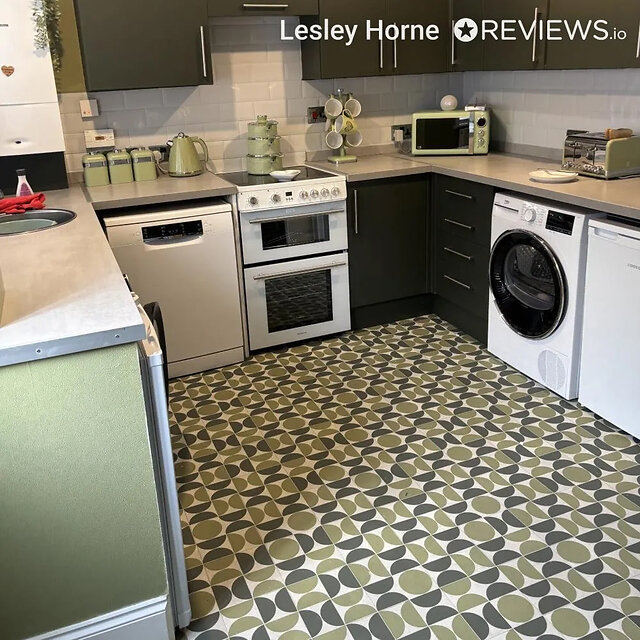
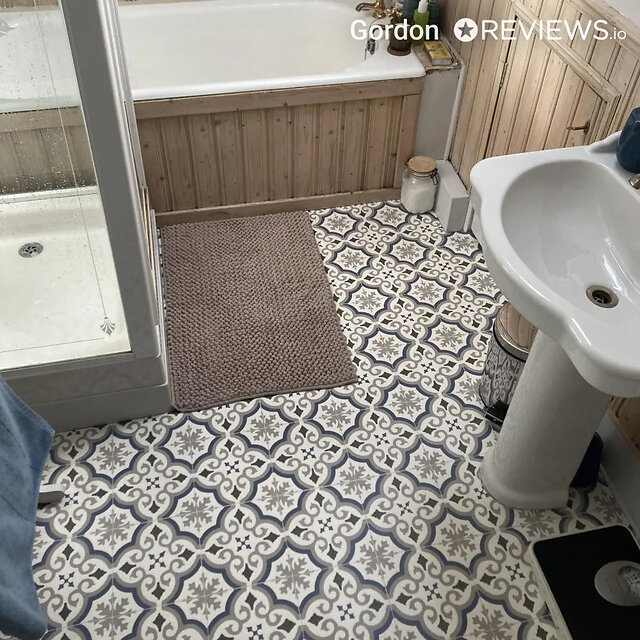
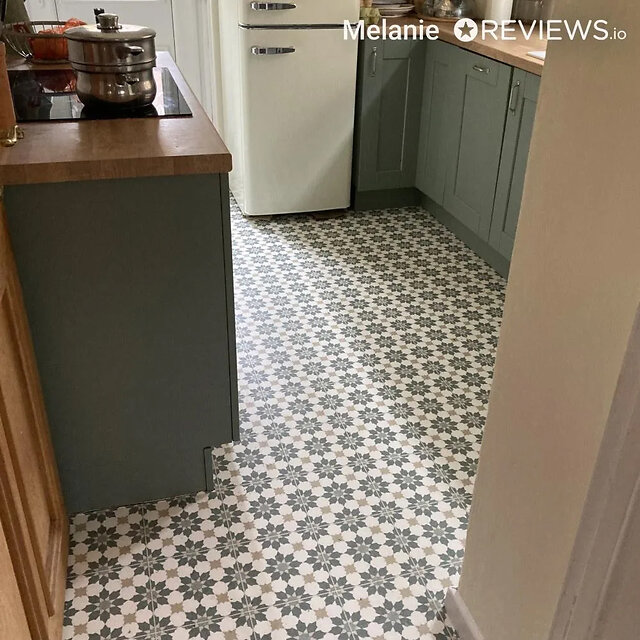
These styles may not be strictly Victorian, but they sit surprisingly naturally within period homes. Softer geometric repeats, faded Moroccan motifs, and decorative cement-inspired patterns all bring warmth, texture, and personality to Victorian interiors without feeling overly formal or tied to a traditional tessellated look.
What Paint Colours Pair with Victorian Floors?
Heritage paint brands have spent the last twenty years documenting the colours that originally went on these walls. Their historical colour cards remain the safest bet for a sympathetic finish, with contemporary shades sitting alongside the period palette for kitchens, bathrooms and other contemporary settings that need a brighter feel.
Useful pairings with our Era range:
- Era Brunel (monochrome): pair with deep colours like Farrow & Ball Hague Blue or Little Greene Bone China Blue for a confident scheme. White woodwork keeps it from feeling heavy.
- Era Brindley (warm tessellated): warm earth tones work well, Farrow & Ball Setting Plaster, Little Greene Stone Mid Cool, or any soft terracotta.
- Era Atkinson (sage and black): heritage greens and creams: Farrow & Ball Bancha or Little Greene Sage Green pair the floor's green back into the wall.
For doors and woodwork in a Victorian terrace, off-white tones like Farrow & Ball School House White or Little Greene Slaked Lime read more period-appropriate than a pure brilliant white.
Complete the Look with Period Accessories
A Victorian terrace transformation is the sum of small details. Once the flooring is in, attention turns to the accessories that anchor the period feel:
- Deep skirting boards (140mm to 220mm) painted in the wall colour or a contrasting heritage tone
- Picture rails at door-head height, restored or replaced where the originals are gone
- Brass or iron door furniture rather than chrome
- Period radiators in column or column-rad styles, painted heritage colours rather than left silver
- Stained glass or etched glass in front-door and pantry-door panels
- Tongue-and-groove wainscoting painted in a deep heritage tone, particularly in hallways and downstairs WCs
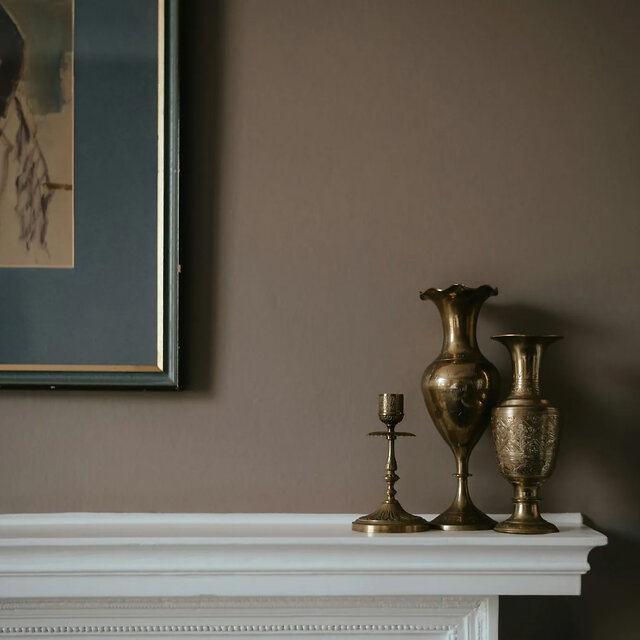
You don't need all of these to get that period feel. A good rule is two strong period choices in any room, say, the original tile floor and a restored fireplace, paired with a clean modern lighting fixture or a contemporary piece of art to keep the room from feeling like a museum.
Ready to Plan Your Victorian Terrace Transformation?
The right flooring is the centrepiece of a Victorian terrace transformation, and the small details around it carry the rest of the period feel. Browse our Era Victorian range to see all six tessellated patterns, or order free samples to see how each pattern reads in your own light against your skirting and door colours.
For the wider picture, our patterned vinyl flooring collection covers Victorian, Edwardian and Art Deco-inspired designs in the same easy-to-fit sheet format.
Frequently Asked Questions
What flooring suits a Victorian terrace best?
Patterned tile (real porcelain or modern sheet vinyl in the Era range) for hallways, bathrooms and kitchens; wide-plank wood-effect LVT or restored boards for living rooms and bedrooms; and soft carpet only in the snug spaces where character matters less than warmth. The Victorian original used a mix of materials room by room, and modern transformations work best when they follow the same logic.
Are vinyl Victorian tiles a good replacement for original encaustic?
For most homes, yes. A felt-backed sheet vinyl gives you the visual character of an encaustic floor at a fraction of the cost, fits in a single afternoon, handles moisture and muddy boots, and can be lifted and replaced if you ever want to swap the pattern. Real porcelain still wins on long-term durability and authentic feel underfoot, but the gap has narrowed considerably.
What paint colours work with Victorian floor tiles?
Heritage palettes from brands like Farrow & Ball and Little Greene give you the most period-accurate pairings. Deep blues, sage greens, earth-toned terracotta and warm off-whites all sit naturally with patterned Victorian floors. Avoid bright modern whites; they tend to fight rather than complement the historical palette.
Where can I install Victorian tile-effect vinyl?
The Era Victorian range is rated for hallways, bathrooms, kitchens, downstairs WCs, utility rooms, conservatories and entranceways. The patterns are not rated for outdoor use, and the felt-backed format is best suited to dry, climate-controlled rooms rather than garages or outbuildings.
How do I restore the rest of a Victorian terrace floor?
Lift the existing boards if they're sound, sand back any worn finish and re-stain to your desired tone. If the boards are too damaged, replace with new pine, engineered wood or wide-plank LVT in a warm oak finish. Whatever you choose, the rest of the floor should sit comfortably alongside the patterned tile rather than competing with it.