


The Best Flooring for a Conservatory
A conservatory is one of the hardest-working rooms in any British home. It bakes in the summer, turns chilly in winter, and puts up with relentless muddy boots from the garden. Your conservatory floor has to handle all of that and still look the part.
This guide walks you through the best conservatory flooring ideas, the materials to consider, and the practical details that help your floor look and feel amazing for many years to come.
Why is Conservatory Flooring Different?
A conservatory sits somewhere between an indoor room and the garden. With glass on three sides (and usually overhead too), you get plenty of direct sunlight, swings in temperature, and more moisture than you would find in a normal living room.
Your conservatory floor needs to handle three things well:
- Temperature shifts, without warping or gapping
- Strong UV resistance, so colours don't fade
- Moisture from condensation, wet boots, and the occasional leak
Get the essentials right, and the rest comes down to style, budget, and what suits your home.
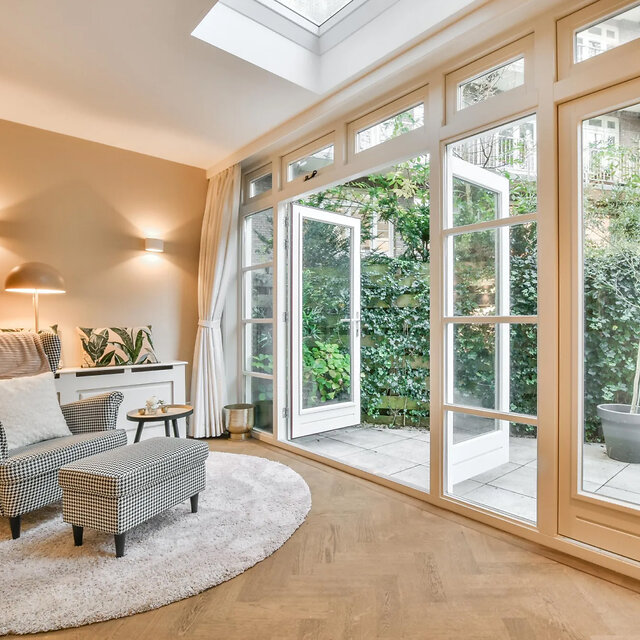
How to Choose Conservatory Flooring
Here are a few things to think about when choosing the right flooring for your conservatory.
How do you use the space?
A conservatory used as a quiet reading nook has very different needs to one that doubles as a playroom, dining spot, or thoroughfare to the garden. Busy conservatories need tough, hard-wearing materials. Quieter spaces can afford to go softer and cosier.
What is the adjoining room?
If your conservatory opens off from the kitchen, go for something water-resistant like LVT, vinyl or water-resistant laminate that handles spills and muddy boots in both rooms. If it flows from a living or dining room, matching the existing floor, or picking something close to it, helps the two spaces feel more connected.
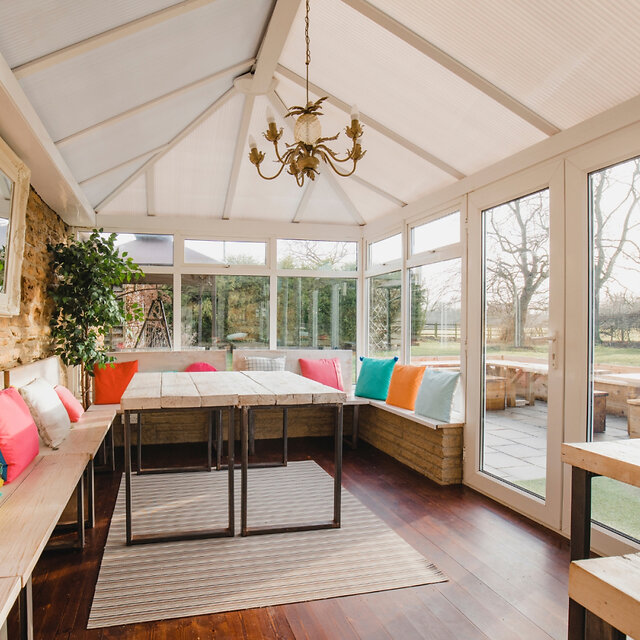
What is the subfloor type?
The subfloor matters more in a conservatory than almost anywhere else in the house. Concrete slabs are common in modern conservatories and suit most flooring types, provided a damp-proof membrane is in place. Suspended timber subfloors need more care, particularly with LVT or tiles, and may need levelling before any flooring goes down.
How much sunlight does the room get?
As you might expect, south-facing conservatories catch the most direct sun. Floor temperatures can climb well beyond what you would see in a normal room. UV resistance really matters here, and laminate, LVT, and tiles each cope with it in different ways.
How much do you want to spend?
Cost-effective does not have to mean short-lived. Laminate and LVT sit at the lower end of the price range, but, chosen well and fitted correctly, they could easily last over a decade. Natural stone and porcelain tiles cost more upfront, but they will often outlast the conservatory itself.
The Best Conservatory Flooring Options
Luxury Vinyl Tiles (LVT)
We love LVT. If we had to name the best flooring for most conservatories, LVT would be right at the top. Luxury vinyl tiles, or LVT, is a multi-layer rigid or semi-rigid product with a realistic printed design layer and a durable wear layer on top. It's not the same as older vinyl flooring, and it performs considerably better in conservatory conditions. What makes conservatory vinyl flooring a strong choice:
- 100% water resistant, so spills and damp boots are not a problem
- Warm and comfortable underfoot, with a slight give that feels softer than tiles
- Stable across fluctuating temperatures when fitted correctly
- Slip-resistant finishes available for safety near garden doors
- Easy cleaning with a soft broom and damp mop
Can you put LVT flooring in a conservatory? 100%. It's one of the most reliable choices you can make, particularly in family homes or conservatories that double as a back door route from the garden. For most conservatories, we'd suggest glue-down dryback for its thermal stability, though click-fit works well with the right perimeter expansion gaps.
Things to note:
- LVT also needs a smooth, flat subfloor. Any unevenness will show through over time, so it is worth levelling the subfloor properly before fitting.
- Allow LVT to acclimatise in the room for at least 24 to 48 hours before installation, particularly in a conservatory where temperatures vary.
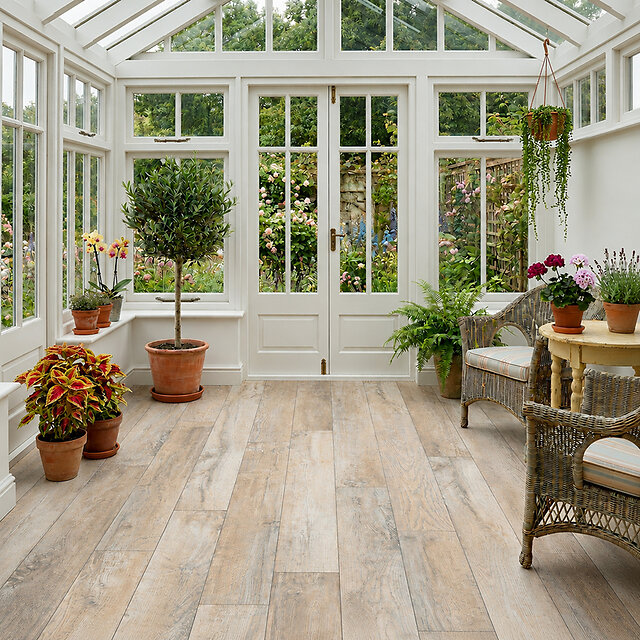
The Moduleo Roots Country Oak 24130 is a warm rustic oak in glue-down dryback format, with embossed-in-register grain that picks up changing light through the glass. A solid year-round choice for high-traffic conservatories.
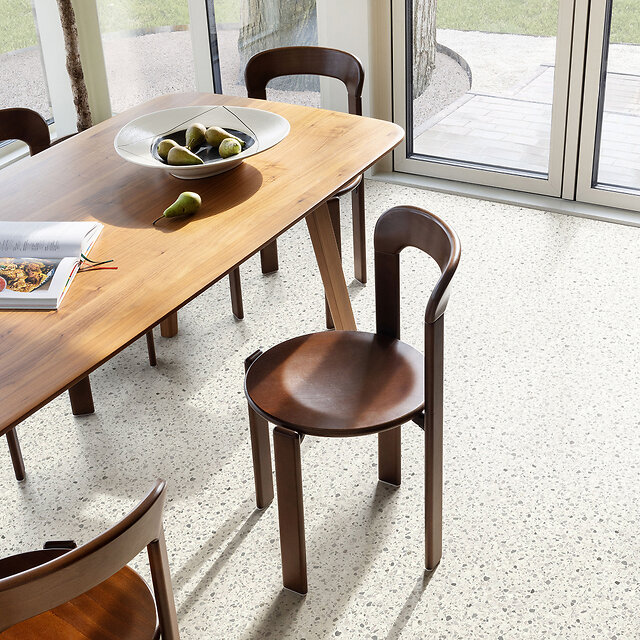
Alternatively, for a more contemporary feel, Moduleo LayRed Bolzano 46112 combines a striking terrazzo-inspired design with the convenience of click-fit installation and integrated underlay.
Laminate Flooring
Laminate is one of the most popular conservatory flooring choices. It gives you the look of real wood for a fraction of the price, and today's laminate copes with temperature swings far better than older versions ever did. Why people choose laminate for a conservatory:
- Brilliant value, with a wide range of colours and wood effect designs
- Low maintenance, just a sweep and the occasional damp mop
- Scratch-resistant surface that handles furniture and foot traffic well
- Easy click fit installation over most subfloors
A few things to keep in mind:
- Quality really matters. Cheap laminate can swell and lift in humid conditions
- It needs expansion gaps around the edges to cope with temperature movement
- Steer clear of wet mops and standing water
Is laminate flooring suitable for a conservatory? Yes, as long as you choose a quality product with decent UV resistance and your installer leaves the correct expansion gaps. It is one of the most practical conservatory flooring ideas if you want the look of solid wood (without the higher price tag).
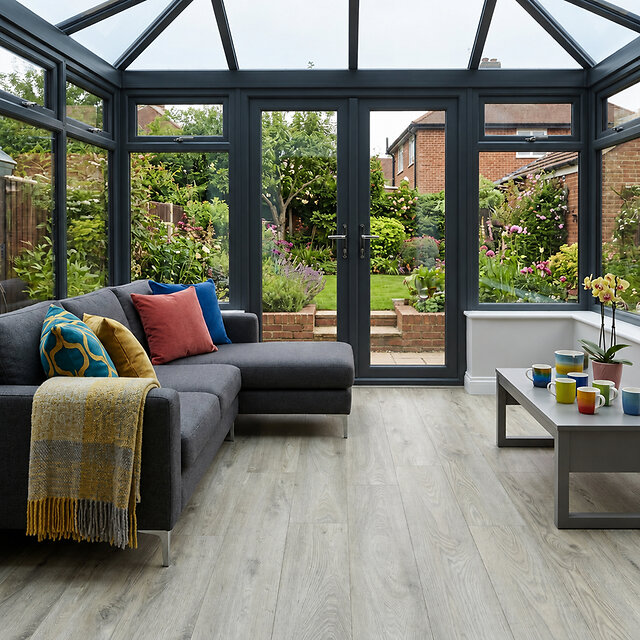
The Verdanti Splash Sandpiper is an 8mm water-resistant laminate in a soft, pale oak that mixes creams, beiges and greys across the planks. Bevelled on all four sides and rated for underfloor heating, it's ideal for a bright conservatory looking for an airy, contemporary feel.
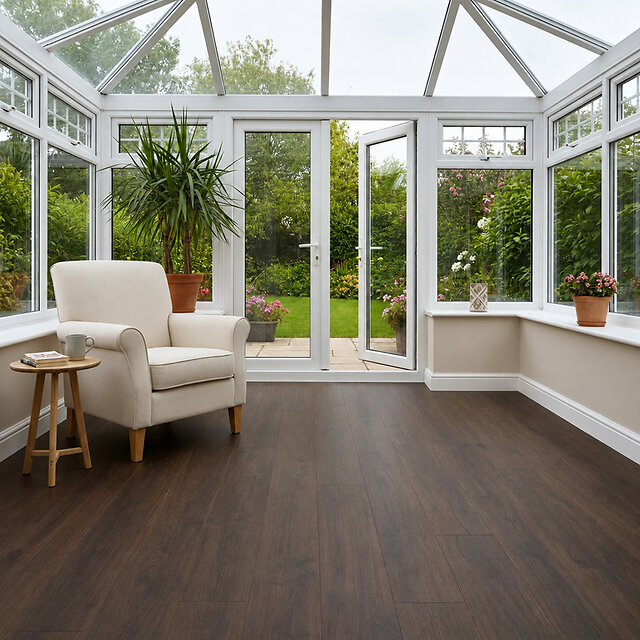
The Quick-Step Impressive Ultra Classic Oak Brown IMU1849 is a 12mm water-repellent board in a warm mid-brown oak with subtle natural grain. The warmer tone gives a richer feel against pale walls and white-painted frames.
Sheet Vinyl
Sheet vinyl is the budget-friendly, fully waterproof option that often gets overlooked for conservatories. It comes in a single sheet with no joins, which means moisture can't work its way between planks. Modern vinyl flooring is also surprisingly convincing, with realistic wood-effect and stone-effect designs at a fraction of the cost. Why it works for conservatories:
- 100% waterproof across the surface and at the edges, with no seams for water to find
- Cushioned construction is soft underfoot and forgiving with dropped items
- Many ranges include slip-resistant finishes for damp-boot zones
- Cheapest of the practical conservatory options
- Easier to lift and replace than glued or click-fit alternatives
For a conservatory-grade option, look for a felt-backed sheet vinyl with good slip resistance and a longer wear guarantee.
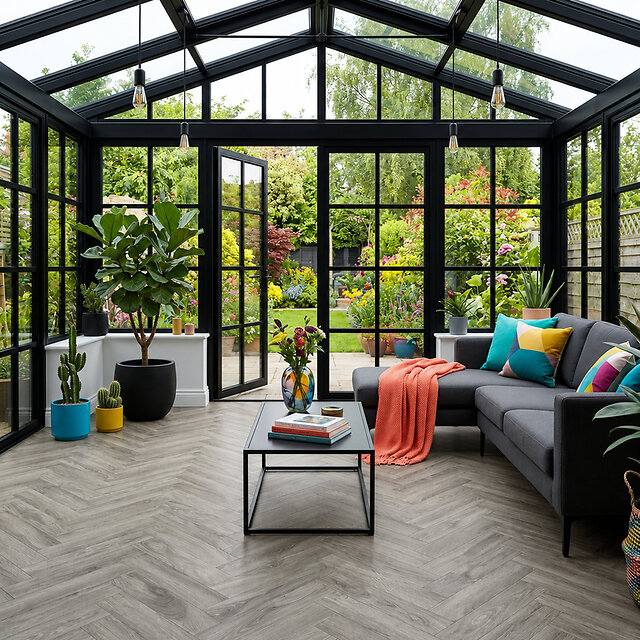
The Tudor Mansions Eltham Parquet is a 4mm felt-backed sheet vinyl with a soft grey-toned oak parquet design, suiting contemporary conservatories with steel-frame doors or matt black accents. It's slip and water-resistant with a 7-year residential guarantee.
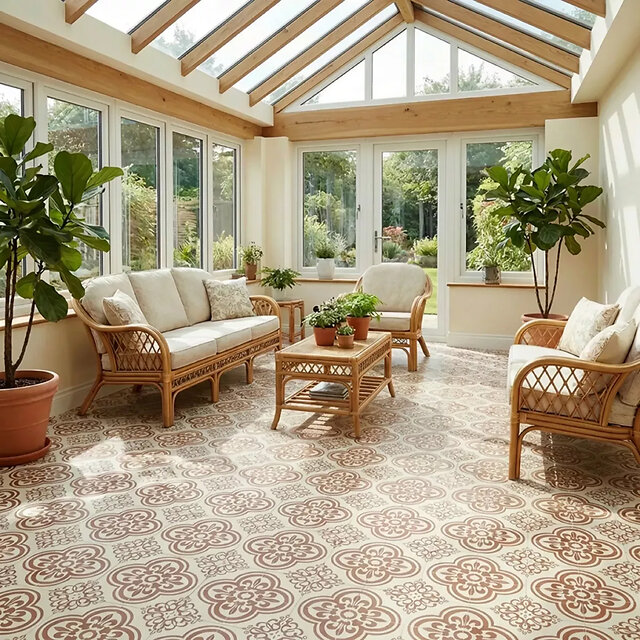
For a colourful alternative, Larache Clay is a sheet vinyl with a statement patterned look. It's felt-backed, durable and perfectly suited to interiors that are crying out for a bold finish or a splash of colour.
Engineered Wood Flooring
For homeowners who want real wood in their conservatory, engineered wood is the sensible choice. Solid wood struggles with the temperature swings a conservatory creates. Engineered wood flooring is built in layers that resist expansion and contraction far better.
It sits at a higher price point than laminate or LVT, but if you want natural materials underfoot, engineered wood is the most practical way to achieve that in a conservatory. If you'd rather avoid the upkeep, the Moduleo Roots wood-effect range delivers convincing oak underfoot without the periodic refinishing.
Natural Stone
Natural stone such as slate, limestone, or travertine brings a character that few other materials can match. Each piece is individual, and the space feels grounded and timeless. Stone needs sealing to prevent staining and is usually the highest cost option. It can feel cold underfoot without underfloor heating. For the right property and the right style, natural stone is a beautiful long-term investment.
Porcelain Tiles and Conservatory Floor Tiles
Porcelain tiles and ceramic conservatory floor tiles are the most durable option available. They cope with heat, sunlight, and moisture without issue.
Points to consider:
- Cold underfoot without underfloor heating, particularly in the colder months
- Grout lines need occasional sealing to stay clean
- Harder surface than wood or LVT, so less forgiving if something is dropped
If you're weighing tile against vinyl, see our LVT vs porcelain tile comparison, which covers where vinyl wins on warmth and noise without giving up the look.
Natural Stone
Natural stone such as slate, limestone, or travertine brings a character that few other materials can match. Each piece is individual, and the space feels grounded and timeless. Stone needs sealing to prevent staining and is usually the highest cost option. It can feel cold underfoot without underfloor heating. For the right property and the right style, natural stone is a beautiful long-term investment.
Carpet
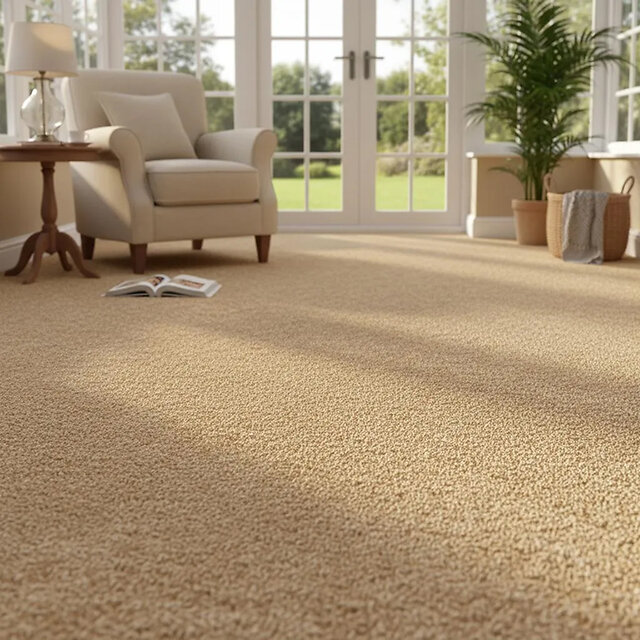
Carpet creates a cosy atmosphere and feels soft underfoot, particularly in conservatories used as snugs or reading rooms. It is not usually our first recommendation. Carpet struggles with moisture, fades in direct sunlight, and is harder to keep fresh in a conservatory that sees garden traffic. If you love the warmth of carpet, a large rug over a more practical floor gives you that comfort without the drawbacks.
If a snug conservatory is the brief, a polypropylene twist pile like the Aspire Oxford holds up better than wool against UV fade and the occasional damp.
Underfloor Heating in a Conservatory
Underfloor heating solves the single most common conservatory complaint: cold floors! It warms the whole space evenly, frees up wall space, and works with most flooring types. UFH pairs well with:
- LVT and many laminates rated for underfloor heating
- Carpet with caution
- Porcelain tiles and natural stone, which conduct heat superbly
- Engineered wood, provided the manufacturer confirms compatibility
Is underfloor heating in conservatory spaces a good idea? For most homes, yes. It extends the usable life of the room, keeps the floor warm, and runs quietly in the background.
Is it illegal to have a radiator in a conservatory? It's not illegal, but UK building regulations usually require a conservatory to be thermally separated from the main house. Extending your central heating into a conservatory through the existing system can breach those rules. Underfloor heating on its own circuit, or a standalone electric system, is usually the cleaner solution.
Here are a few more simple steps to help keep your conservatory feel warm:
- Choose naturally insulating materials like LVT or laminate rather than tiles or stone
- Use thermal underlay where your flooring type allows
- Add a large rug for extra warmth in the colder months
- Check door seals and roof insulation, as most heat loss is not through the floor
Quick Comparison of Conservatory Flooring Types
| Flooring | Warmth | Moisture | UV Resistance | Maintenance | Cost |
|---|---|---|---|---|---|
| Laminate | Warm | Good | Good | Very low | Low |
| LVT | Warm | Excellent | Excellent | Very low | Low to mid |
| Engineered wood | Warm | Good | Good | Moderate | Mid to high |
| Porcelain tiles | Cold | Excellent | Excellent | Low | Mid |
| Natural stone | Cold | Good | Excellent | Moderate | High |
| Carpet | Very warm | Poor | Poor | Higher | Low to mid |
Making a Conservatory Look More Expensive
Small choices lift the whole room.
- A wide plank wood effect laminate or LVT feels more considered than narrow boards.
- Neutral colours with a slight grain pattern create a calm, composed look.
- Using the same flooring in the adjoining room makes the space flow and feel larger, which helps particularly in smaller conservatories.
- Felt pads under furniture legs protect the floor and keep everything looking fresh.
- A good quality rug adds softness without committing to carpet.
How to Order Free Samples
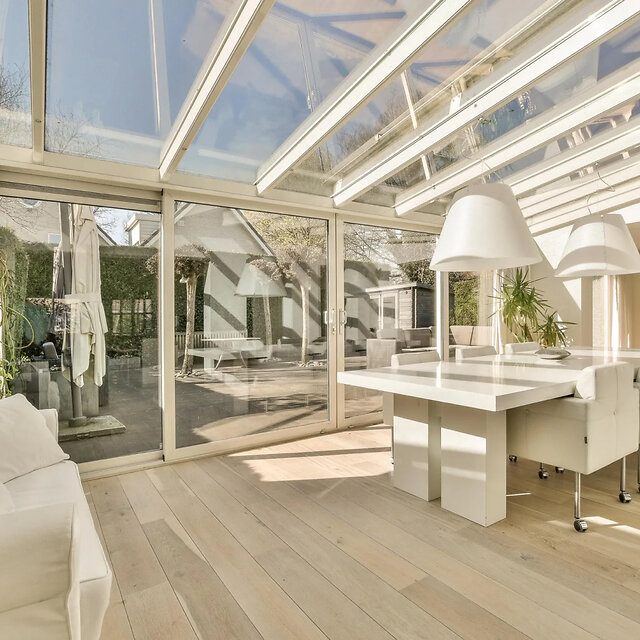
We always recommend ordering free samples before you commit. Colours and textures look different in natural light, and a conservatory has more of it than almost any other room in the house. Hold the sample against your walls, your furniture, and the floor of the adjoining room to see how everything sits together. You can order free flooring samples directly from our website.